Block landing · bathtub cad block
Free bathtub CAD blocks for AutoCAD
By Sumana Kumar · Published 28 Oct 2023 · Updated 14 May 2026
The bathtub is usually the largest single fixture in a bathroom, so where it goes shapes the whole layout. It wants the longest available wall, a clear edge to get in and out, and access to the same drainage zone as the WC and basin. A scaled bathtub CAD block lets you settle that big move early. This page collects free bathtub CAD blocks in DWG and DXF — standard built-in baths, freestanding tubs and shower-baths — drawn to true size and ready for AutoCAD 2004 or later, free for personal and commercial work with no signup and no watermark.
Baths come in a handful of standard lengths and a few common shapes, and the block library here reflects that rather than offering a single generic rectangle. Whether you are dropping a 1700 mm built-in bath against a wall, floating a freestanding tub in a large bathroom, or fitting a compact bath into a small en-suite, starting from a correctly-sized block keeps the layout honest from the first placement.
Bathtub types in the library
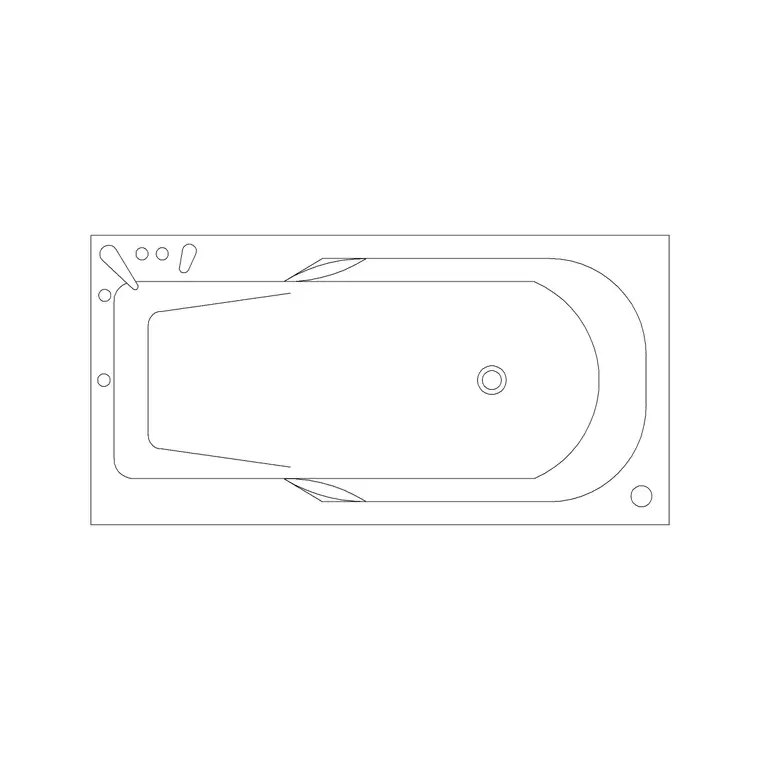
The set covers the bath types you specify most. A standard built-in (alcove) bath sits against one or more walls with a panel on the open side — the workhorse of domestic bathrooms. A freestanding bath stands clear of the walls as a feature, needing space all around. A shower-bath is shaped wider at one end to double as a shower enclosure. Corner and offset baths suit awkward rooms.
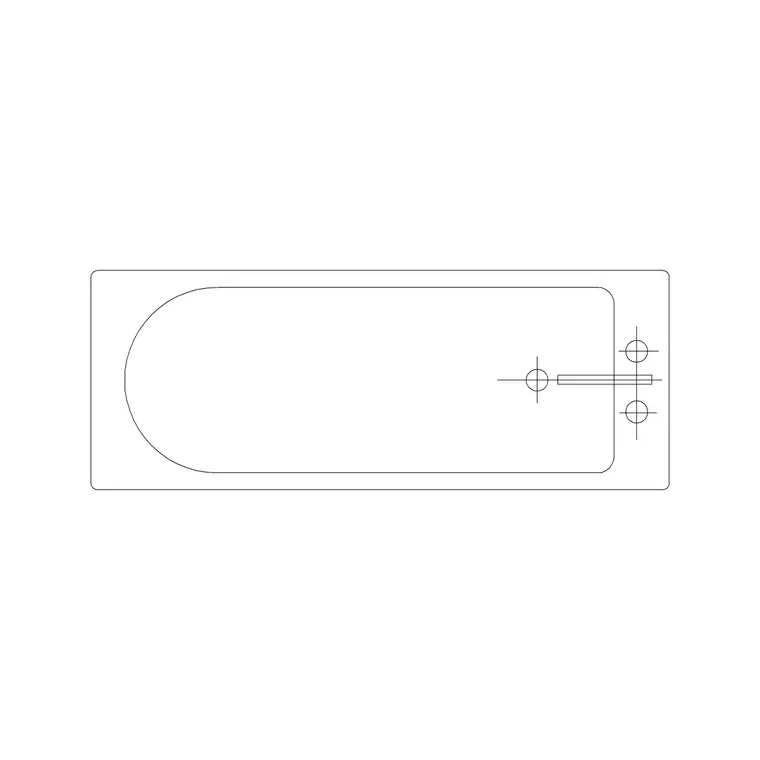
Each is drawn as a clean block reference with the rim outline, the inner bowl and the tap/waste end shown, so you can place it, dimension it and rotate it to the wall it serves. The tap end is marked because it fixes where the plumbing and the access have to be.
Plan view for layout, elevation and section for detail
For the bathroom layout you use the plan: the bath seen from above, set against the longest wall with a clear access edge. The plan is what you mirror to flip a layout or position the bath relative to the WC and basin.
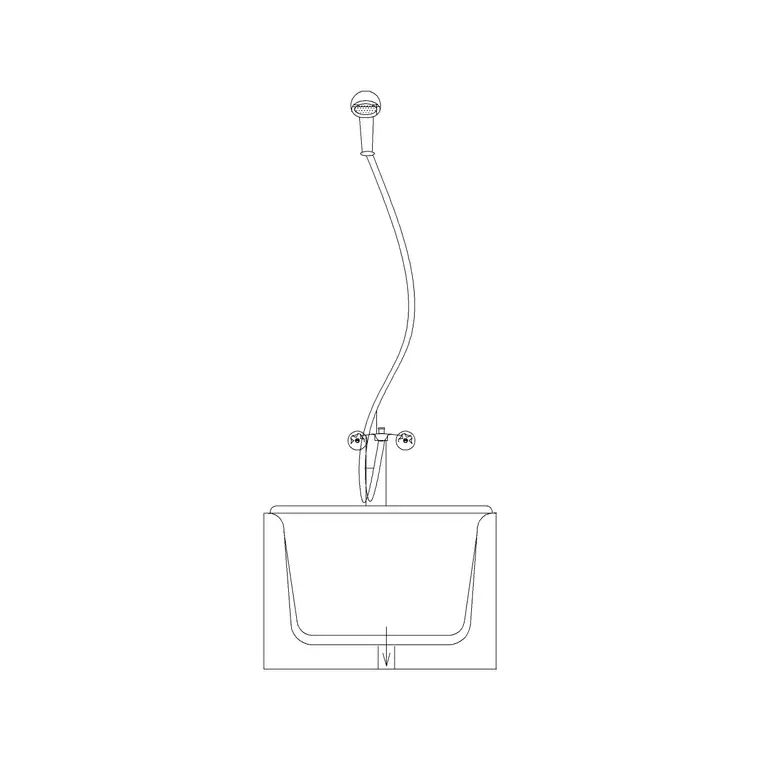
For tiling drawings, sanitary elevations and presentations you switch to elevation, where the bath and its panel are drawn face-on at the rim height. A section through the bath is useful where you need to show the internal depth, the overflow and the relationship to the floor or a raised plinth. Many downloads ship the plan with an elevation or section so one file covers both the layout and the detail.
Typical bathtub dimensions
Design around these figures. The classic built-in bath is 1700 × 700 mm; compact baths run 1500 × 700 mm and small en-suite baths down to 1400 mm. Larger and double-ended baths reach 1800 mm and beyond. Rim height above the floor: around 500–560 mm. Freestanding tubs vary widely but plan on roughly 1500–1800 mm long with clear space all around.
For access, leave a clear strip at least 700 mm wide alongside the open edge of the bath so a person can get in and out and a cleaner can reach it. The tap end needs access to the hot, cold and waste, so keep it against the wall carrying those services where possible.
Inserting and placing the bath block
The blocks are drawn full size in millimetres — insert at scale 1 in a millimetre drawing, or set INSUNITS to millimetres for automatic rescaling. Use INSERT, snap the insertion point to a corner of the rim or the tap end, and rotate so the bath sits along the chosen wall with the tap end towards the drainage.
For a built-in bath, place the rim hard against the walls it abuts and draw the bath panel on the open side. Dimension the bath from the walls and mark the tap/waste end for the plumber. Keep the bath on a sanitaryware layer so it freezes off a structural plan and thaws back for the furnished and tiling drawings.
Where bathtub blocks are used
Bathtubs feature in residential bathrooms, hotel rooms, hospitality suites and accessible bathrooms (where a bath with a transfer seat or a walk-in tub may be specified). Architects and interior designers place them to anchor the layout; plumbing designers coordinate the fill, the waste and the overflow.
Use the bath block as the first big move in a bathroom that includes one, then fit the WC, basin and any separate shower around it. Pair the bath with the shower-tray, WC, basin and bathroom-faucet blocks to complete the sanitary layer, and tag each fixture to extract a schedule for the plumber and the procurement list.
Built-in, freestanding and shower-bath layouts
How you place the bath block depends on the type. A built-in bath is the most space-efficient: it tucks against one, two or three walls with only the access edge open, and the panel hides the underside and plumbing. A freestanding bath is a statement that needs room to breathe — leave clear space on every side, and remember the supply and waste have to reach it across the floor or up through it, which the section helps you coordinate.
A shower-bath earns its place in a smaller bathroom by combining the bath and shower in one footprint; place it with the wider showering end at the tap/access edge and add a bath screen on the open side. Because each type is a separate scaled block, you can test which suits the room — swap a built-in bath for a shower-bath to save a separate shower enclosure, or a built-in for a freestanding tub where the floor area allows — without redrawing the surrounding bathroom.
Free download
Browse the full library — DWG & DXF, no signup.
Questions
Frequently asked
What is the standard size of a bathtub?+
The classic built-in bath is 1700 × 700 mm. Compact baths run 1500 × 700 mm and small en-suite baths down to around 1400 mm, while larger and double-ended baths reach 1800 mm and beyond. The blocks cover the common lengths.
What bath types are included?+
Standard built-in (alcove) baths, freestanding tubs, shower-baths shaped for combined bath and shower use, and corner or offset baths for awkward rooms — drawn in plan and, in many cases, elevation or section.
How much access space does a bath need?+
Leave a clear strip at least 700 mm wide alongside the open edge of the bath so a person can get in and out comfortably and the bath can be cleaned. A freestanding tub needs clear space on every side.
Are the bathtub blocks free for commercial work?+
Yes. They download free in DWG and, where available, DXF, with no signup, no watermark and no attribution requirement, and they are cleared for commercial project use.
Related downloads
Blocks for this guide
Related categories
Related guides
Block landing
Free Bathroom Fixtures CAD Blocks — DWG Download
Download free bathroom fixtures CAD blocks in DWG and DXF — toilets, wash basins, bathtubs, showers and vanities drawn in plan and elevation. No signup, commercial OK.
Block landing
Free Sanitary Fixtures CAD Blocks — DWG Download
Download free sanitary fixtures CAD blocks in DWG and DXF — WCs, wash basins, urinals and sinks in plan and section for AutoCAD sanitary plans.
Block landing
Free Toilet / WC CAD Blocks — DWG Download
Download free toilet / WC CAD blocks in DWG and DXF — close-coupled, back-to-wall and commode pans in plan and elevation for AutoCAD. No signup, commercial OK.