Block landing · bar sink cad block
Free bar and prep sink CAD blocks for AutoCAD
By Saumyajit Maity · Published 6 Nov 2023 · Updated 8 Jan 2026
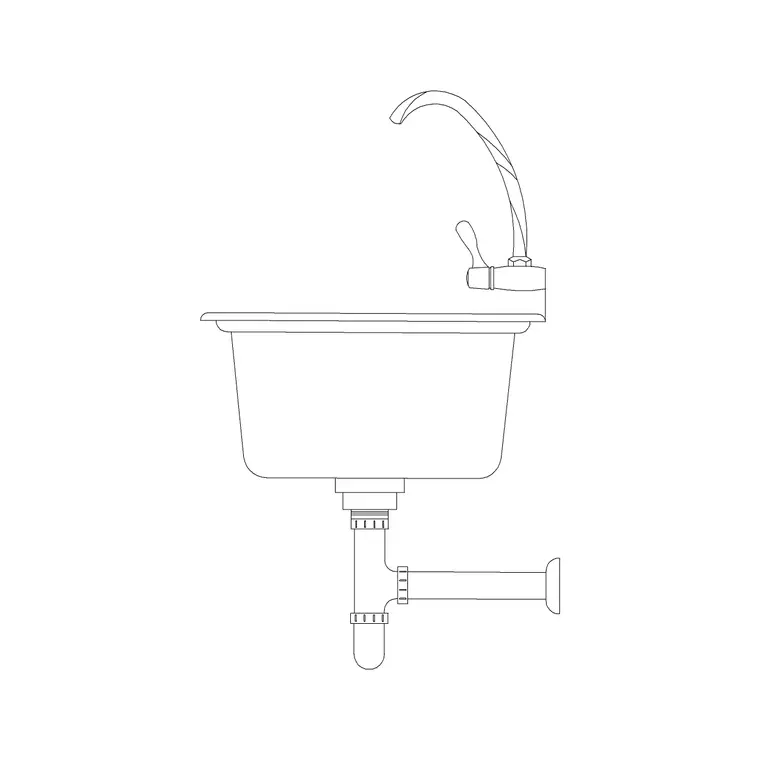
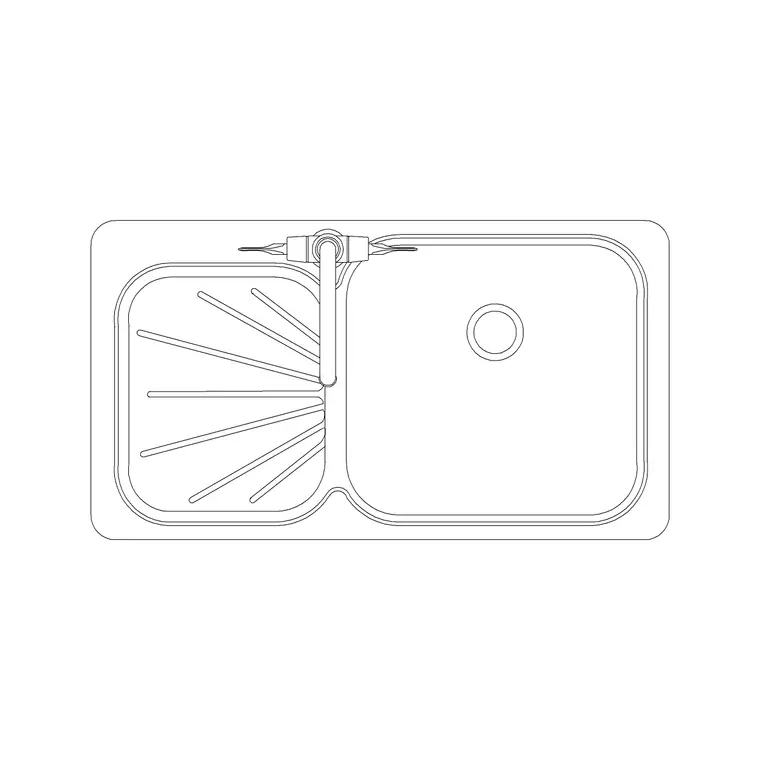
A bar or prep sink is the small secondary basin that turns an island, a bar or a butler's pantry into a proper working station, and a scaled bar / prep sink CAD block lets you place one without stealing the worktop a main sink would. This page collects free bar and prep sink CAD blocks in DWG and DXF — compact single-bowl sinks suited to islands and bar runs — drawn in plan view at true size for AutoCAD 2004 or later. Free for personal and commercial use, no signup, no watermark.
The defining feature of a bar or prep sink is that it is small. It exists alongside the main sink, not instead of it: somewhere to rinse a glass at the bar, wash herbs at the island, or draw water for the kettle without crossing the kitchen. Because it is compact, it slips into spots a full sink could never fit — the end of an island, a narrow bar return, a coffee station — and the planning job is to place it where it adds convenience without breaking the worktop or the seating. A scaled block makes that placement precise.
What counts as a bar or prep sink
A bar or prep sink is a small single bowl, often round or compact rectangular, used as a secondary water point. At a home bar or beverage station it rinses glasses and fills jugs; on a kitchen island it serves as a dedicated prep sink for washing vegetables and draining pasta away from the main sink; in a butler's pantry or utility it handles overflow tasks. The block is simply a compact single-bowl plan symbol, drawn small to reflect the real unit.
What makes it a 'bar' or 'prep' sink is its role and size rather than a special shape — a small inset bowl placed as a secondary station. The plan view shows the bowl and the tap position, which is all you need to set it into an island top or a bar run and to set out its waste and supply.
Typical bar / prep sink dimensions
Work to these ranges. Round bar sink: roughly 300–400 mm diameter. Compact rectangular prep sink: around 350–450 mm wide and 350–400 mm front to back. Bowl depth: usually 150–180 mm, shallower than a main sink. Overall inset footprint: small enough to leave usable worktop on either side, which is the whole point of a secondary sink.
Because it is so compact, a bar or prep sink can sit on a narrow run or at the end of an island where a 600 mm main sink would never go. The scaled block shows that fit instantly — drop it onto the island top and you can see how much worktop and seating overhang it leaves around it.
Placing a prep sink on an island
On an island, a prep sink earns its place by location. Set it toward the cooking side of the island so washed produce travels a short distance to the hob, and keep it clear of the seating overhang so diners are not sitting at a wet edge. Leave enough worktop between the prep sink and any island hob to work safely, and check that the bowl and tap do not foul the knee space for stools beneath.
Because an island sink needs its own waste and supply routed through the floor, the prep sink fixes plumbing that has to be set out before the slab or the joists are closed. Place the scaled block early, dimension its centreline, and the island services can be coordinated with the structure rather than chased in later.
How to insert and place the block
The blocks are drawn full size in millimetres: insert at scale 1 in a millimetre drawing, 0.001 in a metre drawing, or set INSUNITS to millimetres for automatic rescaling. Use INSERT or drag from a tool palette.
Pick the bowl centre or back edge as the insertion handle so you can snap it to the island or bar top, then position it clear of seating and main work zones. Rotate it to face the way the user works. Keep it on a services-aware layer separate from the main sink so you can dimension its waste and supply independently — island and bar sinks need their own runs, and showing them clearly stops them being forgotten when the plumbing is set out.
Where bar and prep sinks are used
Bar and prep sink blocks belong on kitchen islands, home and entertainment bars, butler's pantries and beverage stations, wet bars in offices and hospitality spaces, and any layout where a small secondary water point adds real convenience. In commercial settings they appear as glass-rinse sinks behind a bar and as hand-wash basins at prep stations.
Use the bar / prep blocks alongside the single, double and triple sinks in the sinks-and-faucets category so the secondary sink is drawn at its true small scale beside the main sink, and combine them with the island, cabinet and appliance blocks to build a complete kitchen or bar layer. Where a scheme repeats the same island or bar, standardise on one prep-sink block so a single edit updates every instance.
Free download
Browse the full library — DWG & DXF, no signup.
Questions
Frequently asked
How big is a bar or prep sink?+
Bar and prep sinks are small: round bowls run roughly 300–400 mm in diameter and compact rectangular prep sinks around 350–450 mm wide, with shallower bowls than a main sink. The small size lets them fit islands and bar runs without stealing worktop.
What is the difference between a bar sink and a prep sink?+
They are essentially the same compact secondary sink used in different roles — a bar sink rinses glasses and fills jugs at a bar, a prep sink washes produce on an island. The block is the same small single-bowl symbol; the role is set by where you place it.
Does a prep sink need its own plumbing?+
Yes. As a secondary sink it needs its own waste and supply, and on an island those runs must be routed through the floor, so set the sink out early and dimension its centreline before the structure is closed.
Are the bar / prep sink blocks free for commercial use?+
Yes. Every block downloads free in DWG and DXF with no signup, no watermark and no attribution requirement, and they are cleared for commercial project use including hospitality and bar fit-outs.
Related downloads
Blocks for this guide

Related categories
Related guides
Block landing
Free Sanitary Fixtures CAD Blocks — DWG Download
Download free sanitary fixtures CAD blocks in DWG and DXF — WCs, wash basins, urinals and sinks in plan and section for AutoCAD sanitary plans.
Block landing
Free Kitchen Faucet / Mixer Tap CAD Block — DWG
Download free kitchen faucet and mixer tap CAD blocks in DWG and DXF — monobloc and pull-out mixers in plan and elevation. No signup, commercial OK.
Block landing
Free Kitchen Sink Unit CAD Block — DWG Download
Download free kitchen sink unit CAD blocks in DWG and DXF — single, double and 1.5-bowl sinks with drainers in plan and section. AutoCAD 2004+, no signup.