Block landing · awning window cad block
Free awning window CAD blocks for AutoCAD
By Saumyajit Maity · Published 19 Mar 2026 · Updated 2 May 2026
An awning window is hinged at the top and swings outward from the bottom, so the open sash forms a small shelter — an 'awning' — over the opening. That geometry gives it a useful trick: it can stay open in light rain, because the projecting sash sheds water away from the gap. Awning windows are common as ventilation lights above fixed glazing, in bathrooms and kitchens, and along high clerestory strips. This page collects free awning window CAD blocks in DWG, including versions paired with fixed glass, drawn full size in millimetres for AutoCAD 2004 or later, free for personal and commercial use with no signup or watermark.
Use the blocks for top-hung ventilation lights, bathroom and WC windows, kitchen windows over a worktop, and clerestory strips where you want air high on the wall. Because the top-hung swing is drawn correctly, the elevation and the section both read the way an installer expects.
The awning window is the type where the section view matters most, because its defining feature — the sash projecting outward at the bottom — only shows properly when you cut through it vertically. The blocks here keep that section clean so the head detail, the sill and the projecting sash all read correctly.
What an awning window block shows
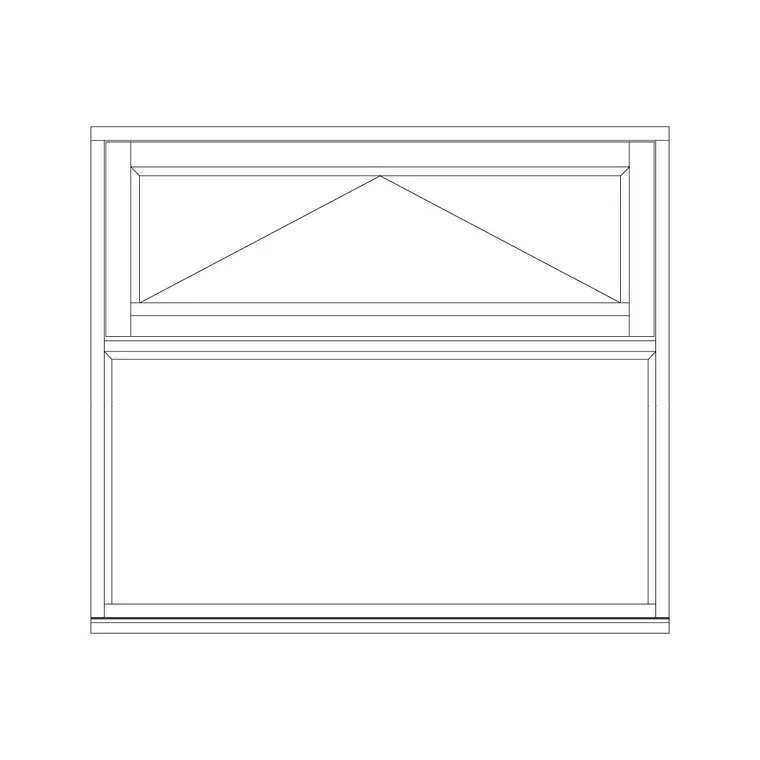
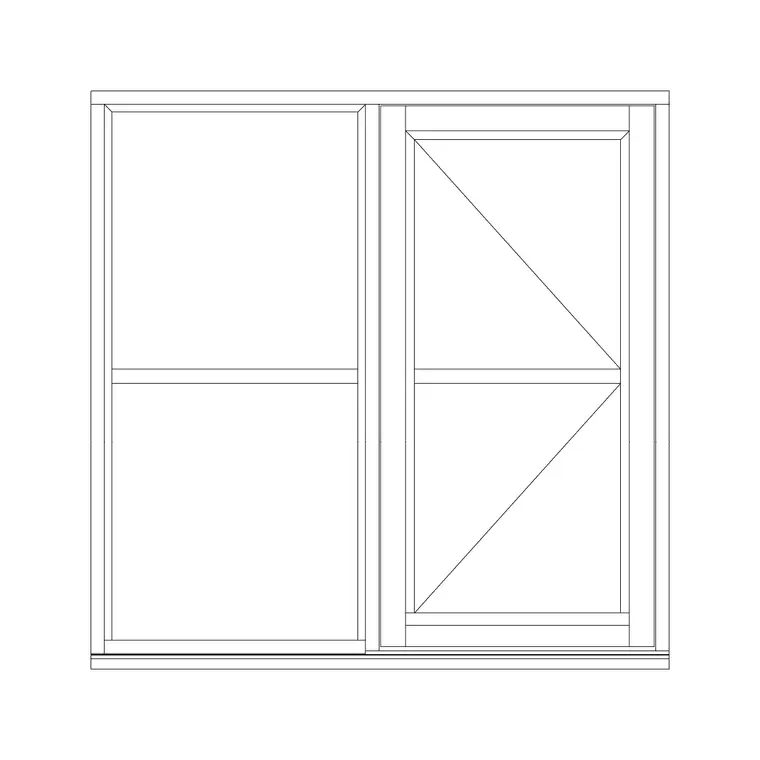
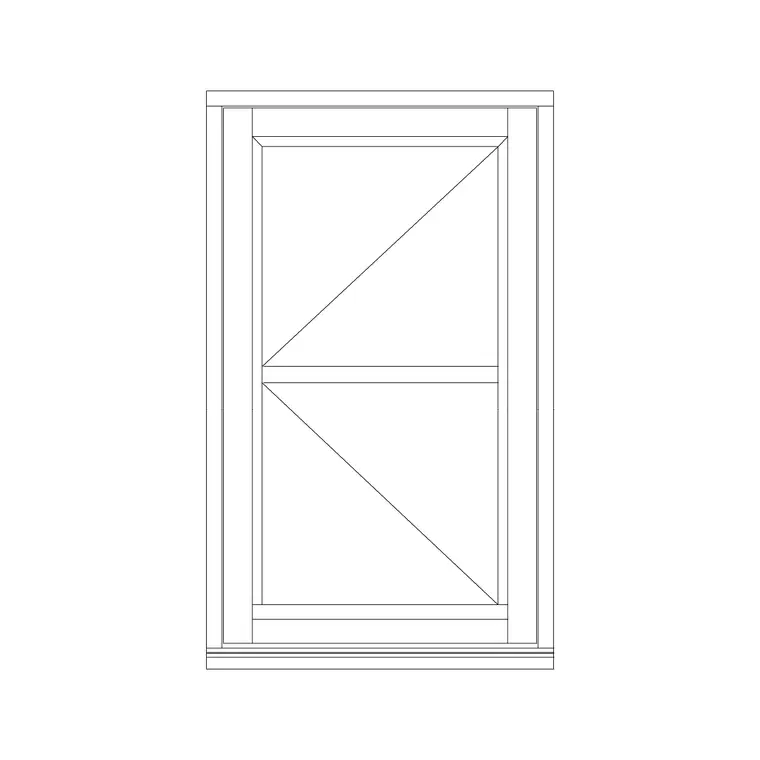
An awning window is hinged along its top edge, so on the elevation its swing notation is a dashed triangle whose apex sits at the top — the mirror image of a bottom-hung 'hopper' window, and rotated ninety degrees from a side-hung casement. The block carries the frame, the sash, the glazing and that top-hinge swing symbol so it is instantly distinguishable from a casement on a busy elevation.
The section is where the awning shows its character: the sash swings out and down from the top hinge, projecting at the bottom like a little canopy. The block's section draws that projection, the head detail and the sill, which is exactly what you need to detail the window and to check the sash clears anything below it on the façade.
Awning windows with fixed glass
A very common real-world arrangement — and one of the blocks in this set — is an awning vent set above a fixed glass pane. The big fixed light gives daylight and view; the top-hung awning above it gives ventilation that can stay open in the rain. On the elevation this reads as a framed opening divided by a transom, with the top-hinge swing notation on the upper awning light only and the lower pane left plain as fixed glass.
Drawing it from the combined block keeps the transom line continuous and the two parts coordinated. It is the standard solution for bathrooms, stairwells and any room that wants a large view window plus a discreet, weather-tolerant vent, so the 'awning with fixed glass' block earns frequent use.
Elevation and section views
Elevation shows the frame, glazing and the top-hinge swing notation face-on, keyed into the window schedule. It tells you the awning is a top-hung vent and shows its proportion relative to any fixed glass it sits above.
Section is the view that makes an awning legible, because the outward-and-down projection of the open sash only appears in a vertical cut. The section also shows the head, the sill and how the frame sets into the wall — the detail an aluminium or uPVC awning relies on for its weatherseal. Plan view shows the frame and reveal within the wall. Insert the views your drawing needs from the multi-view DWG and freeze the rest; for an awning, keeping the section is usually worthwhile.
Typical awning window sizes
Awning lights are usually modest, because the sash is supported only at the top and a very large top-hung sash gets heavy and projects a long way when open. As planning figures, an awning vent commonly runs 400–900 mm wide by 300–600 mm high — wide and shallow suits a ventilation strip; near-square suits a bathroom window.
Where the awning sits above fixed glass, the fixed pane takes most of the opening height and the awning takes a shallow band at the top. For a clerestory strip you might array a row of identical awning lights along the head of a wall. Confirm the maximum sash size against the frame system, since the projecting open sash and its stays have practical limits.
Inserting and detailing the block
The blocks are full size in millimetres; insert at scale 1 in a millimetre drawing, 0.001 in a metre drawing, or set INSUNITS to millimetres so AutoCAD rescales on insertion. Run INSERT and place at a frame corner or opening centre. Because an awning is top-hung, you do not mirror it for left/right handing the way you would a casement — instead, align the section so the projecting sash reads correctly against the façade below.
Keep the window on a glazing layer for clean freezing, and where a clerestory or bathroom strip repeats, COPY or ARRAY the awning light at equal centres. When detailing, insert the section beneath the elevation and align the heights so the head, transom and sill line up between the two views.
Where awning windows are used
Awning windows suit any opening that wants ventilation without letting rain straight in: bathrooms and WCs, kitchens, utility rooms, and clerestory strips high on a wall. They are a favourite for the ventilation light above a fixed picture window, because the top-hung sash can be left ajar in wet weather. In tropical and subtropical climates the awning is especially common for exactly this reason.
Architects use the block for these ventilation lights and combination windows; services engineers value the rain-tolerant opening for continuous background ventilation; installers read the top-hinge and the projection from the section. Pair the awning blocks with fixed-glass and casement blocks to assemble the large combination windows that dominate modern residential façades.
Free download
Browse the full library — DWG & DXF, no signup.
Questions
Frequently asked
What is an awning window?+
An awning window is hinged at the top and swings outward from the bottom, so the open sash projects like a small awning over the opening. That shape lets it shed rain and stay open in light wet weather, which makes it popular for ventilation lights.
How is an awning window drawn differently from a casement?+
An awning's swing triangle points up to the top hinge rather than sideways to a side hinge, and its defining outward-and-down projection only shows in a vertical section. A casement is side-hung and shows its swing in plan and elevation.
What is an awning window with fixed glass?+
It is a combination window with a top-hung awning vent above a fixed glass pane. The fixed pane gives daylight and view; the awning above gives rain-tolerant ventilation. It is a standard arrangement for bathrooms, stairwells and view windows.
Which view best shows an awning window?+
The vertical section, because the sash projecting outward and down from the top hinge only reads properly when you cut through the window. The elevation shows the top-hinge swing notation and the proportion relative to any fixed glass.
Related downloads
Blocks for this guide
Related categories
Related guides
Block landing
Free Casement Window CAD Blocks — DWG Download
Free casement (openable) window CAD blocks in DWG — side-hung sashes in plan, elevation and section for AutoCAD. No signup, free for commercial use.
Block landing
Free Single-Shutter Window CAD Blocks — DWG
Free single-shutter window CAD blocks in DWG — one-panel openable sashes in elevation and plan for AutoCAD. Left/right-hung, no signup, commercial OK.
Block landing
Free Double-Shutter Window CAD Blocks — DWG
Free double-shutter window CAD blocks in DWG — two-leaf openable windows with glass, in elevation and plan for AutoCAD. No signup, commercial-use OK.