Block landing · exercising person figure cad block
Free exercising person figure CAD block
By Sumana Kumar · Published 21 Apr 2023 · Updated 9 Jan 2026
A gym or studio drawn with static standing figures misses the whole point of the space, which is movement. The exercising person figure shows someone mid-activity — stretching, lifting or running — so a fitness elevation reads as a place of motion and so you can test the clearances that exercise actually needs. This page provides a free exercising person figure CAD block in DWG and DXF for AutoCAD 2004 or later, free for personal and commercial use with no signup or watermark.
An active figure does a job a standing one cannot: it occupies the space a moving body really uses. A person mid-stretch needs more room than a person standing still; a runner on a treadmill, a lifter at a rack and a yogi on a mat each have their own envelope. Placing an exercising figure against equipment and circulation shows whether those activity envelopes fit, which is why fitness, sports and wellness designers keep an active figure in their set alongside the static ones.
What the exercising person figure shows
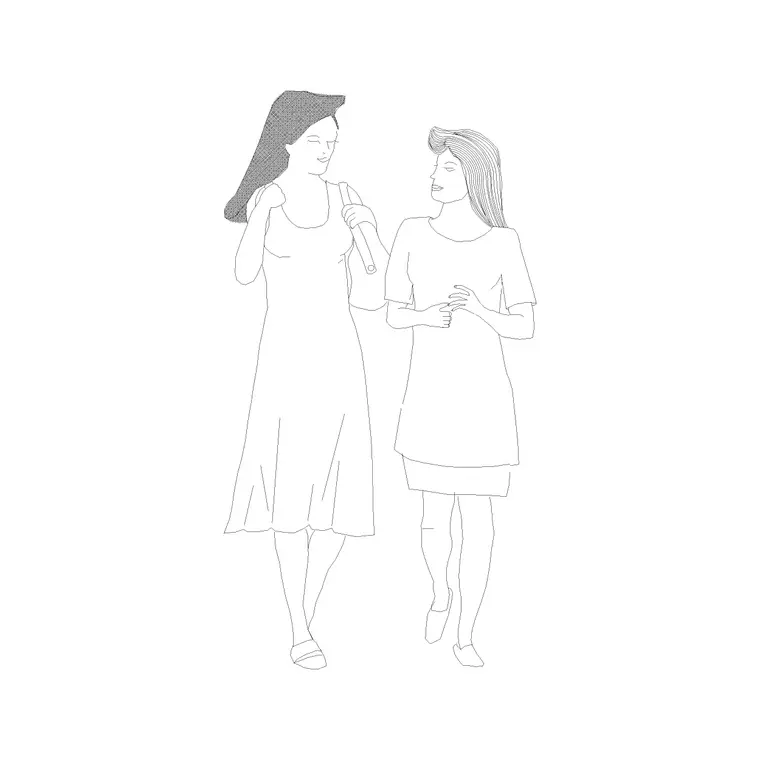
The block is an adult figure in elevation caught mid-exercise — a recognisable active pose such as a stretch, a lunge, a lift or a run, rather than a neutral stand. It is drawn as a clean silhouette so it reads instantly as movement and animates a gym, studio or sports-hall elevation. The active pose also shows the extended reach and footprint that exercise demands, which a standing figure hides.
As a single block reference it inserts and moves in one action, and as a block it never needs redrawing. One active figure populates a run of equipment or a studio floor, and editing the master updates every instance. Using a couple of different active poses keeps a fitness scene believable rather than mechanically repeated.
Gyms, studios and sports facilities
The exercising figure belongs in any fitness or sports brief. In a gym it sits at the equipment — a treadmill, a rack, a bench — and shows both scale and the space each activity needs. In a studio it animates a yoga, spin or dance floor and helps set the mat or station spacing. In a sports hall or wellness centre it communicates active use and energy in a way a standing figure never manages.
The activity envelope is where the figure earns its keep. A stretching or lifting body reaches well beyond a static stance, so placing an active figure against neighbouring equipment or a wall checks whether the spacing leaves room to actually exercise. That clearance is exactly what gets squeezed when a gym is laid out from equipment footprints alone, and the figure surfaces it.
Activity envelopes and figure scale
The figure is at adult scale, so an average adult is commonly taken as around 1600 to 1800 mm standing, but in an active pose the relevant figure is the reach and footprint, not just the height. A stretch or a lift extends the limbs well beyond the standing envelope, and the spacing between exercise stations is commonly set to give clear room around that reach; treat any spacing as a design-stage range to check against the equipment manufacturer and the relevant facility guidance rather than a fixed value.
Keep the figure full size and uniform; stretching the block to fit distorts the very envelope you are trying to read. Set INSUNITS to millimetres so AutoCAD rescales on insertion if needed, and use MIRROR to vary facing. Mixing active and standing figures gives the scene both the motion and the scale reference it needs.
Placing the exercising figure in AutoCAD
INSERT the block and snap the contact point — feet or mat — to your floor line with an endpoint OSNAP so the figure stands or sits on the surface. Place it at the equipment or station you are checking and read the activity envelope against neighbouring equipment, walls and circulation. If the active reach fouls something, that is a layout finding to resolve. Use MIRROR to vary facing across a row of stations.
Keep the active figures on a dedicated entourage or scale-figure layer, screened or non-plotting for presentation-only use, so they read in client drawings but drop out for technical issue. Maintain master blocks for consistency, and mix poses and facings so the gym or studio floor reads as a believable, busy space rather than a cloned line.
Combining active and static figures
An exercising figure works best alongside static ones. Mix active poses with standing and seated figures to show a gym where some people work out and others rest or wait, and add staff or trainer figures for a fuller picture. For a top-down equipment plan, use plan-view people kept on their own block so the elevation and plan stay separate.
The full people category collects active, standing, seated and group figures so you can build a varied, consistent fitness cast. Keep the exercising figure in the same drawing as your other people so they share insertion scale and layer conventions, and the finished gym or studio reads as one coherent, active scene.
Free download
Browse the full library — DWG & DXF, no signup.
Questions
Frequently asked
What pose is the exercising figure in?+
An active pose such as a stretch, lunge, lift or run, caught mid-movement rather than standing still. The pose shows the extended reach and footprint that exercise actually needs, which a static figure hides.
Can it check spacing between gym stations?+
Yes — place the active figure at a station and read its activity envelope against neighbouring equipment, walls and circulation. If the reach fouls something, the spacing is too tight; confirm clear spacing against the equipment maker and facility guidance.
What height is the figure drawn at?+
At adult scale, commonly around 1600 to 1800 mm standing, but in an active pose the reach and footprint matter more than the height. Treat any spacing figures as design-stage ranges, not fixed dimensions.
Is the exercising figure free for commercial work?+
Yes. The DWG and DXF download is free for personal and commercial use with no signup, watermark or attribution, so it can go directly into gym, studio and sports-facility drawings.
Should I use only active figures in a gym drawing?+
No — mix active poses with standing and seated figures so the scene shows people working out, resting and waiting. The variety reads as a believable, busy facility rather than a row of identical figures.
Related downloads
Blocks for this guide
Popular blocks to download
Related categories
Related guides
Block landing
Human Figure Plan CAD Blocks — Free DWG
Download free human figure plan-view CAD blocks in DWG — people seen from above, drawn to scale for floor plans and circulation. AutoCAD 2004+, no signup.
Block landing
Human Figure Elevation CAD Blocks — Free DWG
Free human figure elevation CAD blocks in DWG — people drawn front-on and in profile to scale your sections and streetscapes. AutoCAD 2004+, no signup.
Block landing
Standing Person Scale Figure CAD Blocks (Free)
Free standing person scale figure CAD blocks in DWG — clean, true-height figures to set the scale of plans, sections and elevations. AutoCAD 2004+, no signup.