Room guide · day spa layout cad blocks
Design a day spa layout with free CAD blocks in 2026
By Saumyajit Maity · Published 13 Apr 2026 · Updated 7 May 2026
A spa sells calm, and the floor plan is the first thing that delivers it or destroys it. Where a salon is busy and social, a spa is quiet and sequential: arrival, change, a relaxation lounge, a private treatment room, perhaps a wet area, then a gentle return. The plan's whole job is to separate the serene front-of-house experience from the practical back-of-house plumbing and to keep noise, smells and circulation away from the client at rest.
This guide covers laying out a day spa or wellness centre in AutoCAD from free CAD blocks. Each linked block downloads free in DWG and DXF at true millimetre scale for AutoCAD 2004 or later — no signup, no watermark, cleared for commercial use. Because the lounge furniture and lighting are scaled, you can judge how restful a relaxation room reads the moment it lands on the plan.
It suits day spas, hotel spas, wellness centres and combined beauty-and-treatment spaces.
What a spa plan is really arranging: calm
Everything in a spa plan serves a sense of retreat. That means acoustic separation (treatment rooms away from the busy reception and the noisy plant room), a deliberate slowing of pace from the entrance inward, and privacy at every stage where a client is undressing or being treated. The plan flows in one direction — arrive, transition, treat, recover — so a client never has to walk back through the 'public' zone in a robe.
The relaxation lounge is the emotional centre of the spa: a softly lit room with comfortable seating where clients wait before and decompress after treatment. The plan should make it the calmest, most private point, buffered from the door and the wet areas.
Zoning: arrival, lounge, treatment, wet, back-of-house
Layer the spa into zones that get progressively more private. Arrival holds reception and a small retail display. A transition zone — changing rooms and lockers — separates dressed clients from robed ones. The relaxation lounge sits beyond, the quiet heart. Treatment rooms line a calm corridor, each fully private. Wet areas (steam, sauna, hydro) group against the plumbing and drainage wall. Back-of-house holds laundry, the plant room and staff.
The key planning move is buffering: the lounge and treatment rooms must not share a wall with reception, the plant room or the wet area's pumps. Mark each zone as a polyline on its own layer and check that the noisy and the calm zones never touch.
Furnishing the lounge and rooms with CAD blocks
The spa's atmosphere comes mostly from the relaxation lounge and reception, and the free blocks below furnish them:
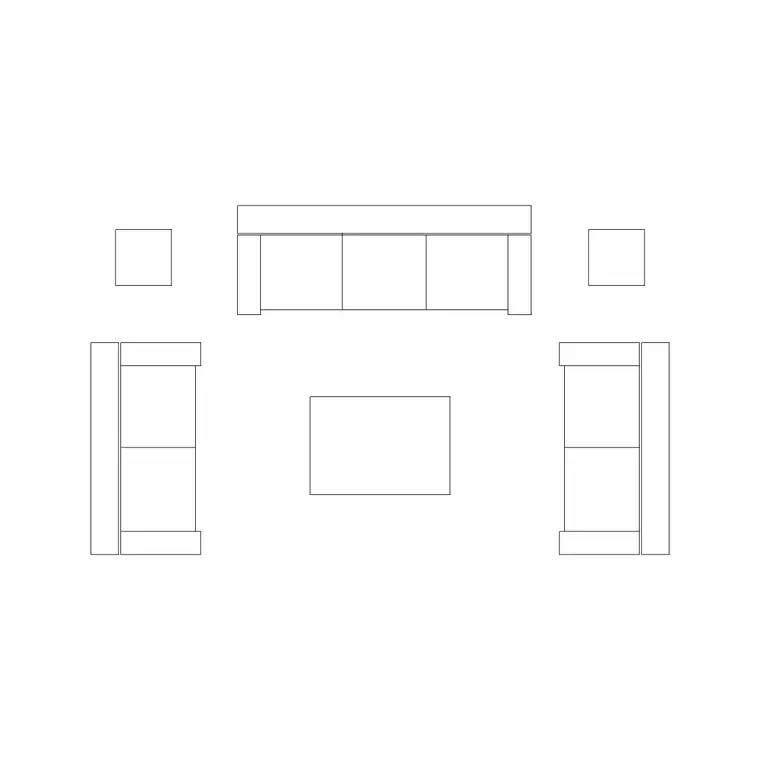
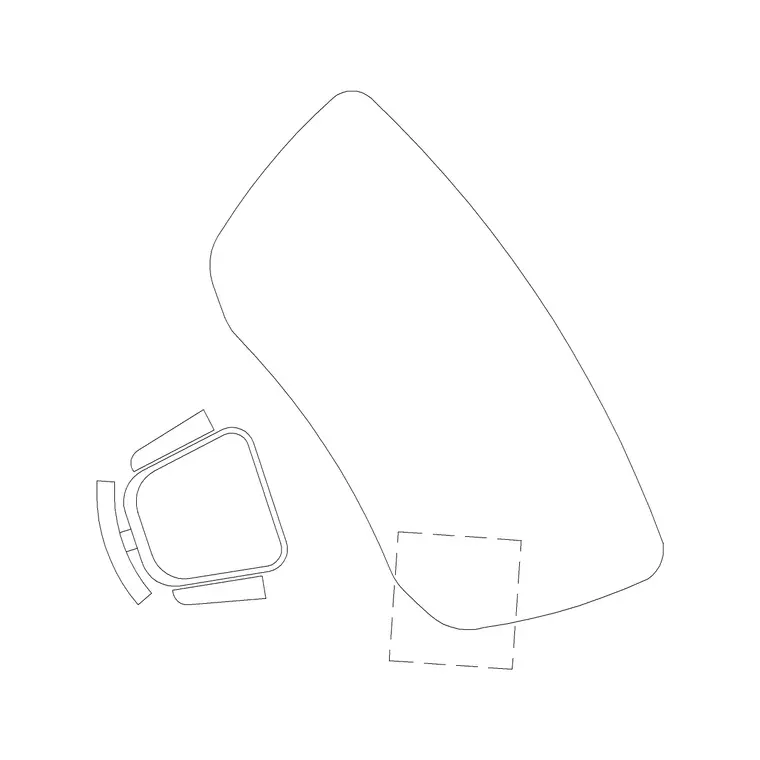
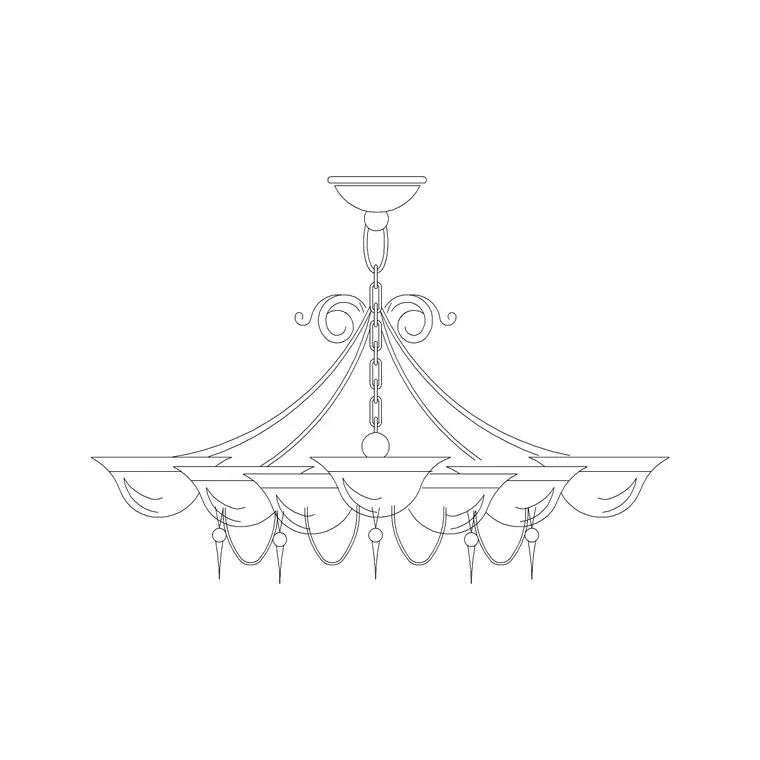
- A sofa set and accent chairs make the relaxation lounge — deep, soft seating is what says 'rest'. - A reception-table block is the calm welcome desk. - Low round/dia tables hold tea, water and magazines between the lounge seating. - A feature chandelier dimmed low plus wall lamps create the layered, low-level lighting a spa needs — bright overhead light is the enemy of calm. - Indoor plants, potted plants and a flower basket bring the biophilic, natural element that is central to spa design. - Soft wall art and a discreet clock dress the lounge without shouting.
Treatment rooms themselves are mostly a massage couch (often a dedicated symbol) plus a stool and a plant; keep them sparse. Layer lounge furniture, lighting and planting separately so the lighting designer and joiner each get a clean drawing.
Dimensions and clearances
Plan around these ranges. A single treatment room is typically 3000–3600 mm by 2400–3000 mm, enough for a massage couch with about 600–750 mm of clear access on both long sides for the therapist, plus a stool and a small trolley. Couches sit around 1900 mm long by 700–800 mm wide.
The relaxation lounge wants generous spacing — 700–900 mm of clear floor between seating pieces so robed clients move easily. Reception desk: 600–750 mm deep with 900 mm behind. Changing cubicles: 1000 x 1200 mm minimum. Keep corridors at least 1200 mm wide, and a 1500 mm turning circle at the entrance, lounge and any accessible treatment room. Because the lounge blocks are full size, the spacing reads true on the plan.
Building the spa plan
Start with the shell, the entrance, and the plumbing/drainage wall — the wet areas and the treatment rooms' basins anchor to it. Place reception by the door, then the changing rooms as the transition. Lay the relaxation lounge in the most buffered position you can, away from the door and the plant room, and furnish it with the sofa, chairs, low tables, plants and dimmable lighting.
Line the treatment rooms along a quiet corridor, each with its couch, a stool and a plant. Group the wet areas against the services wall. Add back-of-house last. Insert all furniture and lighting blocks at scale 1 in a millimetre drawing on their layers. Finally, trace a client's route from door to treatment to recovery and confirm they never cross back through the public zone undressed.
Common spa mistakes
The defining mistake is failing to buffer noise and smells: a treatment room sharing a wall with reception, the plant room, or the laundry shatters the calm the whole business is selling. Another is a relaxation lounge that is an afterthought — too small, too bright, too close to the door — when it should be the serene centrepiece. Over-lighting is a third: a spa needs low, layered, dimmable light, not a flat ceiling grid.
In the drawing, the recurring errors are not separating the noisy zones from the calm ones on the plan (so the conflict is invisible until it is built) and routing the robed-client circulation back through the public front-of-house. Keep furniture and lighting as block references so a lounge that feels too sparse or too crowded is a quick adjustment.
Free download
Browse the full library — DWG & DXF, no signup.
Questions
Frequently asked
How big should a spa treatment room be?+
Typically 3000–3600 mm by 2400–3000 mm — enough for a massage couch with about 600–750 mm of clear access on both long sides for the therapist, plus a stool and a small trolley. Couches are around 1900 x 700–800 mm.
Why does zoning matter so much in a spa plan?+
Because a spa sells calm. Treatment rooms and the relaxation lounge must be buffered from reception, the plant room, the laundry and the wet-area pumps, or the noise and bustle destroys the restful experience. The plan is mostly an exercise in separating noisy zones from calm ones.
Which CAD blocks furnish a spa relaxation lounge?+
Deep, soft sofa seating and accent chairs, low tables, dimmable feature and wall lighting, plenty of plants and a flower basket, and quiet wall art. The biophilic, low-light feel is what makes the lounge read as restful.
Are these spa CAD blocks free for commercial fit-outs?+
Yes. Every block downloads free in DWG and DXF with no signup, watermark or attribution and is cleared for commercial spa and wellness projects.
Related downloads
Blocks for this guide

Related categories
Related guides
Room guide
Free Living Room CAD Blocks — DWG Download
Free living room CAD blocks in DWG & DXF — sofa sets, coffee tables, lamps, plants and art drawn to scale for AutoCAD plans. No signup, commercial-use OK.
Room guide
Free Reading Nook CAD Blocks — DWG Download
Free reading nook CAD blocks in DWG & DXF — armchairs, side tables, reading lamps, plants and art for cosy reading corner plans in AutoCAD. No signup.
Room guide
Free Open-Plan Living Area CAD Blocks — DWG
Free open-plan living area CAD blocks in DWG & DXF — sofa sets, tables, plants and zoning lighting to define a great room in AutoCAD. No signup, free.