Room guide · beauty parlour layout cad blocks
Design a beauty parlour layout with free CAD blocks in 2026
By Sumana Kumar · Published 4 Nov 2025 · Updated 25 Feb 2026
A beauty parlour packs a surprising number of distinct services into a small footprint — makeup, threading and waxing, facials, manicure and pedicure, sometimes bridal packages — and the floor plan has to give each its own well-lit, comfortable spot while keeping the whole room flowing. Unlike a hair salon, where the chairs do similar work, a parlour is a cluster of specialised mini-stations, so the plan is about fitting varied activities together cleanly.
This guide covers laying out a beauty parlour in AutoCAD from free CAD blocks. Each linked block downloads free in DWG and DXF at true millimetre scale for AutoCAD 2004 or later — no signup, no watermark, cleared for commercial fit-outs. Because the seating, stations and reception are drawn full size, you can check the elbow room each service needs as you place it.
It suits ladies' beauty parlours, bridal studios, nail bars and combined beauty-and-grooming spaces.
A parlour is a cluster of specialised stations
The defining feature of a beauty parlour plan is variety in a small space. A makeup or threading station is a seated client facing a well-lit mirror; a facial or waxing service needs a semi-private reclining couch; manicure is a small table with two facing chairs; pedicure adds a footbath chair. Each has different lighting, privacy and clearance needs, and the plan's job is to fit them together without any one cramping another.
Because several of these involve close, detailed work, lighting is critical and very local — each station needs its own good light, not just a ceiling wash. Group similar services so their clearances and lighting can be shared, and keep the more private services (facials, waxing, bridal) toward the back.
Zoning the parlour by service and privacy
Plan the parlour as bands of increasing privacy. The front holds reception, a small product display and waiting seating. The open middle holds the public-facing stations — makeup, threading, manicure — where a little buzz is fine. The back holds the private services — facial and waxing rooms, the bridal room — behind partitions or in cubicles.
Manicure and pedicure often sit together as a nail zone with their own seating cluster. Keep a clear circulation spine so a client moving from, say, threading to a facial does not weave through other clients' stations. Mark each service zone as a polyline on its own layer to balance how many of each station the space can really hold.
Stations, seating and the CAD blocks
The supporting furniture comes straight from the free blocks below, while the specialist couches and mirror units are often dedicated symbols:
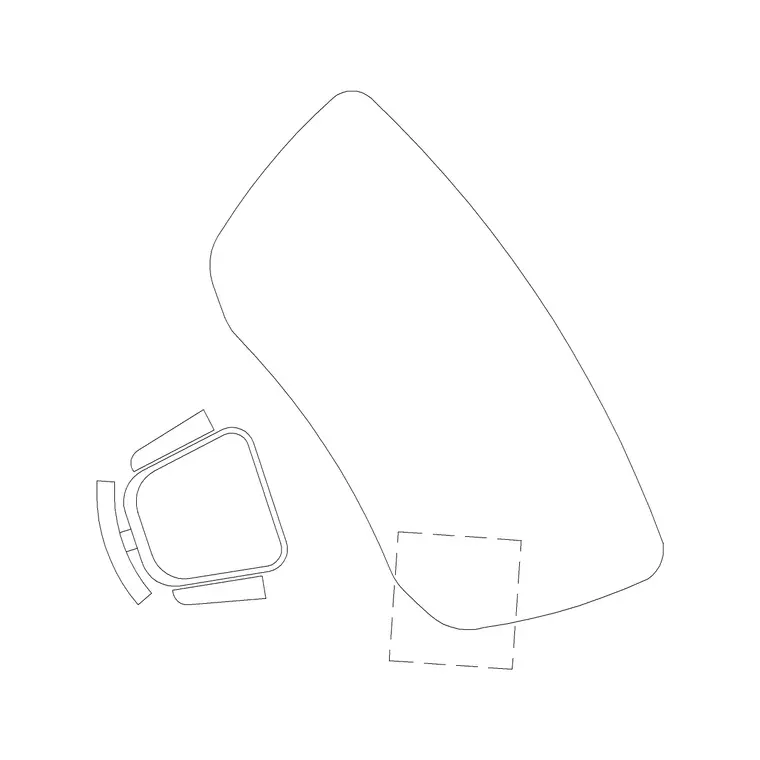
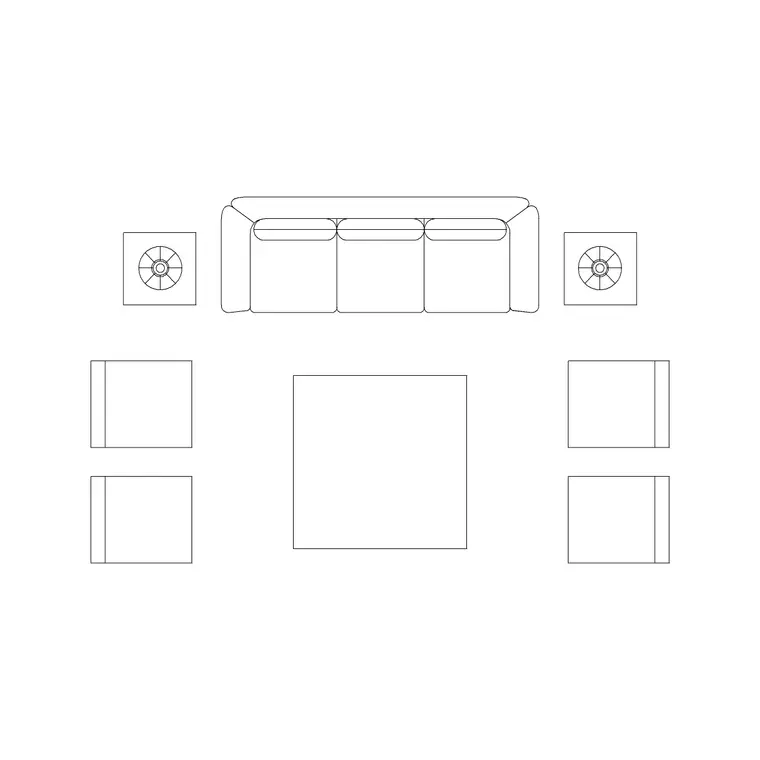
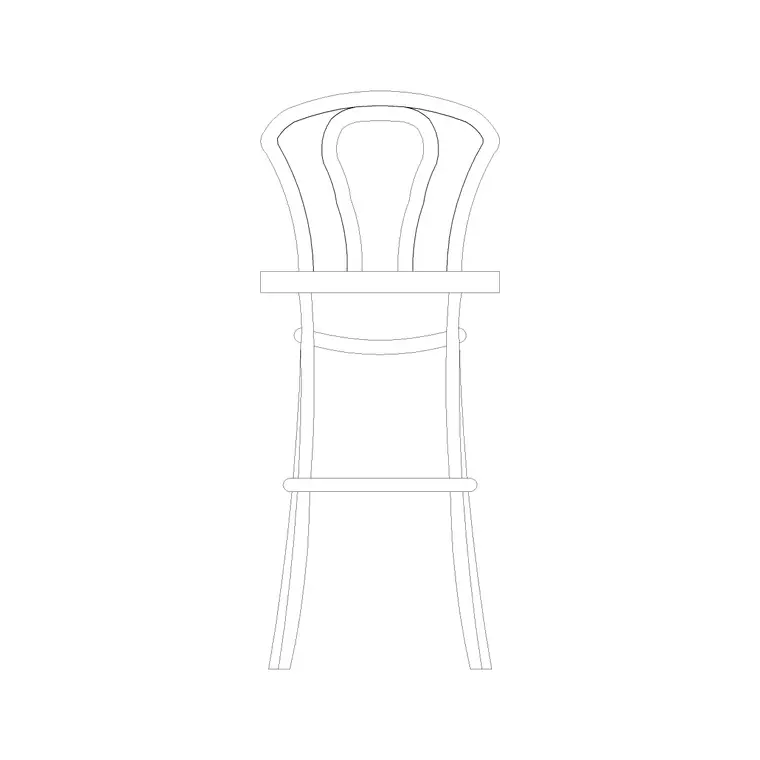
- A reception-table block is the booking and payment desk at the front. - A sofa set and accent chairs make the waiting area, where clients often spend real time between services. - Round-back stools and bar stools serve the makeup, threading and manicure stations — both the client seat and the technician's stool. - Small round/dia tables work as manicure tables and as side tables in waiting. - Wall lamps at every mirror and station give the local task light the work demands; a feature pendant and a ceiling lamp set the overall mood. - Indoor plants, a potted plant and a flower basket bring the soft, pampered atmosphere clients expect. - Art frames and a wall clock dress the walls and help track appointment times.
Layer stations, seating, lighting and planting separately so each trade gets a clean plan.
Dimensions and clearances
Plan around these ranges. A makeup or threading station: about 900–1100 mm of counter width per client with a stool, and 900 mm of clear floor behind for the technician. A manicure table seats two facing across roughly a 500–600 mm wide top; allow 600–750 mm of clear space behind each chair. A pedicure station needs space for the chair plus the technician's low stool and footbath in front.
A private facial/waxing room runs about 2400–3000 mm by 2100–2700 mm for the couch with access on both long sides. Reception desk: 600–750 mm deep, 900 mm behind. Waiting seating: 700–900 mm passing space in front. Keep a 1500 mm turning circle at the entrance and reception. With full-size blocks, every station's elbow room reads true.
Building the parlour plan
Draw the shell and the entrance, then place reception by the door with the waiting sofa and chairs beside it. Set out the open public stations — makeup and threading along a mirror wall, the manicure cluster nearby — confirming the technician's space behind each. Group the private facial and waxing rooms (and the bridal room if briefed) at the back behind partitions.
Drop a wall lamp at every station for task light, a feature pendant over reception, and the ceiling lamp for ambient fill, all on the lighting layer. Add plants, a flower basket and wall art to soften the room. Insert every block at scale 1 in a millimetre drawing on its layer. Finally, trace a multi-service client's route and confirm the circulation spine keeps them out of other stations.
Common parlour mistakes
The most common error is under-lighting the stations: beauty work is detailed and close, so a flat ceiling grid without dedicated mirror and task lighting makes good work hard and clients unhappy. Another is cramming so many stations in that technicians have no room to stand and work behind a seated client. Putting private services like waxing or facials in an open area, with no partition, is a real comfort and dignity failure.
In the drawing, the recurring mistakes are forgetting the per-station task light on the lighting plan and mixing the varied stations onto one layer so you cannot separate the nail zone from the facial rooms for review. Keep stations and seating as block references so re-balancing the service mix is a quick edit, not a redraw.
Free download
Browse the full library — DWG & DXF, no signup.
Questions
Frequently asked
How is a beauty parlour layout different from a hair salon?+
A salon is rows of similar styling chairs, while a parlour is a cluster of varied specialised stations — makeup, threading, manicure, pedicure, facial and waxing — each with different lighting, privacy and clearance needs. The plan's job is fitting that variety together cleanly in a small space.
Why is lighting so important in a beauty parlour plan?+
Because beauty work is close and detailed. Each station needs its own good task light — typically a wall lamp at the mirror — not just an overhead ceiling wash, so plan dedicated lighting at every station on the lighting layer.
Which CAD blocks do I use for a beauty parlour?+
A reception desk, waiting-area sofa and chairs, stools for the makeup, threading and manicure stations, small tables for manicure, wall and ceiling lighting, plus plants, a flower basket and wall art. Facial couches and mirror units are often dedicated symbols around these.
Are these beauty parlour CAD blocks free for commercial use?+
Yes. They download free in DWG and DXF with no signup, watermark or attribution and are cleared for commercial beauty-parlour fit-out projects.
Related downloads
Blocks for this guide

Related categories
Related guides
Room guide
Free Living Room CAD Blocks — DWG Download
Free living room CAD blocks in DWG & DXF — sofa sets, coffee tables, lamps, plants and art drawn to scale for AutoCAD plans. No signup, commercial-use OK.
Room guide
Free Reading Nook CAD Blocks — DWG Download
Free reading nook CAD blocks in DWG & DXF — armchairs, side tables, reading lamps, plants and art for cosy reading corner plans in AutoCAD. No signup.
Room guide
Free Open-Plan Living Area CAD Blocks — DWG
Free open-plan living area CAD blocks in DWG & DXF — sofa sets, tables, plants and zoning lighting to define a great room in AutoCAD. No signup, free.