Room guide · barbershop layout cad blocks
Design a barbershop layout with free CAD blocks in 2026
By Saumyajit Maity · Published 7 Jan 2026 · Updated 9 Mar 2026
A barbershop is a tighter, more masculine cousin of the salon, and its plan reflects a different rhythm: quick, repeat, walk-in trade, a strong social waiting culture, and a fit-out that leans into character — exposed brick, dark timber, vintage detail. The layout is built around a row of robust barber chairs facing mirrors, a small wash zone, and a waiting area that is part of the experience rather than a holding pen.
This guide covers laying out a barbershop in AutoCAD from free CAD blocks. Each linked block downloads free in DWG and DXF at true millimetre scale for AutoCAD 2004 or later — no signup, no watermark, cleared for commercial fit-outs. Because the chairs and bench seating are drawn full size, you can confirm the working space behind each chair the moment they land.
It suits traditional and modern barbershops, men's grooming lounges and combined barber-and-shave bars.
The barbershop rhythm the plan supports
Barbershops run on volume and turnover, often walk-in rather than appointment, so the plan favours an efficient row of chairs and a generous, sociable waiting area where the next customers are happy to sit and watch. The barber works a tight arc around a seated client — less full-circle than a hairdresser — but still needs clear room behind and beside the chair.
Character matters as much as function: the waiting bench, the mirror wall, the lighting and the wall décor are the brand. So the plan should treat the waiting zone as a feature, not leftover space, and give the mirror wall a strong, repeating composition of chair, mirror, light and shelf.
Zoning: entry, waiting, chairs, wash
Block the shop simply. The entry and reception/till sits by the door, often a compact counter. The waiting zone — a bench or a run of chairs against the opposite wall — comes next, deliberately comfortable and within view of the action. The barber chairs line the mirror wall as the productive row. A small wash zone (one or two backwash basins) tucks against the plumbing wall for shampoos and shaves.
Unlike a big salon, a barbershop often has no separate back-of-house beyond a small store and staff corner, so plan storage tight. Mark the zones as polylines on their own layer and check the waiting zone is generous — a barbershop with nowhere to wait loses the walk-in trade it depends on.
Chairs, bench and the CAD blocks you place
The barber chairs and backwash units are usually dedicated symbols, but the surrounding furniture comes from the free blocks below:
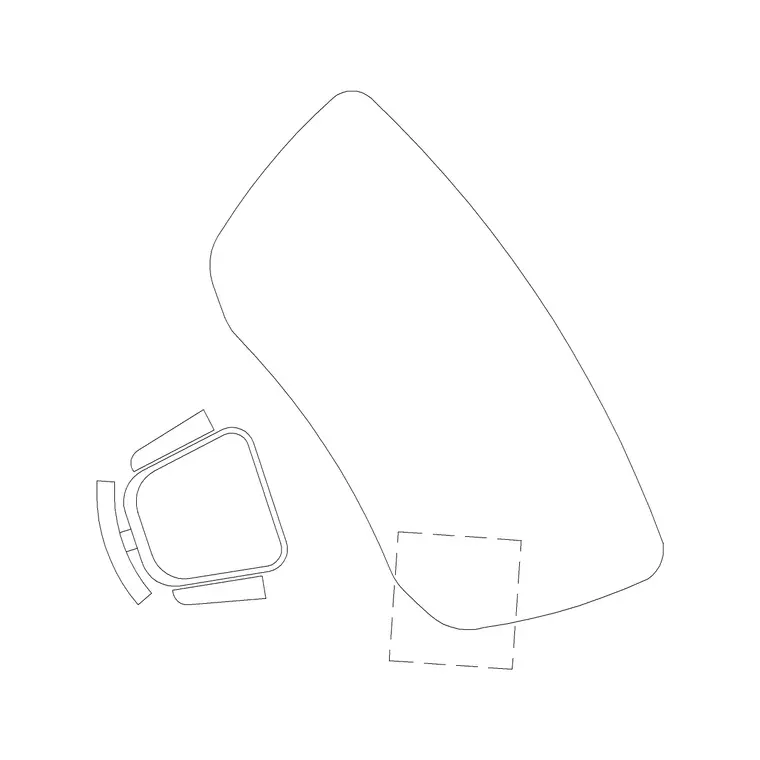
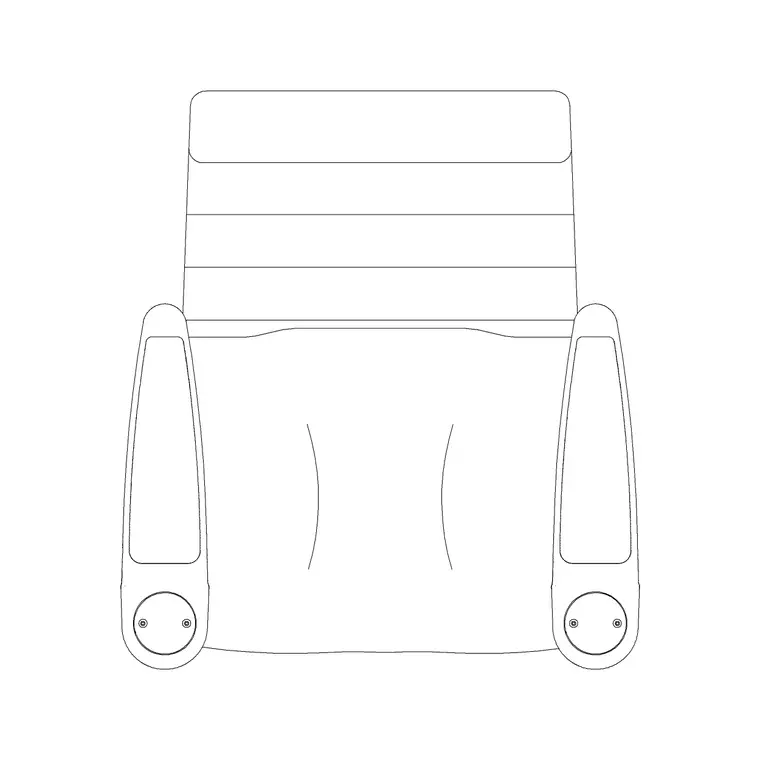
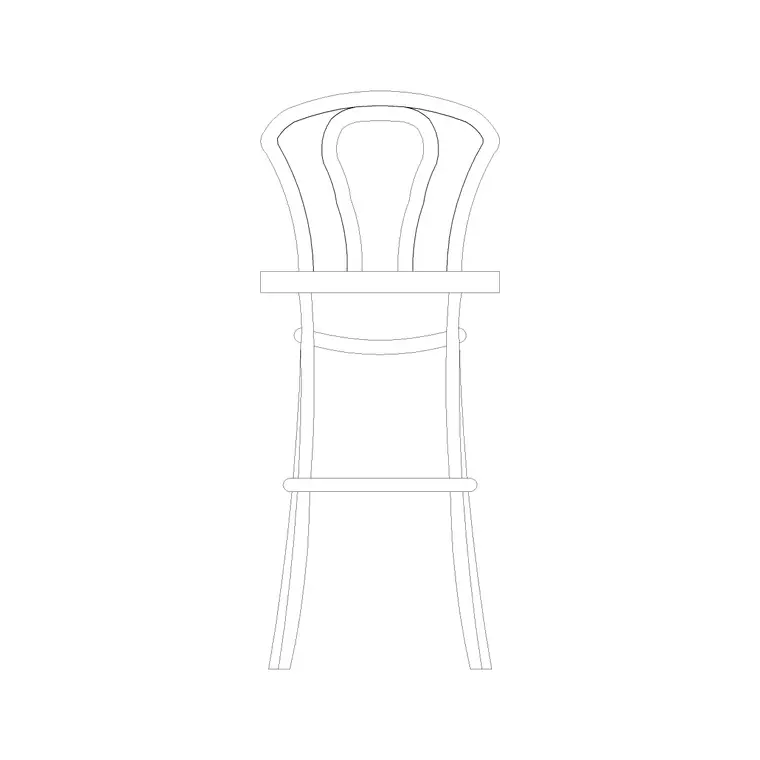
- A compact reception-table block is the till and product counter at the door. - A run of accent chairs, or a sofa, makes the all-important waiting zone; bar stools suit a higher waiting ledge or a shave-bar. - Round-back stools serve as the barber's own seat and at the wash basins. - Wall lamps at each mirror and a feature pendant set the warm, characterful lighting a barbershop trades on. - Art frames, a portrait frame and a classic wall or cuckoo clock dress the walls with the vintage character customers come for. - A potted plant or two softens the hard materials without feminising the space.
Keep chairs, waiting seating, lighting and décor on separate layers so the fit-out reads cleanly for each trade.
Dimensions and clearances
Plan around these ranges. Barber chair centres along the mirror wall: about 1500–1800 mm apart, with at least 900 mm of clear working space behind each chair (the barber circles less than a hairdresser but still needs to step around). A barber chair occupies roughly a 600–700 mm footprint and reclines longer for shaves, so allow extra depth in front.
Wash basins: 900–1200 mm of clear floor in front. The waiting bench wants 700–900 mm of clear floor in front so people pass without disturbing a cut in progress. Reception/till counter: 600–750 mm deep with 900 mm behind. Keep a 1500 mm turning circle at the entrance. Because the chairs and bench are full-size blocks, the working clearances are visible as you lay them out.
Building the barbershop plan
Draw the shell, the shopfront and the plumbing wall first — the wash zone anchors to it. Place the compact till counter by the door. Set the barber chairs out along the mirror wall at the centre-to-centre spacing above, confirming the working space behind each. Put the waiting bench or chairs against the opposite wall, in view of the chairs, and give it room to feel sociable.
Tuck the wash basins against the plumbing wall with their clearance. Add the barber's stools, then the lighting — wall lamps at each mirror, a feature pendant over the room — on the lighting layer. Dress the walls with framed art and a clock, and add a plant. Insert every block at scale 1 in a millimetre drawing on its layer. Check that a waiting customer has a clear view of the chairs, which is half the barbershop experience.
Common barbershop mistakes
The classic mistake is treating the waiting area as leftover space — a couple of chairs jammed by the door — when the social wait is core to the barbershop's appeal and revenue. Another is squeezing the chairs too close so barbers knock elbows and clients feel hemmed in. Putting the wash basins away from the plumbing wall, as in any wet trade, drives up cost.
In the drawing, the recurring errors are flat single-source lighting (a barbershop wants warm, layered, characterful light at each mirror) and mixing the décor and chairs onto one layer so you cannot pull a clean fit-out or lighting plan. Keep the chairs and seating as block references so adjusting the chair count is a quick re-array.
Free download
Browse the full library — DWG & DXF, no signup.
Questions
Frequently asked
How far apart should barber chairs be?+
Set them about 1500–1800 mm centre-to-centre along the mirror wall, with at least 900 mm of clear working space behind each so the barber can step around the client. Allow extra depth in front for the chair to recline during shaves.
How is a barbershop layout different from a salon?+
A barbershop favours volume and walk-in trade, with a tighter row of robust chairs, a smaller wash zone, and a deliberately sociable waiting area that is part of the experience. Character — lighting, décor, the bench — matters as much as raw efficiency.
Which CAD blocks do I need for a barbershop?+
A compact till counter, waiting seating (chairs, a sofa or bar stools at a ledge), barber stools, wall and feature lighting, plus framed art, a classic clock and a plant for character. The barber chairs and backwash units are usually dedicated symbols.
Are these barbershop CAD blocks free for commercial use?+
Yes. Every block downloads free in DWG and DXF with no signup, watermark or attribution and is cleared for commercial barbershop fit-out projects.
Related downloads
Blocks for this guide

Related categories
Related guides
Room guide
Free Living Room CAD Blocks — DWG Download
Free living room CAD blocks in DWG & DXF — sofa sets, coffee tables, lamps, plants and art drawn to scale for AutoCAD plans. No signup, commercial-use OK.
Room guide
Free Reading Nook CAD Blocks — DWG Download
Free reading nook CAD blocks in DWG & DXF — armchairs, side tables, reading lamps, plants and art for cosy reading corner plans in AutoCAD. No signup.
Room guide
Free Open-Plan Living Area CAD Blocks — DWG
Free open-plan living area CAD blocks in DWG & DXF — sofa sets, tables, plants and zoning lighting to define a great room in AutoCAD. No signup, free.