Room guide · backyard garden cad blocks
Free backyard garden CAD blocks for AutoCAD
By Sumana Kumar · Published 13 Jun 2026 · Updated 28 Jun 2026
The backyard is the private outdoor room behind a house — a real piece of ground you can dig into, big enough to hold several zones at once: lawn, planting beds, a patio or seating area, maybe a path to a shed at the bottom. Because it is ground-level and enclosed by fencing, it is the most flexible outdoor space most homes have, and the easiest to overstuff. These free backyard garden CAD blocks give you the trees, beds, seating, paving and fencing to plan one with discipline in AutoCAD, all to true scale in DWG.
A backyard rewards a clear structure. The strongest rear gardens divide the plot into a near zone close to the house (paved, for sitting and dining), a middle (lawn and beds) and a far zone (a focal point, a tree, a shed), tied together by a path and framed by boundary planting against the fences. Drawing that structure first stops the garden from becoming a flat lawn with things dotted on it.
Everything is free for personal and commercial use, no signup, no watermark, and opens in AutoCAD 2004 or later. Start from the boundary and the house wall, then build the zones outward from the back door.
What a backyard has to do
A backyard, or rear garden, is the private ground-level space behind a house, used for relaxing, dining, play, growing and storage. It is the household's main outdoor room, and because it is enclosed by boundary fencing and overlooked by the house, it is read both from the back windows and from within. Most backyards juggle several uses at once, which is why structure matters more than any single feature.
The ground itself is the opportunity: real soil means real beds and lawn, full-depth tree roots and built paving on hardcore. The boundary fences define the limits and the privacy, and the back door fixes the main entry and the busiest part of the garden. A plan that starts from those three reads as a designed garden rather than a furnished field.
Zoning from the back door outward
The reliable structure is a gradient of use from house to boundary. Nearest the back door, a paved terrace or patio carries the table, chairs and the most-used outdoor life — it should be generous, because this is where the garden is actually lived in. Beyond it, lawn and beds form the green middle. At the far end, a focal point — a specimen tree, an arch, a bench, a shed — gives the eye somewhere to land and a reason to walk down.
Tie the zones with a path, straight or curving, that reaches the far point. Keep the lawn one clean shape rather than a leftover, and push planting beds to the boundaries where they screen the fences and give the garden depth. This near–middle–far reading is what makes even a small backyard feel composed.
Trees, beds and boundary planting
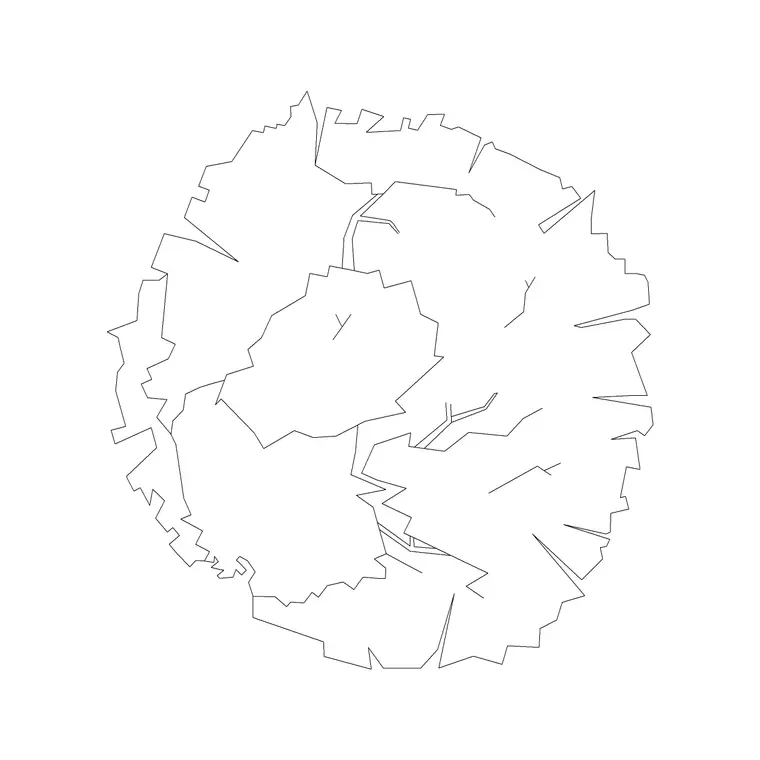
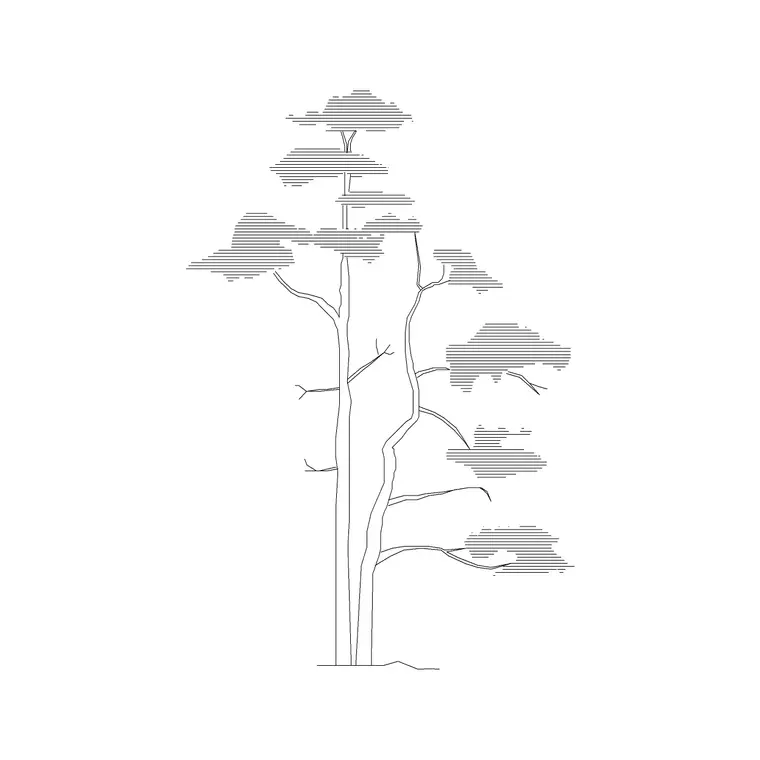
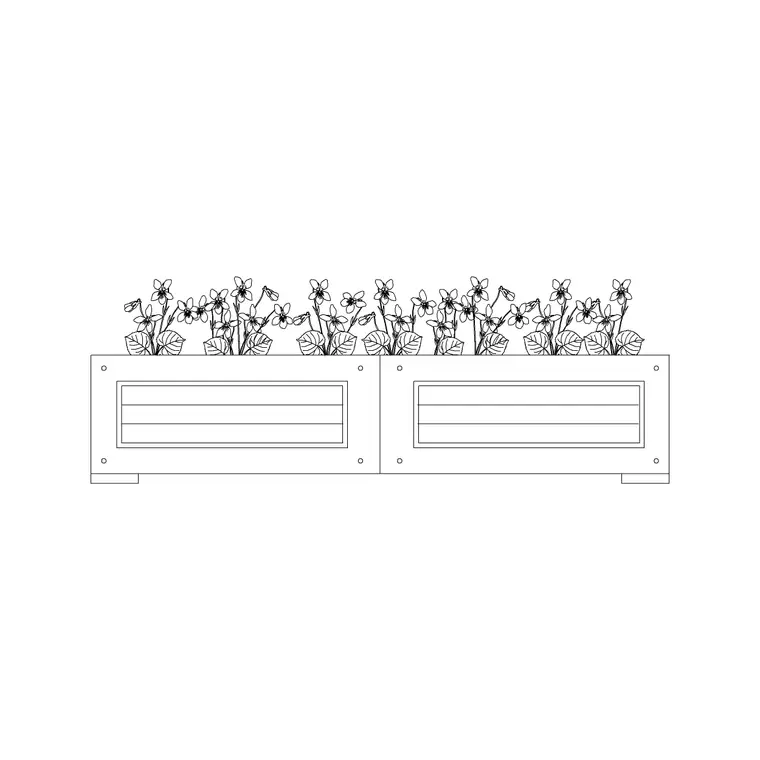
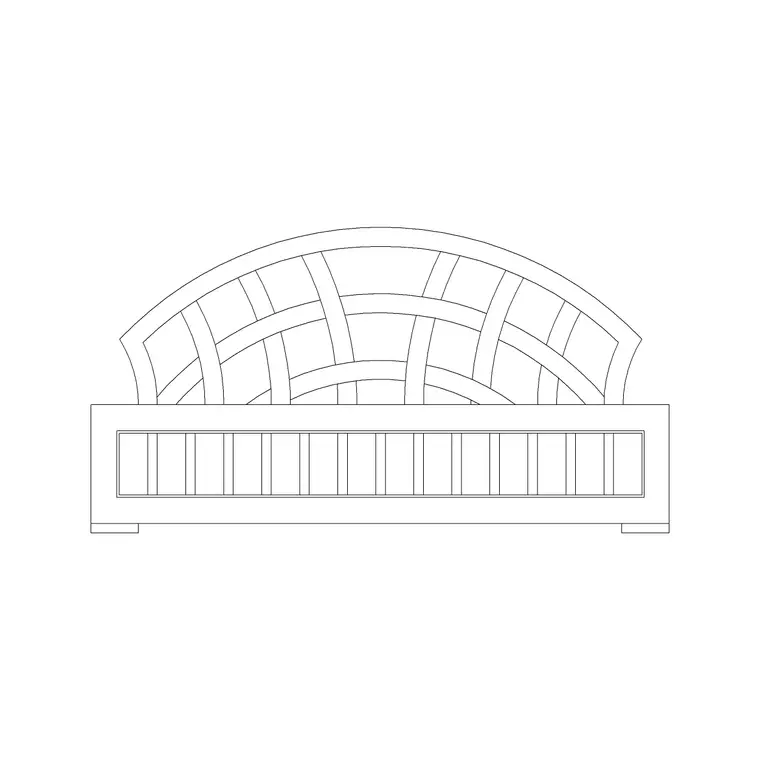
Planting is what turns a fenced rectangle into a garden. Use the pine plan and elevation blocks for specimen and boundary trees, the rectangular and standard flower-bed blocks for borders along the fences, and potted plants on the patio. Draw trees at their plan canopy so you can test shade and spacing — a tree's canopy, not its trunk, is what governs where it can go.
Run deep borders along the boundaries to soften the fences and frame the lawn; thin strips read as edging, not planting. Place at least one tree where it will throw afternoon shade over the seating area, and keep large trees clear of the house and boundary by a sensible margin. Boundary beds plus a few well-placed trees do most of the work of making a backyard feel mature.
Seating, paving and the fence line
The seating area is the backyard's true centre of gravity. Lay the patio in a paver pattern sized to hold the furniture you actually want — a dining set with a round table, a three-seat sofa or a swing seat — plus a clear margin to pull chairs out and walk around. A table for six needs noticeably more paved area than a bistro set; draw the furniture in to size the paving honestly.
The boundary is set by the fence. Choose the fence block that fits — wooden for a typical garden, iron or metal-with-wall for something more formal or secure — and run it along the plot line as the frame. Add a gate where the garden connects to a side return or a back lane. Keep the fence as a clean boundary and let the boundary beds soften it from inside.
Assembling the backyard plan
Build the drawing from the outside in, then back to front. First, draw the boundary with the fence and any gate, and the house wall with the back door. Second, set the patio against the house at a real, generous size with the furniture placed in it. Third, shape the lawn as one clean form. Fourth, run boundary beds along the fences and place trees by their canopy. Fifth, draw the path to a far-end focal point, then add potted plants and details on the patio.
Keep boundary, paving, lawn, planting, trees and furniture on separate layers, and insert trees, beds and furniture as named blocks. A north arrow tells the reader where the sun and shade fall, which is exactly what decides where the seating and the shade tree belong.
Backyard garden mistakes
- An undersized patio: cramming a six-seat table onto a token slab leaves no room to move. Size the paving to the furniture plus a margin. - A leftover lawn: lawn shaped by whatever is left over looks accidental. Make it one deliberate form. - Edging-thin beds: narrow strips against the fence read as trim. Use deep boundary borders to give real depth. - Trees by trunk, not canopy: drawing a tree as a dot hides the spread that actually conflicts with the house and fence. Draw the canopy. - No far-end focus: a garden with nothing to walk to has no depth. Give the eye a destination at the boundary.
Free download
Browse the full library — DWG & DXF, no signup.
Questions
Frequently asked
How should I structure a backyard garden plan?+
Use a near–middle–far gradient: a generous paved patio by the back door, lawn and beds in the middle, and a focal point — tree, arch or bench — at the far boundary, tied together by a path. This structure makes even a small backyard feel composed.
Should I draw trees by trunk or canopy?+
By canopy. The plan canopy is what governs shade, spacing and clashes with the house and fence, so use the pine plan block at its real spread. Place at least one tree to shade the seating area in the afternoon.
How big should the patio be?+
Size it to the furniture you actually want plus a clear margin to pull chairs out and walk around. A six-seat dining set needs far more paved area than a bistro set, so draw the furniture in before you fix the paving extent.
Which fence block should I use for a backyard?+
A wooden fence suits most gardens; choose the iron fence or the metal-fence-with-wall for a more formal or secure boundary. Run it along the plot line as the frame and soften it from inside with deep boundary beds.
Are the backyard garden blocks free for commercial use?+
Yes. Every block downloads as DWG free for personal and commercial work, no signup or watermark, and opens in AutoCAD 2004 or later and most DWG-compatible CAD software.
Related downloads
Blocks for this guide
Related categories
Related guides
Room guide
Free Balcony CAD Blocks — DWG Download
Free balcony CAD blocks in DWG — railings, compact seating, planters and pavers drawn to scale for AutoCAD apartment plans. No signup, commercial use OK.
Room guide
Terrace Garden CAD Blocks — Free DWG
Free terrace garden CAD blocks in DWG — raised planters, potted greenery, seating and paving to design a green roof terrace in AutoCAD. No signup.
Room guide
Rooftop Deck CAD Blocks — Free DWG
Free rooftop deck CAD blocks in DWG — lounge seating, railings, planters and decking pavers for roof terrace plans in AutoCAD. No signup, commercial OK.