Curated pack · 20 free toilet commode cad blocks dwg
Twenty free toilet commode CAD blocks for AutoCAD in 2026
By Sumana Kumar · Published 3 Aug 2024 · Updated 18 Apr 2026
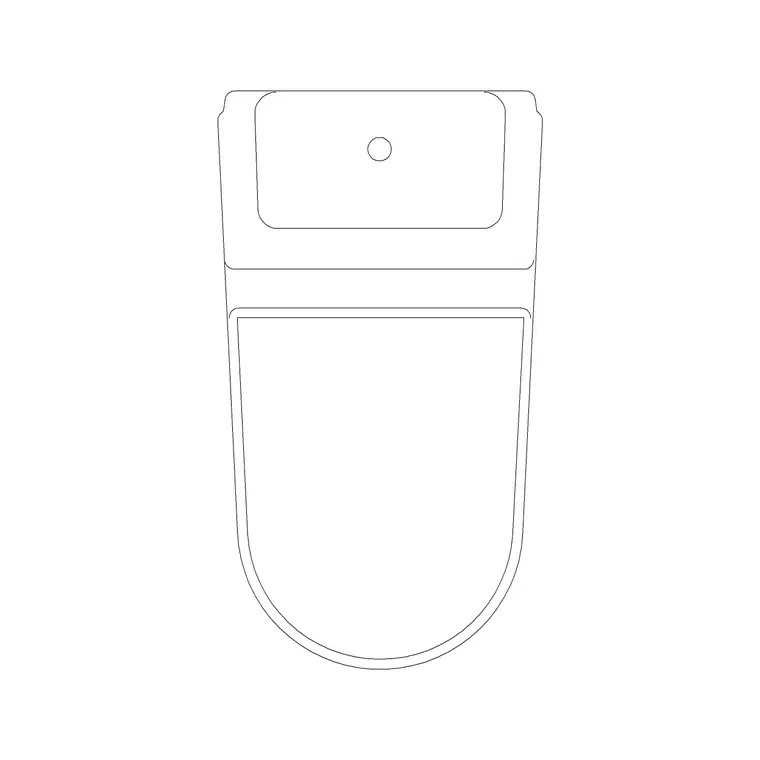
The toilet commode is the fixture that anchors a bathroom plan, because building regulations and basic comfort both hinge on the clear space around it. This pack gathers 20 free toilet commode CAD blocks in DWG — close-coupled WCs, wall-hung pans, back-to-wall units and accessible-height commodes — drawn to scale for AutoCAD 2004 and later. Every file is free for personal and commercial use, with no signup and no watermark.
Twenty styles cover the fixtures you actually place: the standard close-coupled toilet for homes, the wall-hung pan on a concealed cistern frame for contemporary and commercial fit-outs, the back-to-wall unit that hides the cistern in a duct, and the higher commode for accessible facilities. You get plan blocks for the bathroom layout and elevation blocks for interior elevations and presentation drawings.
A toilet is not just a footprint — it needs activity space in front and to the side, and the cistern type changes how far the pan stands off the wall. Drawing the commode at its true projection and showing the clear zone around it lets you size a bathroom correctly and check accessible clearances on the plan, long before any tiling is set out.
The 20 toilet commode types in the pack
The set spans the common WC configurations. Close-coupled toilets where the cistern sits directly on the pan — the residential default. Wall-hung pans mounted on a concealed frame, with the cistern hidden in the wall, for a clean floor and easier cleaning. Back-to-wall units where the pan meets a duct or furniture run that conceals the cistern. And accessible commodes drawn at the higher seat height used in accessible WCs. There are also bidet-adjacent and combined blocks for fuller bathroom sets.
Keeping the range in one pack lets a project stay consistent across cores or vary by room — close-coupled in homes, wall-hung in a commercial washroom. Each block is drawn so the pan outline, the cistern and the seat read clearly and can be handled on sensible layers.
Toilet dimensions and clearances to design around
Use these as planning ranges and confirm against the fixture and your local code. A WC pan commonly projects somewhere around 650-700 mm from the wall and sits roughly 350-400 mm wide; a wall-hung pan can project a little less. Seat height is typically near 400-430 mm for a standard toilet and higher for an accessible commode. Always verify activity space and accessible clearances against the governing building regulations rather than any single figure.
The clearances are what govern the room. You need clear space in front of the pan to use it and, in an accessible WC, a defined clear zone to one side for transfer. Drawing the commode at true projection with that clear zone shown turns the bathroom layout into a set of visual checks instead of a tape-measure exercise on site.
Plan block and elevation block
The plan block is the one that drives the bathroom layout: it shows the pan and cistern footprint against the wall and the projection into the room. This is what you place first, because the toilet position fixes the soil connection, then build the basin, shower and bath around it. Keep it on a sanitaryware layer so the bathroom plan and the plumbing coordination stay legible.
The elevation block shows the commode face-on or in side view, with the pan, cistern and seat at their true heights. Use it in interior elevations and sections, where tiling set-out, the cistern type and the relationship to the basin and any grab rails matter, and in presentation drawings. Many blocks ship both views in a single DWG.
Placing the toilet in a bathroom layout
Place the WC first, against the wall that carries the soil stack, since moving a toilet later means moving drainage. Push the pan to the wall, then mark the clear activity space in front so nothing — a door swing, the basin, a towel rail — encroaches on it. In an accessible WC, set out the transfer space to the correct side and check the grab-rail zones.
With the toilet fixed, work the rest of the room around it. Because each commode is a block reference, you can try a close-coupled unit, swap it for a wall-hung pan if the floor needs to read clear, and shift it along the wall to balance the layout, all without redrawing the bathroom. The clear-zone geometry moves with the block so the checks stay live.
Layers, schedules and reuse
Put toilets on a sanitaryware layer, distinct from the architecture and from furniture, so the bathroom plan can be produced cleanly and the fixtures can be frozen for a base plan or a tiling set-out. Drawing the pan, cistern and clear zone with clear lineweights keeps an accessible-WC drawing legible where the clearances have to be obvious.
Tag each WC with a type code and a data extraction gives you a fixture count for the sanitaryware schedule. When a WC compartment or an accessible cubicle is finalised, WBLOCK the toilet with its walls, basin and grab rails as a reusable unit so the next core starts part-drawn. Because the fixtures are references, swapping close-coupled for wall-hung across a scheme is a redefine, not a redraw.
Where toilet commode blocks are used
Toilet commode blocks belong in any drawing with sanitary facilities: house and apartment bathrooms and en-suites, hotel guest bathrooms, office and retail washrooms, accessible WCs, schools, clinics and public toilets. They pair with the wash basin, shower, bath and bidet blocks in the bathroom category to build a complete sanitaryware layer, and with door and partition blocks to test the room as a whole.
Because the set is free and licence-clear, it suits student bathroom schemes, fit-out concepts and presentation plans where the WC clearances have to be shown to read as compliant. Twenty styles give enough range to fit out homes, hotels and commercial washrooms across a project without the same toilet appearing everywhere.
Free download
Browse the full library — DWG & DXF, no signup.
Questions
Frequently asked
Are these 20 toilet commode CAD blocks free for commercial projects?+
Yes. All twenty download free in DWG with no signup, no watermark and no attribution requirement, and they are cleared for commercial use.
How far does a toilet commode project from the wall?+
A WC pan commonly projects somewhere around 650-700 mm, with wall-hung pans sometimes a little less. Confirm against the fixture you specify, and always check activity space and accessible clearances against your local building regulations.
What is the difference between close-coupled and wall-hung blocks?+
A close-coupled toilet has the cistern sitting on the pan, the residential default. A wall-hung pan mounts on a concealed frame with the cistern in the wall, giving a clear floor. The pack includes both, plus back-to-wall units.
Do the files include plan and elevation views?+
Many do. The plan block shows the footprint and clear zone; the elevation block shows the pan, cistern and seat at true heights for tiling set-out. Where both ship, they are in the same DWG.
Related downloads
Blocks for this guide
Popular blocks to download
Related categories
Related guides
Curated pack
Free Kitchen CAD Block Pack — DWG & DXF
A free kitchen CAD block pack in DWG and DXF — cookers, hobs, ovens, sinks, hoods and cabinets drawn in plan and elevation for AutoCAD. No signup, commercial-use OK.
Curated pack
Free Plumbing Fixtures CAD Block Pack — DWG
Free plumbing fixtures CAD block pack in DWG and DXF — WCs, basins, sinks, valves, gullies and pipework symbols for AutoCAD layouts. No signup.
Curated pack
Free Accessibility / Part M CAD Block Pack — DWG
Free accessibility / Part M CAD block pack in DWG — wheelchair symbols, turning circles, accessible WCs and clearances for AutoCAD inclusive-design plans.