Curated pack · free potted plant cad blocks
20 free potted plant CAD blocks for AutoCAD in 2026
By Saumyajit Maity · Published 17 May 2025 · Updated 12 Jun 2026
Potted plants sit at the boundary between landscape and interior design, which is exactly why they turn up in so many drawings: on terraces and balconies, in lobbies and atriums, along shopfronts and around courtyards. This round-up gathers 20 free potted plant CAD blocks in DWG and DXF — small pots, large planters, container trees and decorative urns — in both plan and elevation, drawn to scale and free for commercial use with no signup.
What makes a potted plant block different from a tree or shrub block is the container. The pot or planter has a real, fixed footprint that matters for the layout — it takes floor space, it needs clearance, and on a balcony or terrace its size is often constrained by structure and access. So these blocks draw the container and the planting together, with the pot footprint as the dimension that actually governs the layout.
Below we cover what the 20 blocks include, how the container drives the plan layout, where potted plants do their best work, and how to handle them on the right layer when a drawing straddles the line between architecture and landscape.
What the 20 potted plant blocks cover
The set spans the range of containers and the planting they hold. Small pots — desk and table-top plants, windowsill pots — for interior dressing. Floor-standing planters in round, square and rectangular profiles for lobbies, corridors and terraces. Large container trees and feature palms in oversized planters for atriums and entrances. Long trough planters for balcony edges, shopfronts and roof terraces. And decorative urns and bowls for formal courtyards and entrances.
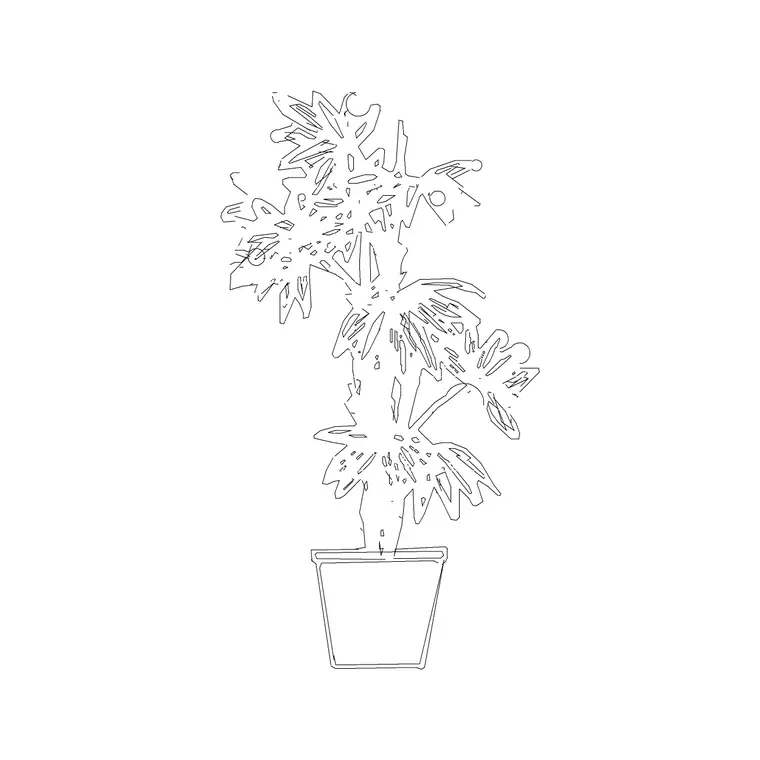
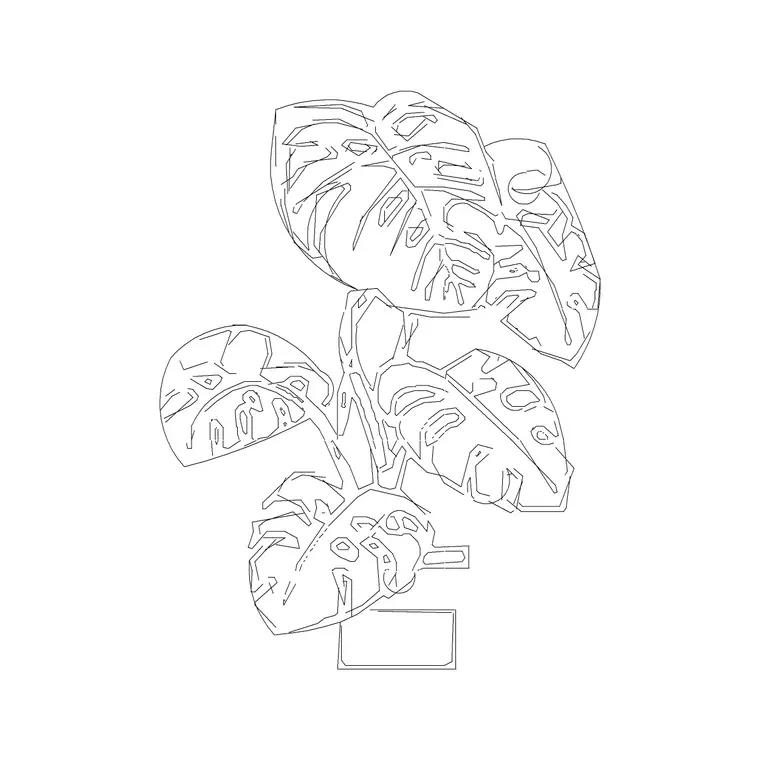
In plan, each block shows the container footprint with the planting indicated inside it — a small canopy symbol within the pot outline. In elevation, the pot profile and the plant above it are drawn face-on at a believable height, which is what you need for interior elevations and shopfront drawings.
The container drives the plan, not the plant
With trees you care about canopy spread; with potted plants the container footprint is the dimension that matters for the layout. A floor planter occupies real floor area, needs clearance around it, and on a balcony or terrace its size and weight are constrained by the structure. So when you place these blocks, you are space-planning the pots as much as the plants.
Reference footprints to design around: small floor pots 300–450 mm diameter, medium planters 450–700 mm, large feature planters 800–1200 mm or more, and trough planters typically 200–400 mm deep and as long as the run needs. Drop the scaled block in and you can immediately check it doesn't block a doorway, narrow a corridor below its required width, or crowd a seating area.
Plan view for layouts, elevation for presentation
For the floor layout you work in plan: pots and planters positioned against walls, along balcony edges and around seating, with their footprints and clearances checked. The plan blocks are what you array along a shopfront or repeat down a corridor.
For interior elevations, shopfront drawings and client presentations you switch to elevation, where the planter profile and the plant above are drawn face-on at the right height — a trough on a balcony rail, a tall planter flanking an entrance, a feature palm in a lobby. Several blocks in this set ship both views in one DWG so a single download covers the plan position and the elevation appearance.
Where potted plants do their work
Potted plant blocks span an unusually wide range of drawings. Interior designers use them to dress lobbies, reception areas, restaurants, offices and showrooms. Landscape and roof-terrace designers use them where planting has to sit in containers because there's no ground to plant into — podium decks, balconies, roof gardens. Architects use them to soften forecourts, entrances and shopfronts. And they appear constantly on presentation and marketing plans because a few well-placed planters make a space read as finished and inhabited.
Pair them with the indoor plant set for interior greenery, with furniture blocks for seating arrangements, and with paving for terrace and forecourt surfaces. On a roof-terrace plan especially, the planters often define the whole layout — they zone the space, screen the edges and carry the greenery — so getting their footprints right is the heart of the drawing.
Layering pots between architecture and landscape
Potted plants straddle disciplines, so where you put them on the layer structure depends on the drawing. On an interior layout, treat them like furniture — put them on a furniture or FF&E layer so they freeze and thaw with the rest of the loose items. On a landscape or roof-terrace plan, treat them as planting and keep them with the landscape information so they read alongside any beds and trees.
Whatever you choose, keeping the pots on a clearly named layer lets you produce a clean architectural plan (pots frozen) and a fully dressed presentation plan (pots thawed) from one drawing. Because the blocks are licence-clear, you can build a small reusable planter palette for a project and carry it from the concept plan through to the FF&E schedule without redrawing a single pot.
Free download
Browse the full library — DWG & DXF, no signup.
Questions
Frequently asked
What's included in the 20 potted plant blocks?+
Small pots, floor-standing planters in round, square and rectangular profiles, large container trees and feature palms, long trough planters and decorative urns — drawn in plan and, in many cases, elevation.
Should I scale potted plants by the pot or the plant?+
By the container footprint. The pot or planter takes real floor space and needs clearance, so it governs the layout — from roughly 300 mm for small floor pots up to 1200 mm or more for large feature planters.
Do potted plant blocks go on the furniture layer or the planting layer?+
It depends on the drawing. On an interior layout treat them like furniture; on a landscape or roof-terrace plan treat them as planting. Either way, keep them on a clearly named layer so you can freeze and thaw them as a group.
Are the potted plant CAD blocks free for commercial use?+
Yes. Every block downloads free in DWG and DXF with no signup, no watermark and no attribution requirement, and all are cleared for commercial project use.
Related downloads
Blocks for this guide
Popular blocks to download
Related categories
Related guides
Curated pack
Free Landscape & Tree DWG Pack — Plan & Elevation
A free landscape and tree DWG pack — trees, palms, shrubs and potted plants in plan and elevation for AutoCAD site plans. DWG and DXF, no signup, commercial-use OK.
Curated pack
Free Landscape CAD Block Pack — DWG & DXF
A free landscape CAD block pack in DWG and DXF — trees, shrubs, fences, paving, lighting and figures for AutoCAD landscape plans. No signup, commercial-use OK.
Curated pack
Free Garden CAD Block Pack — DWG Download
A free garden CAD block pack in DWG and DXF — trees, shrubs, fences, a swing, a BBQ and paving for residential garden plans. No signup, commercial OK.