Curated pack · free wash basin cad blocks
15 free wash basin CAD blocks for AutoCAD in 2026
By Saumyajit Maity · Published 29 May 2026 · Updated 14 Jun 2026
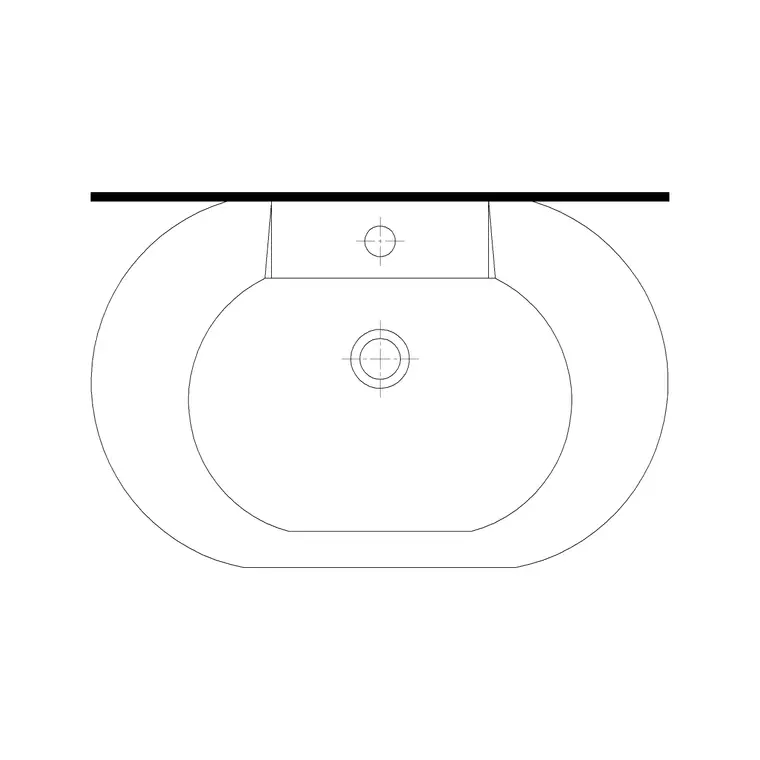
A wash basin sits in almost every bathroom, cloakroom, ensuite and washroom you ever draw, and it is the fixture clients touch most, so getting its position and reach right matters. This collection gathers 15 free wash basin CAD blocks in DWG and DXF, covering the whole family: pedestal and semi-pedestal basins, wall-hung basins, countertop (vessel) bowls that sit on a vanity top, inset and under-mount basins set into a vanity unit, compact cloakroom basins, and corner basins for tight WC compartments. Everything downloads free for personal and commercial work, with no signup and no watermark.
Basins are deceptively fiddly to lay out because the bowl, the tap and the user's elbows all need room the rough footprint doesn't show. Drawing from scaled blocks means the projection from the wall, the rim height and the side clearance are correct from the start, so the layout you hand on is the layout that gets built.
Use the set to lay out single basins in homes, paired his-and-hers vanities, and long runs of basins in public and commercial washrooms. Plan blocks handle the layout; the elevation blocks carry the rim heights you need for tiling, mirror and splashback drawings.
What's in the 15-basin collection
The pack is organised by mounting type, because that is what really changes a basin's footprint and how you draw it. Pedestal basins come with the pedestal that hides the trap and bracketing; semi-pedestals are included for the wall-hung-but-shrouded look. Wall-hung basins are drawn as the bare bowl on its bracket line for a clean, floating plan. Countertop vessel bowls sit proud on a vanity top, so they ship with a representative counter outline you can stretch. Inset and under-mount basins are drawn within a vanity-unit footprint, and the set finishes with a small cloakroom basin and a corner basin for tight compartments.
Every block is drawn full size with the bowl, the tap hole and a centreline on sensible layers, so you can dimension the setting-out, freeze the counter, or recolour the porcelain without disturbing the rest of the drawing.
Standard basin dimensions to design around
Keep these reference figures close. A full-size basin is roughly 500–600 mm wide and projects 400–500 mm from the wall; a compact cloakroom basin can be as little as 350–450 mm wide and 250–300 mm deep. The rim is normally set 800–850 mm above the finished floor (lower for a children's washroom), which is the number the elevation blocks carry. A countertop vessel bowl adds its own height on top of the counter, so the effective tap and rim line climbs — worth checking against the mirror and splashback.
For comfortable use, allow around 600 mm of clear space in front of the basin, and where basins are repeated along a wall keep at least 700–800 mm centre-to-centre so two people can wash without clashing elbows. Drop the scaled block in and these checks become a glance instead of a calculation.
Plan view for layouts, elevation for mirrors and tiling
For the bathroom or washroom layout you work in plan: the bowl seen from above, set against the wall, with the front clearance drawn in and the basin mirrored or arrayed for paired and multi-basin runs. The plan blocks are what you repeat down a vanity to lay out a row of basins in an office or hotel washroom.
For elevations — tiling setting-out, mirror and splashback positions, and client presentations — you switch to the elevation blocks, which carry the rim height and the bowl profile face-on. This is where pedestal, wall-hung and countertop visibly differ: the pedestal reads to the floor, the wall-hung floats with the trap exposed, and the vessel bowl sits above the counter line. Pick the elevation that matches the basin you specified so the tiling and mirror heights come out right.
Coordinating the basin with the WC and the trap
Place the basin after the WC, because the WC position is fixed by the soil stack while the basin's small-bore waste is far more flexible. Set the basin within easy reach of the WC but clear of the door swing, and keep its waste running back to the same drainage zone with a sensible fall. On a wall-hung or countertop basin the trap is visible or semi-visible, so leave room for it in the duct or vanity — the plan blocks account for the bowl, but the bottle trap and isolating valve need their own service space.
With the basin fixed, snap a centreline and dimension it off the finished wall and corner; that setting-out dimension is what positions the tap, the mirror and the bracket. Keeping every basin on a dedicated sanitary layer lets you produce a clean architectural plan and a dimensioned setting-out plan from the same blocks.
Per-item notes: pedestal, wall-hung, countertop and vanity
The pedestal blocks are the forgiving default for domestic work — the pedestal hides the trap and bracketing, so you can drop one against a finished wall without a service void, which suits refurbishments. The wall-hung blocks give the cleanest contemporary plan and the easiest floor cleaning, but they need a sturdy fixing and a tidy exposed trap, so reach for them where the wall construction can take the bracket.
The countertop vessel blocks are the statement option: the bowl sits on a vanity top you stretch to length, and the tap is usually a tall mono mixer to clear the raised rim — check that height against the mirror. The inset and under-mount basins live inside a vanity unit, so they bring storage with them and are the workhorse for hotel and family bathrooms; array the vanity-unit footprint for a multi-basin run. The corner basin earns its place only in genuinely tight WC compartments where a wall basin won't fit the activity space.
Who uses these wash basin blocks
Architects and interior designers use the basin set to fit out residential bathrooms, hotel ensuites and restaurant washrooms quickly, and to fix the basin and mirror heights across a scheme. Services and public-health engineers use the plan blocks to lay out and coordinate basin runs in offices, schools and leisure buildings, where the repeat-down-the-wall workflow is exactly what scaled blocks are good at. Students use them on studio projects where licence-clear, correctly-sized sanitaryware keeps a portfolio drawing honest.
Pair the basin pack with the toilet, bathtub and shower blocks in the bathroom category for a complete sanitary suite, and with the sinks-and-faucets category when the basin tap and waste detail crosses into the kitchen and utility wet zones.
Free download
Browse the full library — DWG & DXF, no signup.
Questions
Frequently asked
What basin types are in the 15-block pack?+
Pedestal and semi-pedestal basins, wall-hung basins, countertop vessel bowls, inset and under-mount vanity basins, a compact cloakroom basin and a corner basin — drawn in plan, with elevation views on most for rim and tiling heights.
What height should a wash basin rim be set at?+
A standard basin rim sits 800–850 mm above the finished floor, lower for children's facilities. A countertop vessel bowl adds its own height above the counter, so check the effective rim and tap line against the mirror and splashback.
How much space do I leave between basins in a row?+
Allow roughly 700–800 mm centre-to-centre so two people can wash without clashing, and around 600 mm of clear space in front of each basin. The scaled plan blocks let you draw and check these gaps directly.
Are the wash basin blocks free to use commercially?+
Yes. Every basin downloads free in DWG and, where available, DXF, with no signup, no watermark and no attribution requirement, and they are cleared for commercial project use.
Related downloads
Blocks for this guide
Popular blocks to download
Related categories
Related guides
Curated pack
Free Plumbing Fixtures CAD Block Pack — DWG
Free plumbing fixtures CAD block pack in DWG and DXF — WCs, basins, sinks, valves, gullies and pipework symbols for AutoCAD layouts. No signup.
Block landing
Free Sanitary Fixtures CAD Blocks — DWG Download
Download free sanitary fixtures CAD blocks in DWG and DXF — WCs, wash basins, urinals and sinks in plan and section for AutoCAD sanitary plans.
How-to guide
How to Insert a Wash Basin Block in AutoCAD
How to insert a wash basin block in AutoCAD — download the basin DWG, set units, run INSERT, place it near the WC and set the rim height in elevation.