Curated pack · free indoor plant cad blocks
15 free indoor plant CAD blocks for AutoCAD in 2026
By Sumana Kumar · Published 1 Dec 2024 · Updated 23 Jun 2026
Interior greenery is one of the small details that makes a furnished plan read as a real, lived-in space rather than an empty shell. A floor plant in a corner, a row of desk plants along a workstation bench, a tall specimen by a reception desk — these are the touches that finish an interior drawing. This round-up gathers 15 free indoor plant CAD blocks in DWG and DXF — floor plants, desk plants, hanging plants and interior specimen trees — in plan and elevation, drawn to scale and free for commercial use, no signup.
Indoor plants are smaller and quieter than their outdoor cousins, so the symbols are drawn lighter and finer. On a typical office or residential interior they sit on the furniture and FF&E layer alongside the chairs and tables, dressing the space without competing with the architecture.
The sections below cover what the 15 blocks include, how interior plants differ from outdoor planting in both drawing and intent, where they belong in an interior drawing set, and how to use them sparingly enough to look designed rather than scattered.
What the 15 indoor plant blocks include
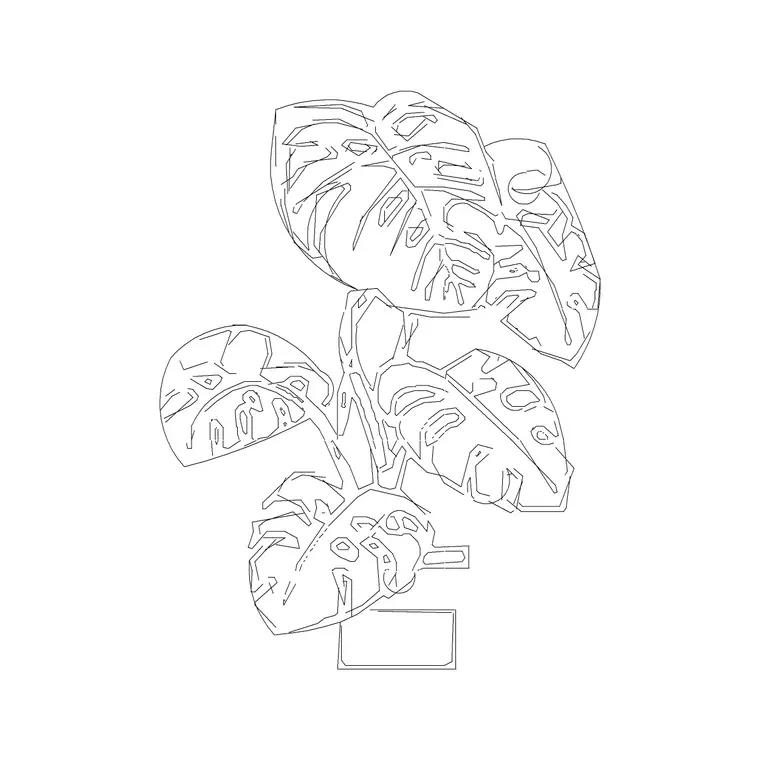
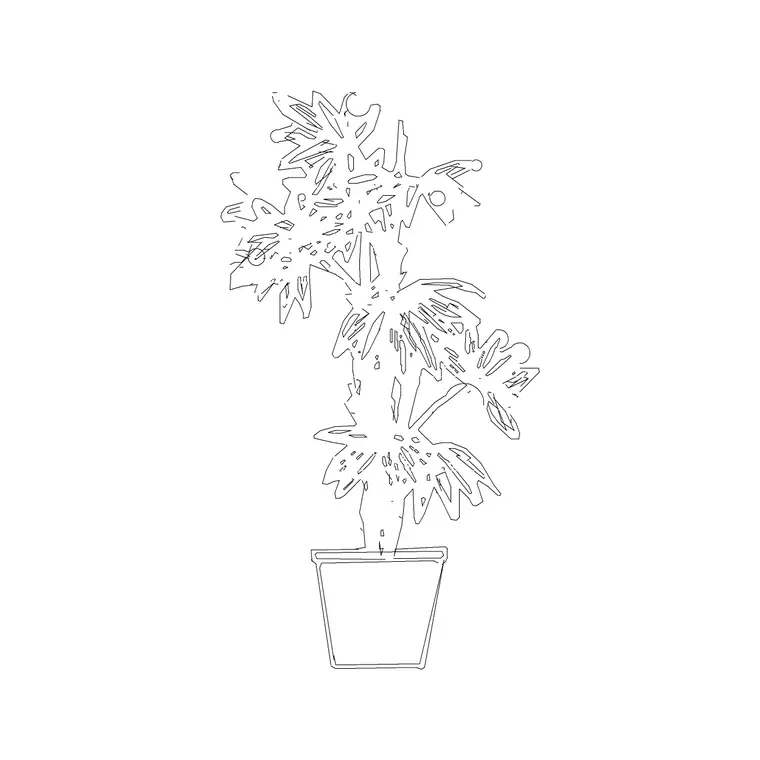
The set covers the interior greenery you actually place. Floor plants in pots — the mid-size plants that stand in a corner or beside furniture. Desk and table plants — small pots for workstations, reception counters and side tables. Tall interior specimen plants and indoor trees for atriums, lobbies and double-height spaces. Hanging and trailing plants for shelves and dividers. And a few grouped arrangements for planting troughs and room dividers used as green screens.
In plan each plant reads as a small, light canopy symbol sitting in its pot footprint — deliberately understated so it dresses the furniture layout without overpowering it. In elevation the plant and its container are drawn face-on at a believable height, which is what you need for interior elevations and presentation views.
Indoor vs outdoor planting: what changes
Indoor plants differ from outdoor planting in both scale and purpose. Outdoor trees and shrubs are structural — they shape a site, screen boundaries and define spaces. Indoor plants are decorative and human-scaled: they soften corners, mark thresholds, add life to a desk. So the symbols are smaller, finer and used more sparingly.
The drawing context changes too. Outdoor planting lives on a landscape layer and is read against paths and buildings; indoor planting lives on the furniture or FF&E layer and is read against furniture and walls. And where an outdoor plan might show mass planting as a hatched bed, an interior plan almost always shows discrete, countable plants — because indoors, every plant is a specified, purchased item that appears on an FF&E schedule.
Where indoor plants go in a drawing set
Indoor plant blocks appear across interior drawing sets: office layouts, residential interiors, hospitality and restaurant plans, retail and showroom designs, reception and lobby areas. They are part of the soft furnishing layer that turns a bare plan into a furnished one, alongside the seating, tables and rugs.
Because they usually appear on the FF&E schedule, they earn their place beyond decoration — tag each plant block and you can extract a count of how many floor plants, desk plants and specimen trees a fit-out needs, which is exactly the data a procurement spreadsheet wants. Pair the indoor set with the potted plant round-up for the containers, and with the furniture and people blocks to build a complete, believable interior.
Using indoor plants sparingly
The most common mistake with interior greenery is overdoing it — a plant on every desk and in every corner reads as cluttered rather than designed. The blocks are best used as accents: one floor plant to anchor a seating group, a single specimen by the reception desk, a row of desk plants only where the design calls for a green bench divider.
Think about why each plant is there. A plant by a threshold marks an entrance; a tall specimen in a double-height space fills the vertical volume; a trough of plants between desks acts as a soft screen. Placing them with intent — and varying scale and rotation slightly so identical plants don't line up too perfectly — makes the interior read as considered. Less is almost always more on the greenery layer.
Keeping interior plants on the FF&E layer
Put indoor plant blocks on the furniture or FF&E layer alongside the loose items, not on the architecture. That way you can freeze the furnishings to produce a clean architectural plan, and thaw them for the fully dressed presentation plan — greenery included — from the same drawing.
If the project has a formal FF&E schedule, tag each plant block with a simple attribute so it can be extracted into the schedule and counted. Because every block here is licence-clear, you can build a small reusable interior-greenery palette, save it into your template, and carry it from the concept layout through to the FF&E drawing without redrawing a single leaf.
Matching plant scale to the drawing
Indoor plants read at a smaller scale than almost any other block on an interior plan, so the symbol detail has to suit the drawing scale. On a furniture layout at 1:50 or 1:100 a light, simple plant symbol reads cleanly; a busy, over-detailed leaf pattern just turns to a smudge at that size. On a larger-scale detail or an interior elevation, a richer symbol that shows the plant's character earns its place. The set includes both lighter plan symbols and fuller elevation versions so you can match the block to the view.
It also helps to think about where the eye goes. A tall specimen plant in a double-height lobby is a focal point and deserves a more detailed elevation, while the row of small desk plants along a workstation bench should stay quiet and uniform so they don't compete with the furniture. Choosing the right level of detail for each plant — and keeping the scale honest against the 1.7–1.8 m human reference the rest of the interior is drawn to — is what makes the greenery read as part of a considered design rather than an afterthought dropped on at the end.
Free download
Browse the full library — DWG & DXF, no signup.
Questions
Frequently asked
What indoor plants are in the 15-block set?+
Floor plants in pots, small desk and table plants, tall interior specimen plants and indoor trees, hanging and trailing plants, and grouped trough arrangements for dividers — drawn in plan and, in many cases, elevation.
How do indoor plant blocks differ from outdoor ones?+
They're smaller, finer and more decorative. Outdoor planting is structural and lives on a landscape layer; indoor planting is human-scaled, lives on the furniture or FF&E layer, and is almost always shown as discrete, countable plants.
Which layer should indoor plant blocks go on?+
The furniture or FF&E layer, alongside the loose items. That lets you freeze the furnishings for a clean architectural plan and thaw them — greenery included — for the dressed presentation plan.
Are the indoor plant CAD blocks free for commercial use?+
Yes. Every block downloads free in DWG and DXF with no signup, no watermark and no attribution requirement, and all are cleared for commercial project use.
Related downloads
Blocks for this guide
Popular blocks to download
Related categories
Related guides
Curated pack
Free Landscape & Tree DWG Pack — Plan & Elevation
A free landscape and tree DWG pack — trees, palms, shrubs and potted plants in plan and elevation for AutoCAD site plans. DWG and DXF, no signup, commercial-use OK.
Curated pack
Free Landscape CAD Block Pack — DWG & DXF
A free landscape CAD block pack in DWG and DXF — trees, shrubs, fences, paving, lighting and figures for AutoCAD landscape plans. No signup, commercial-use OK.
Curated pack
Free Garden CAD Block Pack — DWG Download
A free garden CAD block pack in DWG and DXF — trees, shrubs, fences, a swing, a BBQ and paving for residential garden plans. No signup, commercial OK.