Curated pack · free bench cad blocks
12 free bench and seating CAD blocks for AutoCAD in 2026
By Saumyajit Maity · Published 7 Sep 2024 · Updated 6 Mar 2026
Benches are the seating you reach for when a row of chairs would be wrong — a dining bench tucked under a table, a waiting bench in a foyer, a park bench along a path, a locker-room bench in a changing area. This round-up gathers 12 free bench and seating CAD blocks in DWG and DXF: backless dining benches, slatted park and street benches, upholstered waiting benches, and modular linked seating, each drawn at true millimetre dimensions and ready to insert into AutoCAD 2004 or later. Everything is free for personal and commercial work, with no signup and no watermark.
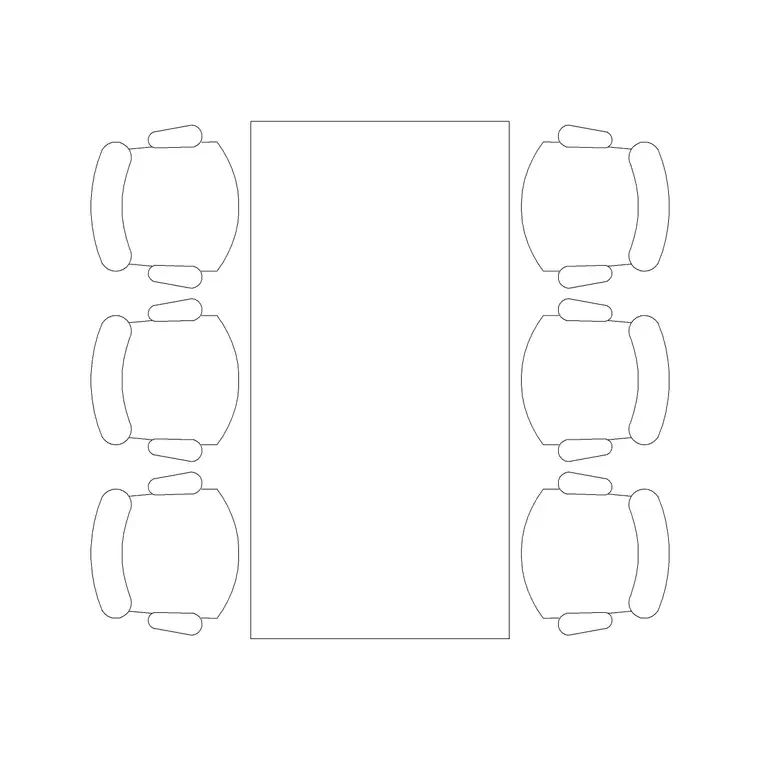
Benches work in both views, depending on the drawing. In plan you place and array them along a wall, a table or a path and check the seated depth they project into the space. In elevation and section you show the seat height and back rake. Because the blocks are scaled, the depth a bench occupies — easy to underestimate once people are sitting on it — is read straight off the plan.
The round-up spans interior and exterior benches, so a single collection serves a dining room, a waiting area and an outdoor landscape scheme.
What the bench and seating round-up covers
The selection spreads across the settings benches serve. Backless dining benches tuck under a table as a space-saving alternative to chairs. Waiting and reception benches — upholstered, with or without a back — line foyers, clinics and transport interchanges. Park and street benches, usually slatted with arms and a back, suit landscape and public-realm drawings. Locker-room and modular linked benches handle changing rooms, gyms and waiting halls where seating runs in long banks.
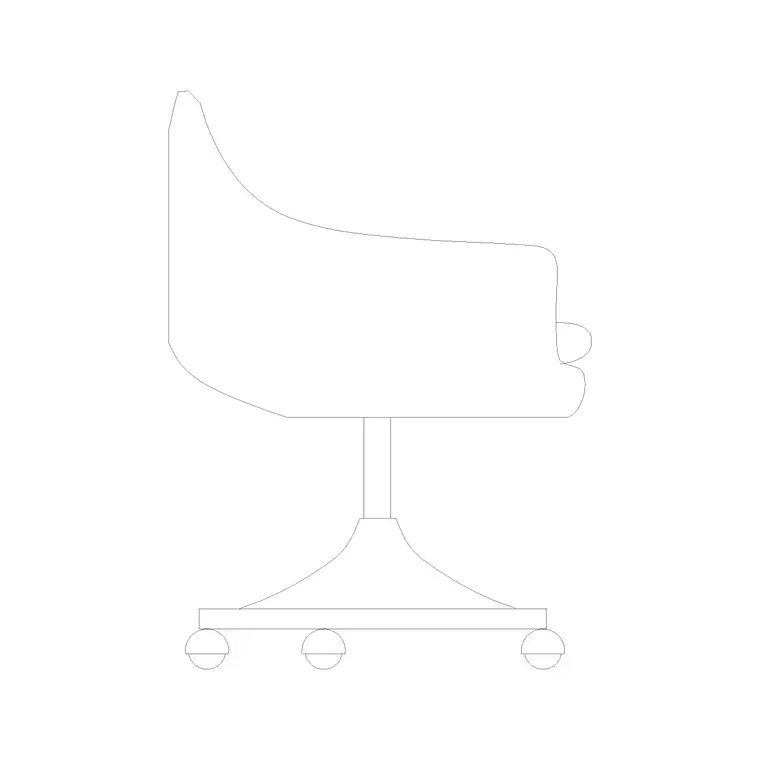
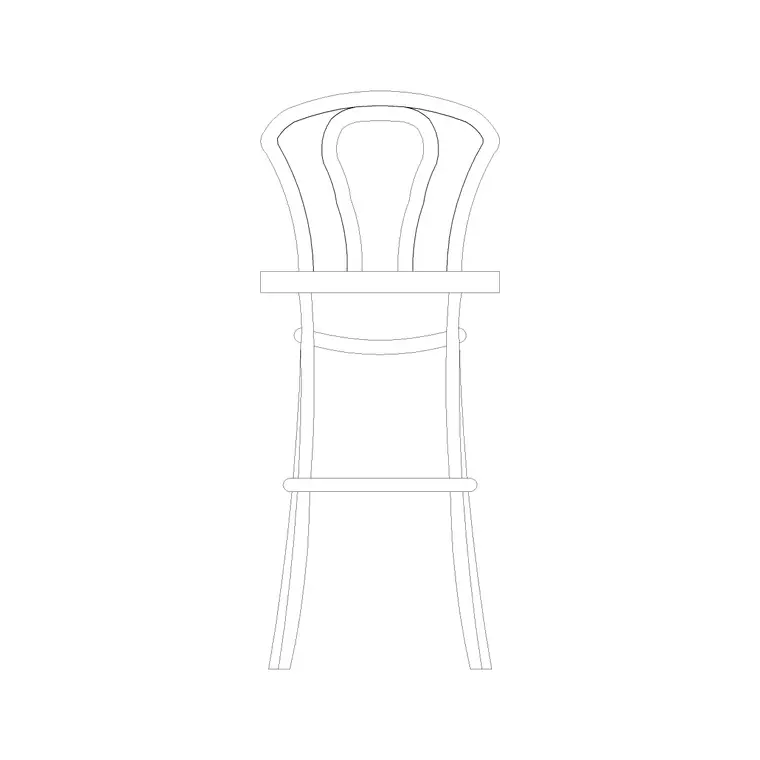
Most blocks carry a plan footprint for layout and, for the public and waiting benches, an elevation showing the seat and back profile. The dining benches read as a simple rectangle in plan; the slatted park benches show the slat lines and arm positions.
Typical bench dimensions to design around
Design around these figures. Seat height for almost any bench sits around 420-460 mm, the same comfortable range as a chair. Seat depth is usually 400-500 mm for a backless or dining bench and 450-550 mm for a benched seat with a back. Length varies with use: a two-person bench runs around 1200 mm, a three-seat waiting or park bench around 1500-1800 mm, and modular banks extend as far as the wall allows.
A park bench with arms and a back projects deeper into a space — often 600-700 mm overall once the back is included — so allow for that when you place it against a path. The scaled blocks make the projected depth obvious so you do not crowd a walkway.
Dining benches: a space-saving alternative to chairs
A backless dining bench is a genuinely different layout choice from a row of chairs. Because it tucks fully under the table when not in use, it needs no individual pull-out space and reads as a clean line in plan, which suits tight dining rooms, kitchen nooks and cafe banquettes. One long bench can also seat more people flexibly than a fixed number of chairs.
The trade-off is access: people on a bench against a wall must shuffle along to reach the inner seats. Place the dining bench in plan tucked under the table, then check that whoever sits at the inner end can get in. For a banquette against a wall, the bench is fixed and the table pulls out, so draw the table's movement rather than the seating's.
Public and waiting benches: planning the bank
Waiting and public benches are usually laid out in banks, so spacing and circulation matter more than the individual piece. Place the bench against a wall or back to back in the middle of a space, then leave a clear walkway in front — at least 900 mm, more in a busy interchange or foyer. For modular linked seating, array the module to fill the run, and break the bank where a gangway is needed.
Keep the benches on a furniture or fixtures layer so they freeze with the rest of the loose furniture. For a repeated waiting layout — a clinic, a transport hub — once a bank works, WBLOCK it as a single block and array it across the space so every waiting zone is laid out identically.
Park and street benches in landscape drawings
Outdoor benches belong to the external-works drawing, where they pair with planting, paving and lighting. Place the bench along a path, a plaza edge or under a tree, oriented to the view or the sun. In plan the slatted seat and the arms read as the footprint; check the seated depth so people's legs do not project into the path.
For a landscape section or street elevation, use the elevation bench so the seat height and back read correctly against the ground and the planting. Keep the benches on the landscape furniture layer with bins, bollards and lighting columns, so the public-realm furniture can be shown or hidden as one. The same scaled bench then carries from the masterplan to the detailed public-realm drawing.
Where bench and seating blocks are used
Benches turn up across an unusually wide range of drawings: dining rooms and cafes, foyers and reception areas, clinics and hospitals, transport interchanges, changing rooms and gyms, schools, and outdoor parks, plazas and streets. The plan blocks set out the layout and the banks; the elevation blocks serve sections and presentation drawings.
Use the bench round-up alongside the chair, dining-table and sofa blocks in this furniture series, and the outdoor and landscape categories elsewhere on the site, to fit out both interiors and external works from one consistent, free library. Scaled and licence-clear, the same bench carries from a concept layout to a coordinated drawing, indoors or out.
Free download
Browse the full library — DWG & DXF, no signup.
Questions
Frequently asked
What kinds of bench are in the round-up?+
Backless dining benches, upholstered waiting and reception benches, slatted park and street benches, and modular linked seating for changing rooms and waiting halls. The set covers both interior and exterior use.
How deep does a park bench sit in a plan?+
A backless or dining bench is usually 400-500 mm deep, while a park bench with arms and a back can project 600-700 mm overall. The scaled blocks show the seated depth so you do not crowd a path or walkway.
Are dining benches better than chairs for a tight room?+
Often, yes. A backless dining bench tucks fully under the table and needs no individual pull-out space, so it saves floor and reads as a clean line. The trade-off is that inner seats are harder to reach against a wall.
Are the bench and seating CAD blocks free for commercial use?+
Yes. Every block downloads free in DWG and DXF with no signup, no watermark and no attribution requirement, and they are cleared for commercial project use.
Related downloads
Blocks for this guide
Related categories
Related guides
Curated pack
Free Office CAD Block Pack — DWG & DXF
Free office CAD block pack in DWG and DXF — desks, workstations, conference tables and reception furniture in plan view. No signup, commercial-use OK.
Curated pack
Free Reception Area CAD Block Pack — DWG
Free reception area CAD block pack in DWG and DXF — reception desks, waiting seating and scale figures for lobby layouts. No signup, commercial-use OK.
Curated pack
Free Restaurant CAD Block Pack — DWG & DXF
Free restaurant CAD block pack in DWG and DXF — dining tables, chairs, bar stools and high chairs for cafe and restaurant layouts. No signup, commercial OK.