Explainer · why is my cad block a different color
Why does my inserted CAD block come in a different colour?
By Sumana Kumar · Published 15 Jan 2023 · Updated 31 May 2026
You insert a clean furniture block and it lands bright red, stark white or some colour you never chose — and changing the layer does nothing. This is one of the most common surprises when working with downloaded CAD blocks, and it almost always comes down to how the block's colour was assigned when it was drawn. It is not a corrupted file, and it is fixable in a few clicks once you understand the rule.
In AutoCAD, every object's colour is controlled by one of three settings: ByLayer, ByBlock, or a fixed colour baked onto the object itself. Which one a block uses decides whether it obeys your layer colours, your block insertion, or stubbornly ignores both. This page explains the three modes, why a downloaded block sometimes behaves unexpectedly, and how to make it follow your drawing's colour scheme.
The blocks here are drawn with sensible colour settings so they pick up your layers cleanly, but understanding the mechanism means you can fix any stray block, from this site or anywhere else.
The three colour modes that govern every object
AutoCAD assigns colour in one of three ways. ByLayer means an object takes the colour of the layer it sits on — change the layer colour and the object follows. This is the default and the one most drawings rely on. ByBlock means the object is colourless until it is inside a block, at which point it takes the colour set on the block reference when you insert it. A fixed colour means someone gave the object an explicit colour (say, red 1) that overrides both the layer and the block reference.
A block can mix these. The trunk of a tree might be ByLayer, the canopy ByBlock, and a stray line hard-coded green, all in the same definition. When a block looks wrong, the first job is to find out which mode each part is using.
Why a downloaded block ignores your layer colour
If you move a block to a layer and the colour does not change, the geometry inside it is almost certainly set to a fixed colour rather than ByLayer. Hard-coded colours override the layer entirely, so a block whose lines are explicitly set to white will stay white no matter what colour you make the layer it sits on.
This happens because the person who drew the block set colours directly on the objects instead of letting them inherit from layers. It is not wrong — sometimes it is deliberate — but it surprises anyone expecting layer control. The fix is to change those objects back to ByLayer, which you do inside the block, not on the inserted reference.
Why a block comes in white or red specifically
Two colours show up again and again. A block that lands white (or black, depending on your background) was usually drawn on layer 0, which is special: objects on layer 0 inside a block adopt the layer of wherever the block is inserted, so they often appear in your current layer's colour. If your current layer is white, the block looks white.
A block that lands red is frequently set to ByBlock or to colour 1 explicitly. ByBlock geometry shows the colour of the block reference, and if that reference colour is red — or the default when nothing else is specified — the whole block reads red. Knowing which of these you are looking at tells you exactly which setting to change.
How to fix the colour the right way
To make a block obey your layers, edit the block definition. Double-click the block to open the Block Editor (BEDIT), select all the geometry, and in the Properties palette set Color to ByLayer. Then assign the geometry to a meaningful layer if it is sitting on layer 0. Save the block and close the editor; every instance in the drawing updates at once.
If you only want to recolour one inserted copy without touching the others, select the block reference and change its colour in Properties — but note this only affects ByBlock geometry. Hard-coded objects will ignore the override, which is exactly why the proper fix lives inside the block definition, not on the reference.
When you actually want a fixed colour
Fixed colours are not always a mistake. A title-block logo, a north arrow, or a graphic that must read the same on every drawing regardless of layer setup is a fair candidate for a baked-in colour. The point is to choose it deliberately rather than discover it by accident.
For furniture, planting and most architectural symbols, ByLayer is the convention, because it lets a whole drawing's appearance be controlled from the Layer Properties Manager — one place, one change, consistent output. Reserve fixed colours for the handful of elements that genuinely need to look identical everywhere.
A quick checklist when a block looks wrong
Run through these in order. First, select the block and check its layer — is it on layer 0 by accident? Move it to a proper layer. Second, open BEDIT and check the geometry's Color property — is it ByLayer, ByBlock, or a fixed colour? Set it to ByLayer for normal behaviour. Third, check the layer's own colour in the Layer Properties Manager. Fourth, if only one copy is wrong, the override is on that reference; if every copy is wrong, the issue is in the definition.
- ByLayer = follows the layer colour (the usual goal) - ByBlock = follows the block reference colour set at insertion - Fixed colour = ignores both; must be changed inside the block
Work from the reference inward to the definition and you will always land on the cause.
Free download
Browse the full library — DWG & DXF, no signup.
Questions
Frequently asked
Why won't my block change colour when I change its layer?+
The geometry inside the block is set to a fixed colour, which overrides the layer. Open the Block Editor (BEDIT), select the geometry, and set its colour to ByLayer. Then the block will follow whatever layer you place it on.
What does ByLayer vs ByBlock mean for colour?+
ByLayer means the object takes its layer's colour. ByBlock means the object takes the colour of the block reference set when you insert it. A fixed colour ignores both. ByLayer is the standard for furniture and architectural blocks.
Why does my block turn white when I insert it?+
The block's geometry is on layer 0, which adopts the layer of wherever it is inserted. If your current layer is white, the block looks white. Edit the block and move the geometry onto a dedicated layer with a defined colour.
Can I recolour just one copy of a block?+
Only the ByBlock parts. Select the inserted reference and change its colour in Properties — ByBlock geometry follows. Hard-coded objects ignore the override, so to recolour those you must edit the block definition itself.
Related downloads
Blocks for this guide
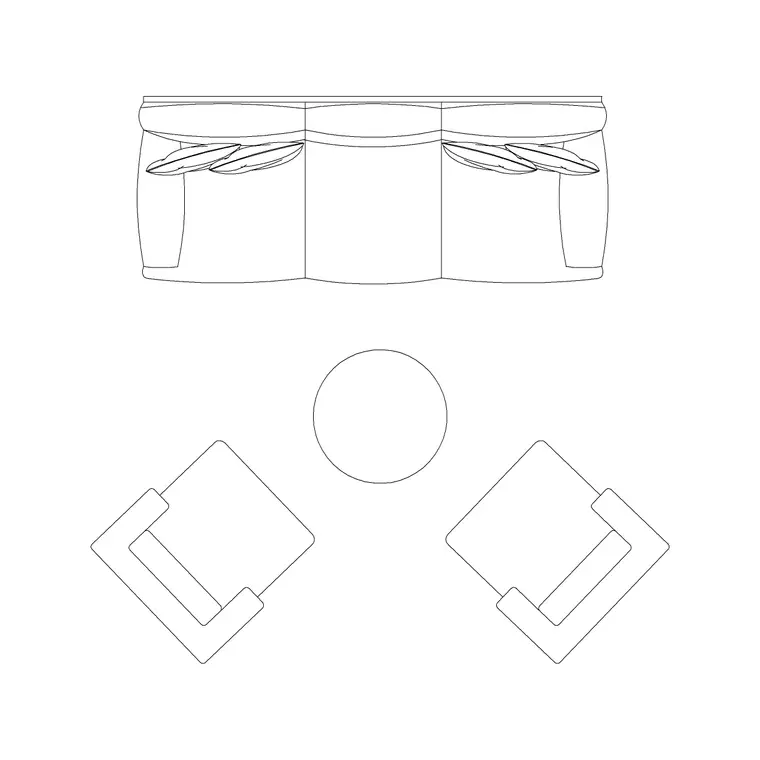
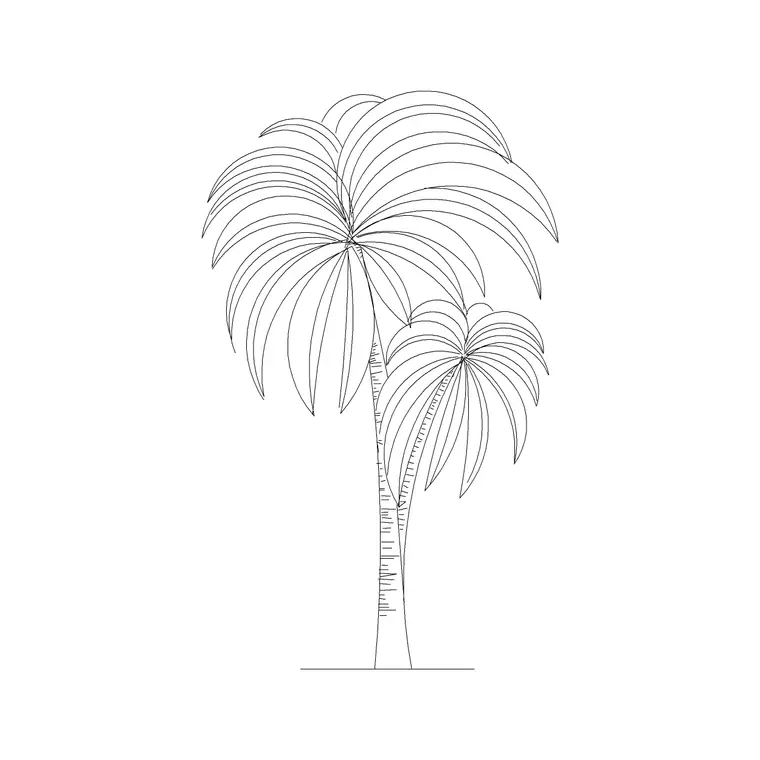
Popular blocks to download
Related categories
Related guides
Explainer
Are DWG and DXF the Same File? Explained
DWG and DXF are not the same file. Learn the real difference, which one to download for AutoCAD blocks, and when DXF is the safer choice.
Explainer
Why Do CAD Blocks Come In on the Wrong Layer?
Inserted a CAD block and it dumped new layers or sat on the wrong one? Learn how block layers work in AutoCAD and how to control where they land.
Explainer
What Is a Block Insertion Scale? Explained
What is a block insertion scale? Learn how AutoCAD's insertion scale and INSUNITS work so downloaded blocks land at the right size every time.