Explainer · are dwg and dxf the same
DWG vs DXF: are they the same file format?
By Sumana Kumar · Published 31 Mar 2024 · Updated 8 May 2026
DWG and DXF look interchangeable on a download page — same drawing, two buttons — but they are not the same file, and the distinction matters more than most people expect. DWG is Autodesk's native, compact binary format for AutoCAD drawings. DXF is a text-based interchange format Autodesk publishes so that other programs can read and write the same geometry. Both describe the same lines, arcs, blocks and layers; they just store them differently.
This page explains what each format actually is, why a CAD block site offers both, and how to choose between them so a block opens cleanly in whatever software you run. If you only ever use full AutoCAD, the answer is simple. If you bounce between AutoCAD LT, a free viewer, a CNC program or a laser cutter, the difference is worth two minutes of reading.
Every block on this site downloads as DWG, with DXF available where it helps, and both carry identical geometry — so the choice is about compatibility, not quality.
What DWG actually is
DWG ("drawing") is the proprietary binary format AutoCAD has used since the early 1980s. It is compact, fast to open, and stores everything a drawing needs: geometry, layers, blocks, text styles, dimension styles, layouts and more. Because it is binary, you cannot open a DWG in a text editor and read it — the bytes are packed for the software, not for a human.
The format is versioned. A DWG saved as "AutoCAD 2018" carries features a 2004 release cannot read, which is why a file saved in a newer release sometimes refuses to open in an older one. The blocks here target a widely-compatible DWG version so they open in current AutoCAD, AutoCAD LT, BricsCAD, DraftSight and free DWG viewers without a version warning.
What DXF actually is
DXF ("drawing exchange format") is the open, documented sibling of DWG. Autodesk publishes its specification so any developer can write a program that reads or writes it. A DXF is usually plain ASCII text — you can open one in Notepad and see the entity records, group codes and coordinates spelled out. That openness is the whole point: DXF exists so a drawing can move between AutoCAD and software that has no DWG licence.
The trade-off is size and tidiness. Because it stores everything as labelled text, a DXF of the same drawing is typically larger than the DWG, and round-tripping through DXF can occasionally drop a niche object an older spec version did not define. For ordinary 2D blocks — furniture, trees, fixtures — that loss almost never happens, so DXF is a safe interchange copy.
So are they the same? The honest answer
They are the same drawing, not the same file. Think of a document saved as both .docx and .rtf: the words are identical, the container is different. A furniture block exported to DWG and to DXF holds the same sofa outline on the same layer at the same coordinates; only the encoding on disk differs.
That means you do not lose design intent by choosing one over the other. You choose based on what is going to open the file. If your tool reads DWG natively, take the DWG — it is smaller and opens faster. If your tool only reads DXF, or you are not sure, take the DXF and you are covered.
Which one should you download
For AutoCAD, AutoCAD LT, BricsCAD, ZWCAD, GstarCAD or DraftSight, download the DWG. It is the native format for all of these and gives you the smallest, fastest file with full layer and block fidelity.
Reach for DXF when you are feeding the block into something outside the AutoCAD family: many CNC and laser-cutting programs, some CAM packages, vector editors like older versions of Inkscape, GIS tools, and a few structural or analysis packages prefer or require DXF. DXF is also the better archival choice if you want a copy that is readable decades from now regardless of which software survives, because the format is openly documented.
Converting between the two
Going from one to the other is painless. In AutoCAD, open the file and use SAVEAS, then pick "AutoCAD DXF" or "AutoCAD Drawing (DWG)" from the file-type dropdown — choose a sensible version (for example R2004/R2007 DXF) if you need broad compatibility. The free Autodesk DWG TrueView and the open-source ODA File Converter both batch-convert folders of files in either direction.
A practical tip: when you convert DWG to DXF for a non-AutoCAD program, export to an older DXF version (R12 or 2000) if the destination software is old or finicky. Newer DXF versions carry objects some third-party readers choke on, and an older version forces the geometry down to the simple lines and arcs almost everything understands.
Why a block site offers both
A good block library hands you the DWG because it is what most CAD users want, and the DXF because it removes a conversion step for everyone else. Offering both means a student on a free viewer, a fabricator on a laser cutter and a draughtsperson in full AutoCAD can all use the same block without first hunting for a converter.
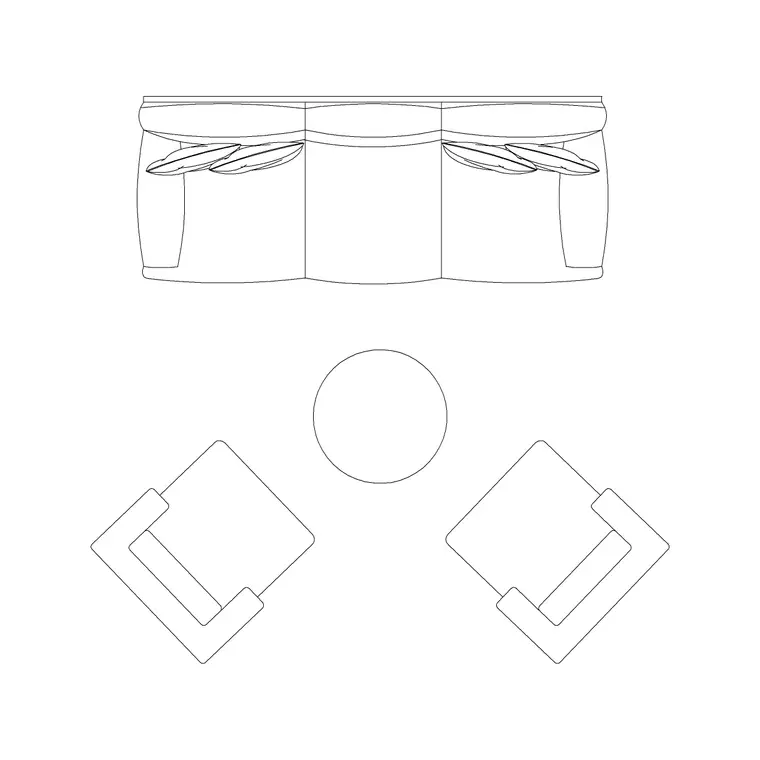
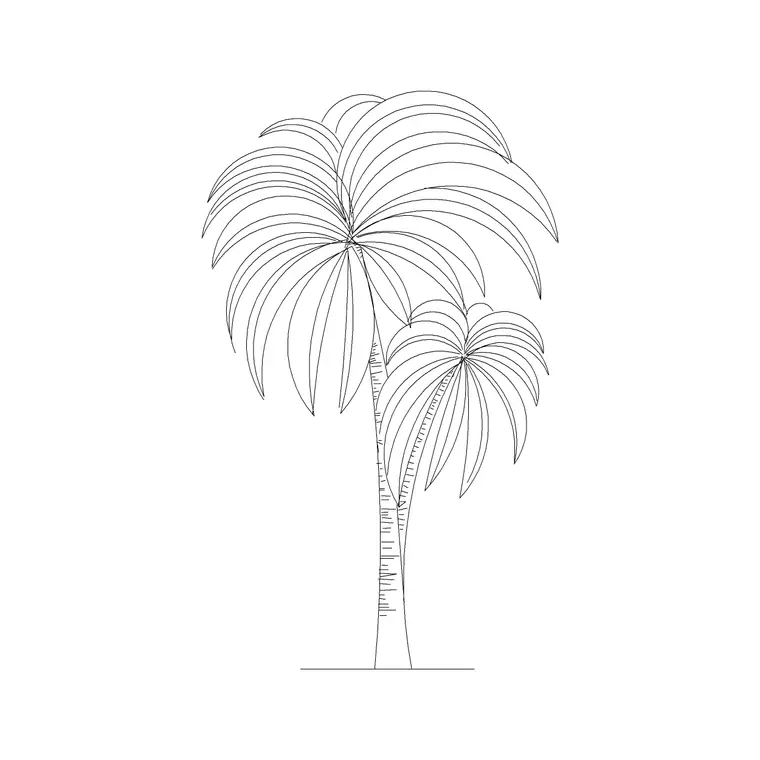
The blocks in the furniture and trees-and-plants categories are drawn once and exported consistently, so the DWG and DXF you download are true twins. Pick the format your software prefers, insert it, and the geometry behaves identically either way — same scale, same layers, same block definition.
Free download
Browse the full library — DWG & DXF, no signup.
Questions
Frequently asked
Is DXF lower quality than DWG?+
No. DXF stores the same geometry as DWG; it is just text-based instead of binary. The lines, arcs and layers are identical. DXF files are usually larger and open a little slower, but the drawing quality is the same.
Can AutoCAD open a DXF directly?+
Yes. AutoCAD opens DXF natively with the OPEN command and inserts it as a block with INSERT, exactly as it does a DWG. You do not need to convert a DXF to DWG before using it in AutoCAD.
Which format is better for laser cutting or CNC?+
Usually DXF, and often an older DXF version like R12. Many cutting and CAM programs read DXF but not DWG, and an older DXF version reduces the geometry to simple lines and arcs that virtually every machine controller understands.
Will a DXF always reproduce the DWG exactly?+
For ordinary 2D blocks, yes. Round-tripping through DXF can rarely drop a specialised object an older spec did not define, but standard furniture, plant and fixture blocks survive the conversion unchanged.
Related downloads
Blocks for this guide
Popular blocks to download
Related categories
Related guides
Explainer
Why Is My CAD Block a Different Color?
Your CAD block came in red, white or the wrong colour? Learn how ByLayer, ByBlock and hard-coded colours work so you can fix it in AutoCAD.
Explainer
Why Do CAD Blocks Come In on the Wrong Layer?
Inserted a CAD block and it dumped new layers or sat on the wrong one? Learn how block layers work in AutoCAD and how to control where they land.
Explainer
What Is a Block Insertion Scale? Explained
What is a block insertion scale? Learn how AutoCAD's insertion scale and INSUNITS work so downloaded blocks land at the right size every time.