Explainer · block insertion scale
What is a block insertion scale in AutoCAD?
By Sumana Kumar · Published 28 Jan 2026 · Updated 15 Apr 2026
Insertion scale is the multiplier AutoCAD applies to a block when you place it. Insert a block at scale 1 and it lands at the size it was drawn; insert it at scale 0.001 and it lands a thousand times smaller. Understanding this single number — and the units setting that often controls it automatically — is the difference between a block that drops in perfectly and one that arrives the size of a building or a speck.
This page explains what insertion scale is, how the X, Y and Z scale factors work, how AutoCAD's INSUNITS setting can set the scale for you, and how to pick the right factor when you need to override it. It is the concept behind almost every "why is my block the wrong size" problem, so getting it straight pays off across every block you ever insert.
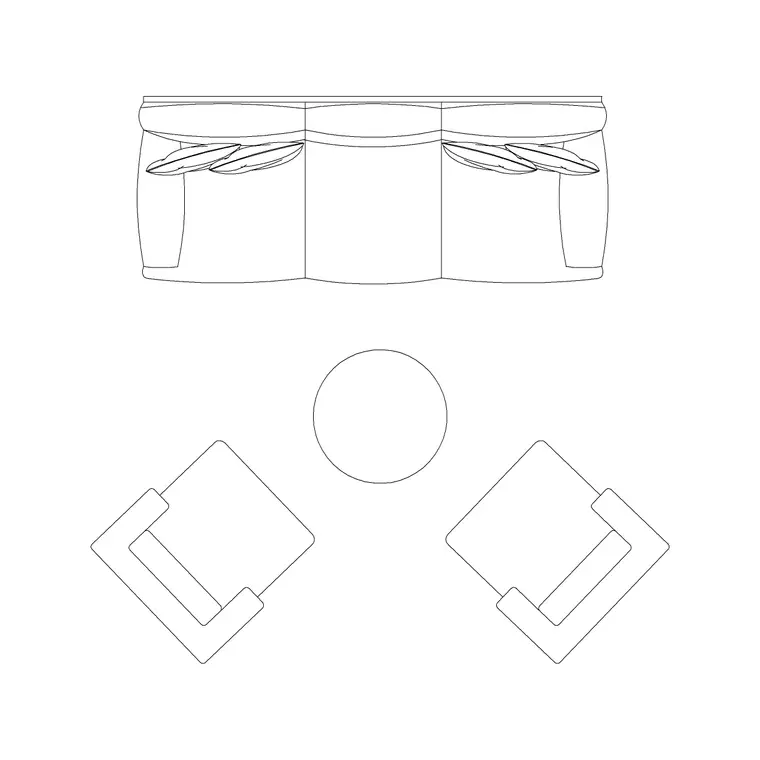
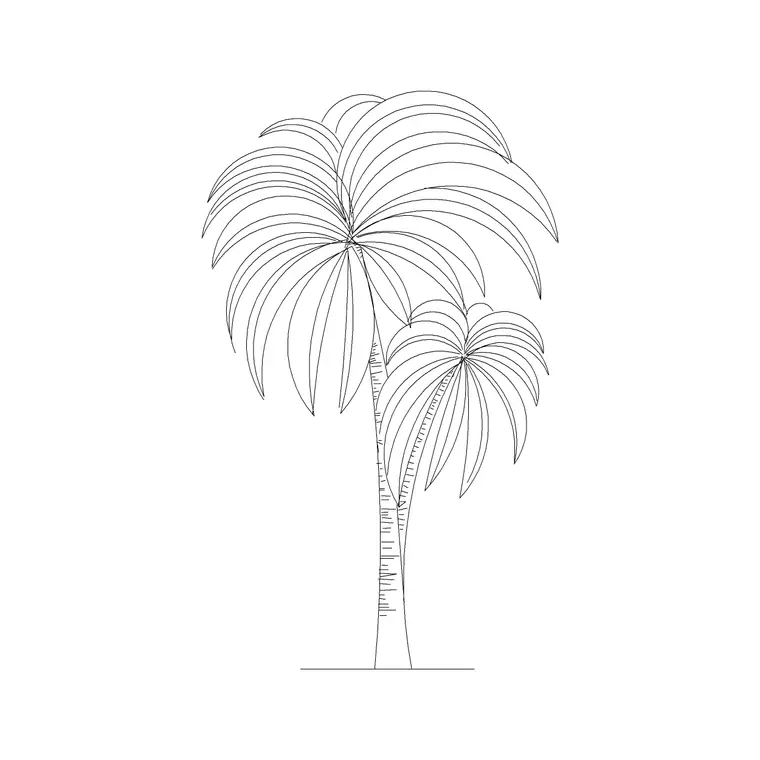
The blocks on this site are drawn full size in millimetres, so once you understand insertion scale you can place any of them — furniture, trees and the rest — at exactly the right size.
Insertion scale in plain terms
When you run INSERT, AutoCAD asks for an insertion point and a scale. The scale is a pure multiplier on the block's drawn size. A block drawn at 600 mm wide, inserted at scale 1, is 600 units wide in your drawing. The same block at scale 2 is 1200 units; at scale 0.5 it is 300 units.
The units of your drawing decide what those numbers mean. If your drawing is in millimetres, scale 1 gives a 600 mm block. If your drawing is in metres and the block was drawn in millimetres, you need scale 0.001 to turn 600 drawing-millimetres into 0.6 metres. Insertion scale is simply the bridge between the block's drawn size and the size you want it on the page.
X, Y and Z scale factors
INSERT lets you set separate scales for the X, Y and Z axes. Most of the time you keep them equal — a uniform scale that resizes the block without distorting it. Enter 2 for all three and the block doubles evenly.
Unequal scales stretch the block. Set X to 2 and Y to 1 and the block becomes twice as wide but the same height, which is occasionally useful for stretching a generic block to a non-standard size, though it distorts circles into ellipses and skews text. A negative scale mirrors the block: an X scale of -1 flips it left-to-right, handy for placing a mirrored sofa or a left-hand version of a symmetrical fixture without drawing a second block.
How INSUNITS sets the scale for you
AutoCAD can pick the insertion scale automatically using two settings: the block's own units and the drawing's INSUNITS. Every drawing has an "insertion units" value (Millimeters, Meters, Inches, and so on). When you insert a block, AutoCAD compares the block's units to the drawing's INSUNITS and scales the block so the physical size matches.
This is why a well-set-up drawing lets you insert at scale 1 and get the right size even when the block was drawn in different units: a millimetre block dropped into a metre drawing is automatically scaled by 0.001 behind the scenes. The catch is that both the block and the drawing must have their units defined. If either is set to Unitless, AutoCAD cannot compute the conversion and inserts at raw scale, which is the usual cause of a wildly wrong size.
Picking the right scale manually
When you need to set the scale yourself, the factor is just the ratio between the units. For millimetre blocks: insert at 1 in a millimetre drawing, 0.001 in a metre drawing, 0.1 in a centimetre drawing, or 0.03937 to convert millimetres to inches in an imperial drawing.
If you want a block at a different real size than it was drawn, multiply. A tree block drawn at a 4 m canopy that you need at 8 m goes in at scale 2; a chair drawn at 600 mm that you want at 540 mm goes in at 0.9. Keep a note of the block's drawn size — it is usually on the download page — so you can compute the factor in your head rather than guessing and rescaling.
Fixing a block that came in the wrong size
If a block arrives the wrong size, do not immediately reach for SCALE — first check whether it is a units problem. Type UNITS, confirm the drawing's insertion scale matches the block (Millimeters here), then delete and re-insert. Nine times out of ten the units fix solves it cleanly, whereas manual SCALE leaves you guessing the factor.
If the size is right in principle but you want it bigger or smaller, the SCALE command does the job after insertion: pick the block, choose a base point (the insertion point is ideal), and enter the factor or use the Reference option to scale by picking a known length. The Reference option is the fastest way to make a block exactly span a known distance without doing arithmetic.
Why a consistent unit makes life easy
The whole insertion-scale headache disappears when your blocks and drawings share a unit. This site draws every block full size in millimetres, the most common convention in architectural CAD, so if you work in millimetres you insert at scale 1 and never think about it again.
- Block in mm + drawing in mm: scale 1 - Block in mm + drawing in m: scale 0.001 (or let INSUNITS do it) - Block in mm + imperial drawing: scale 0.03937, or set INSUNITS to Millimeters
Set INSUNITS once at the start of a template and AutoCAD handles the conversions for you, leaving insertion scale as a tool you only touch when you deliberately want a block at a non-drawn size.
Free download
Browse the full library — DWG & DXF, no signup.
Questions
Frequently asked
What does inserting a block at scale 1 mean?+
It means the block is placed at the exact size it was drawn, with no resizing. If a block was drawn 600 mm wide, scale 1 gives a 600-unit-wide block in your drawing. Any other factor multiplies that drawn size.
What is INSUNITS and how does it affect insertion scale?+
INSUNITS is your drawing's insertion-units setting. AutoCAD compares it to a block's own units and auto-scales the block so its physical size matches. With both set correctly, you can insert at scale 1 and get the right size even across unit systems.
How do I work out the scale factor for a millimetre block?+
Match the units. Insert at 1 in a millimetre drawing, 0.001 in a metre drawing, 0.1 in a centimetre drawing, or 0.03937 to convert to inches in an imperial drawing. To resize, multiply by the ratio of drawn size to desired size.
Can I mirror a block using insertion scale?+
Yes. A negative scale factor mirrors the block. Set the X scale to -1 to flip it left-to-right, or the Y scale to -1 to flip it top-to-bottom — useful for placing a mirrored version of a symmetrical block without redrawing it.
Related downloads
Blocks for this guide
Popular blocks to download
Related categories
Related guides
Explainer
Are DWG and DXF the Same File? Explained
DWG and DXF are not the same file. Learn the real difference, which one to download for AutoCAD blocks, and when DXF is the safer choice.
Explainer
Why Is My CAD Block a Different Color?
Your CAD block came in red, white or the wrong colour? Learn how ByLayer, ByBlock and hard-coded colours work so you can fix it in AutoCAD.
Explainer
Why Do CAD Blocks Come In on the Wrong Layer?
Inserted a CAD block and it dumped new layers or sat on the wrong one? Learn how block layers work in AutoCAD and how to control where they land.