Explainer · visibility states autocad
Visibility states in AutoCAD blocks, explained
By Saumyajit Maity · Published 3 Jun 2025 · Updated 14 May 2026
Visibility states are the dynamic-block feature that lets a single block hold several different versions of its geometry and display just one at a time. Instead of making separate blocks for a left-hand door, a right-hand door and a double door, you build one block with three visibility states and switch between them from a dropdown grip. It is the cleanest way to pack a family of related symbols into one tidy library entry.
This page explains what a visibility state is, how the visibility parameter and the BVSTATE command drive it, the difference between hiding and showing geometry per state, and the practical patterns drafters use to build multi-view and multi-option blocks. The headline benefit is fewer blocks in your library doing more work.
One block, many appearances
A visibility state is a named configuration of which objects in the block are shown and which are hidden. Add a Visibility parameter to a block and you unlock the ability to define states like 'Single Door', 'Double Door' and 'Cased Opening'. Each state remembers a particular on/off pattern across all the geometry in the block.
Crucially, all the geometry still lives in the one block definition — visibility states do not delete anything, they just mask it. Switching states is instant and reversible, which is why visibility states are perfect for option blocks: a piece of furniture shown with or without arms, a door shown in plan or elevation, a fixture in metric or imperial annotation.
The visibility parameter and the grip it adds
You add visibility behaviour by placing a single Visibility parameter in the Block Editor. Unlike most parameters, it needs no action — the parameter alone does the work. Once added, the inserted block gains a small down-arrow grip. Click it and a dropdown lists every visibility state by name; pick one and the block redraws to that configuration.
A block can have only one Visibility parameter, so all your states live under that single control. The parameter also shows in the Properties palette, where the current state name appears and can be changed from a dropdown there too. Naming states clearly is essential because those names are exactly what the end user reads.
Hiding and showing geometry per state
Inside the Block Editor, the Visibility panel gives you the controls. With a state current, select objects and click 'Make Invisible' to hide them in that state, or 'Make Visible' to show them. A toggle lets you display the hidden geometry greyed-out so you can still select it while authoring. The BVSHOW and BVHIDE commands do the same from the keyboard.
The workflow is methodical: set a state current with the state dropdown on the ribbon (or BVSTATE), then dial in which objects are visible for that state. Repeat for each state. The same line can be visible in one state and hidden in another, so overlapping geometry is fine — only one state shows at a time on the inserted block.
Managing states with BVSTATE
The BVSTATE command opens the Visibility States dialog, the control centre for the whole feature. Here you create new states, rename them, delete them, set the running order, and choose how a new state starts — all geometry visible, all hidden, or a copy of the current state. Starting a new state as a copy of an existing one and then tweaking the differences is usually the fastest way to build a family.
The dialog also sets which state is the default shown when the block is first inserted. Put the most common option first so the block lands useful out of the box. Reordering states changes the dropdown order the user sees, so arrange them logically — by size, by hand, or by view.
Common visibility-state patterns
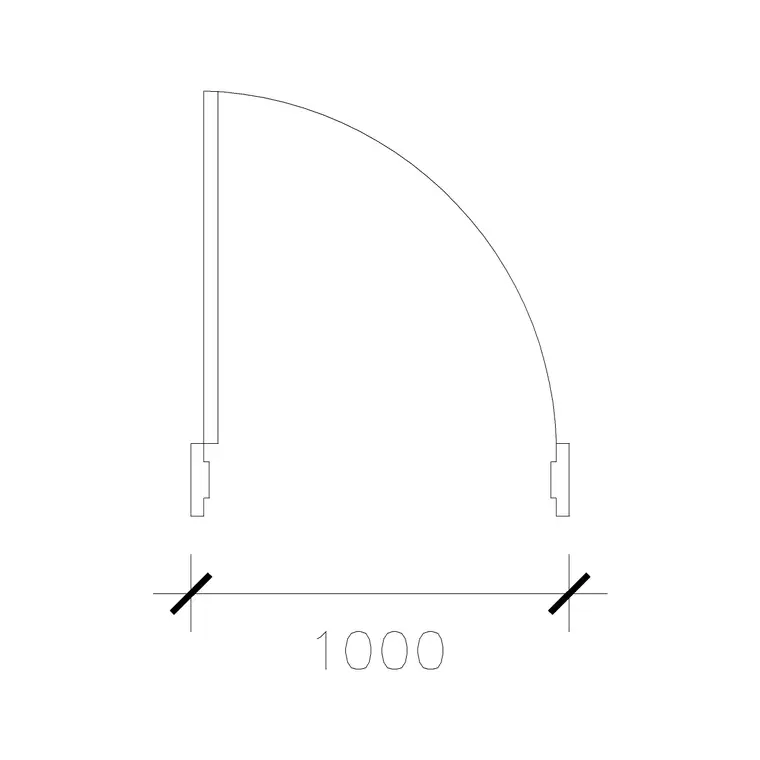
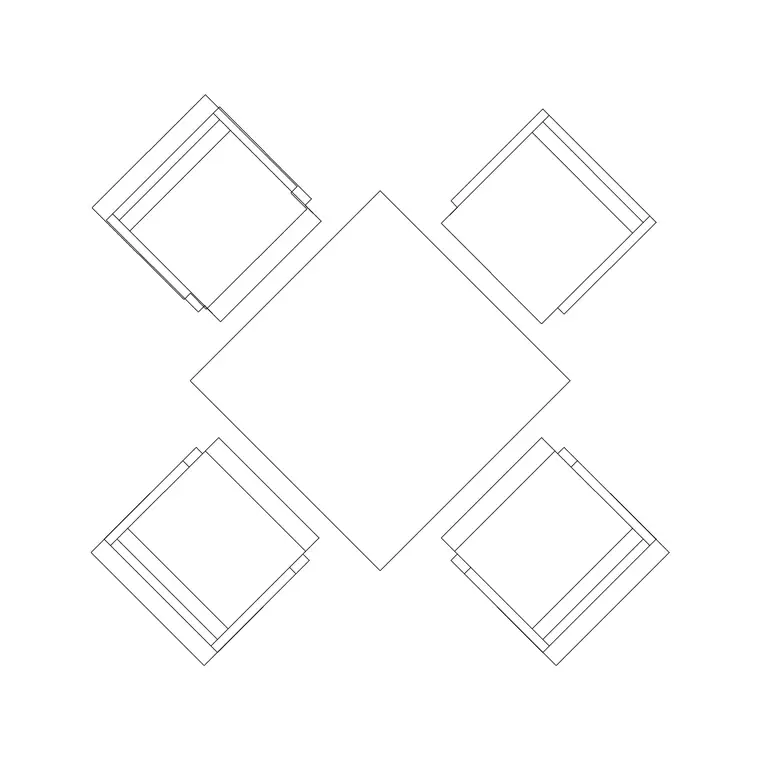
Multi-view blocks are a classic use: one door block carrying a plan state and an elevation state, so a drafter inserts the block once and flips to whichever view the current drawing needs. Option blocks are another: a sofa with states for two-seat, three-seat and corner configurations sharing the same insertion point.
Level-of-detail is a third pattern — a Detailed state with full hatching and a Simplified state with just an outline, switched depending on plot scale. And annotation toggles let one block show or hide a tag, a swing arc or a dimension. In every case the win is the same: one library entry, one insertion point, several outcomes a click apart.
Visibility states versus separate blocks
When should you use visibility states rather than just making several blocks? Use states when the variants share an insertion point and a purpose and you want users to switch between them in place — door hands, furniture options, view variants. The block stays a single library item and swaps instantly without re-inserting.
Use separate blocks when the variants are genuinely different components a user would search for by name, or when file size matters and most users only ever need one variant. A block with a dozen heavy visibility states carries all that geometry in every insertion. As a rule of thumb, a handful of closely related options belongs in one block with visibility states; a sprawling catalogue belongs in separate definitions.
Free download
Browse the full library — DWG & DXF, no signup.
Questions
Frequently asked
What is a visibility state in AutoCAD?+
A named configuration of which objects in a dynamic block are shown or hidden. One block can hold several states and display one at a time, switched via a dropdown grip or the Properties palette.
Does a visibility parameter need an action?+
No. The Visibility parameter works on its own — it is one of the few parameters that needs no paired action. Adding it gives the block a dropdown grip for choosing states.
How many visibility parameters can a block have?+
Only one. All of the block's visibility states live under that single Visibility parameter, so every state appears in the same dropdown list.
Should I use visibility states or separate blocks?+
Use visibility states when variants share an insertion point and users switch between them in place, like door hands or furniture options. Use separate blocks for genuinely distinct components or when file size matters.
Related downloads
Blocks for this guide
Popular blocks to download
Related categories
Related guides
Explainer
Dynamic Blocks Explained — AutoCAD Guide in 2026
Dynamic blocks explained simply — what they are, how parameters, actions and grips let one AutoCAD block flex into many sizes, and when to use them over plain blocks.
Explainer
Static vs Dynamic Blocks in AutoCAD Compared
Static vs dynamic blocks in AutoCAD — the real difference, the pros and cons of each, when to choose which, and how to convert a static block into a dynamic one.
Explainer
What Are Block Attributes in AutoCAD?
What are block attributes in AutoCAD? Learn how attributes attach editable text and data to a block, how to define them with ATTDEF, and how to extract schedules.