Explainer · what are block attributes
What are block attributes? Data inside your blocks
By Sumana Kumar · Published 9 Mar 2023 · Updated 13 Apr 2026
A block attribute is a piece of editable text or data that travels inside a block. Where ordinary block geometry is fixed, an attribute is a labelled field you fill in when you insert the block — a door number, a room name, a drawing title, a part code. The geometry stays the same from copy to copy, but each insertion can carry its own attribute values. That single idea turns a drawing from a picture into a lightweight database.
Attributes are the reason a title-block can show a different sheet number on every sheet from one block, why a door tagged 'D-014' reads differently from one tagged 'D-015' though both use the same symbol, and how a furniture plan can spit out a schedule of every chair and its product code without anyone counting by hand. They are quietly one of the most powerful features in AutoCAD, and most professional drawing sets lean on them heavily.
This page explains exactly what an attribute is, the difference between an attribute definition and an attribute value, how you create and insert attributed blocks, and how you harvest all those values back out into a table or spreadsheet.
Attribute definition vs attribute value
There are two halves to keep straight. An attribute definition is the template — created with ATTDEF — that says 'this block has a field called DOOR_NO, it prompts the user with "Door number?", and its default is blank'. The definition lives in the block definition alongside the geometry, so every copy of the block inherits the same field. An attribute value is the actual text someone types into that field for a particular insertion: 'D-014' on this door, 'D-015' on the next.
Think of it like a form. The definition is the blank labelled box; the value is what you write in it. Because the field is part of the block definition but the value is per-instance, one block design can carry thousands of unique values across a drawing — exactly the property that makes attributes useful for numbering and scheduling.
What attributes are good for
Attributes shine wherever a repeated symbol needs to carry instance-specific information. Title-blocks are the classic case: one title-block holds attribute fields for sheet number, sheet name, scale, date, drawn-by and revision, and each sheet fills them in. Door and window tags carry reference numbers that tie to a schedule. Furniture and equipment blocks carry product codes, manufacturer references or asset tags. Survey and setting-out blocks carry coordinates or level values.
The common thread is that the symbol is identical but the data is not. Without attributes you would place loose text next to each block and hope it stays attached when things move. With attributes, the data is bonded to the block — move the block and the text moves with it — and, crucially, it can be extracted as structured data rather than re-typed into a separate document.
How to create an attributed block
Start by drawing the symbol geometry as you normally would. Then, before you make it a block, run ATTDEF (Insert ribbon, Define Attributes) to create each attribute definition. In the dialog you set a Tag (the field's internal name, e.g. DOOR_NO — no spaces), a Prompt (the question shown on insertion, e.g. 'Door number?'), and a Default value. You also place the attribute text where it should sit, choose its height and justification, and set modes such as Invisible, Constant, Verify or Preset.
With the geometry and the attribute definitions drawn, run BLOCK and include both the geometry and the ATTDEF objects in the selection. AutoCAD bundles them into the block definition. From then on, every time you insert that block, you are prompted (or shown a small dialog) to enter the attribute values for that particular copy.
Editing and managing attribute values
Once an attributed block is placed, you edit its values without touching the block definition. The quickest route is to double-click the block, which opens the Enhanced Attribute Editor (EATTEDIT) showing every field for that instance — change a value and only that copy updates. To redesign the fields themselves (rename a tag, add a new attribute, change the prompt), use the Block Attribute Manager (BATTMAN), which edits the definition and can push changes to existing instances.
A few practical commands help. ATTSYNC updates existing block instances after you change the attribute definitions so they pick up new or reordered fields. The 'Invisible' mode hides an attribute on screen while keeping its data (useful for asset tags you want stored but not drawn), and ATTDISP toggles all attribute visibility globally. Keeping tags tidy and consistent across a library makes the next step — extraction — painless.
Extracting attributes into a schedule
The real payoff is data extraction. Because every attribute value is structured data tied to a block, AutoCAD can read them all and build a table or spreadsheet automatically. Run the Data Extraction wizard (EATTEXT / DATAEXTRACTION): choose the blocks to include, pick which attributes (and block properties) to report, and output the result as a table placed in the drawing or as an external CSV/XLS file.
This is how a door schedule, a window schedule or a furniture, fixtures and equipment (FF&E) list is produced straight from the model rather than typed by hand. Number your doors with an attributed door tag, then extract a schedule that lists every door number, width and type in seconds — and re-run it whenever the drawing changes so the schedule never drifts out of date. That live link between drawing and schedule is the entire reason attributes exist.
Attributes on the blocks you download
Most general-purpose blocks you download — furniture, doors, fixtures, symbols — ship as clean geometry without attributes, because attributes are project-specific: your door numbering scheme is not the same as anyone else's, and a generic block can't guess your tag format. That is by design, not an omission. A plain block is the neutral starting point you tag to your own standards.
Adding attributes to a downloaded block is straightforward and exactly the intended workflow. Insert the block, explode it (or open it in BEDIT), run ATTDEF to add the fields your project needs — a reference number on a door, a product code on a chair — and redefine the block. From then on it carries your data and feeds your schedules. So a free, attribute-free block is not a limitation: it is a clean canvas you bond your own data to, which is how attributed drawing sets are built in practice.
Free download
Browse the full library — DWG & DXF, no signup.
Questions
Frequently asked
What is a block attribute in AutoCAD?+
A block attribute is an editable text field attached to a block — like a door number, drawing title or part code. The block geometry stays fixed, but each insertion can carry its own attribute value, and those values can be extracted into a schedule.
How do I add an attribute to a block?+
Run ATTDEF to create an attribute definition with a tag, prompt and default, place its text, then include it when you run BLOCK. AutoCAD prompts for the value each time the block is inserted.
How do I extract block attributes into a table?+
Use the Data Extraction wizard (DATAEXTRACTION / EATTEXT). Select the blocks and attributes to report and output a table in the drawing or an external CSV/XLS — perfect for door, window and furniture schedules.
Why don't downloaded blocks already have attributes?+
Attributes are project-specific — your numbering and coding scheme is unique. Blocks ship as clean geometry so you can add your own attributes with ATTDEF to suit your standards, which is the normal professional workflow.
Related downloads
Blocks for this guide
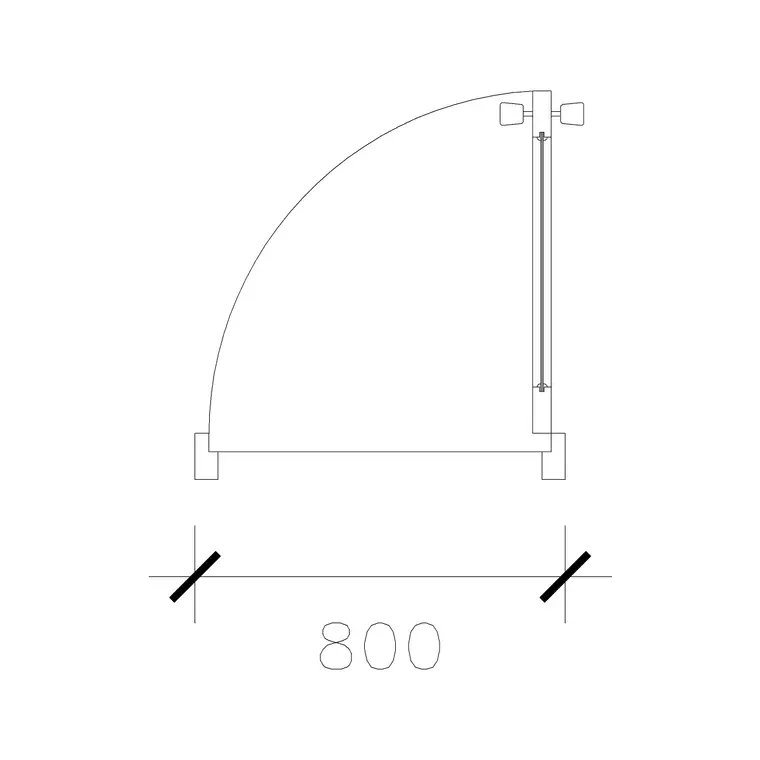

Popular blocks to download
Related categories
Related guides
Explainer
Dynamic Blocks Explained — AutoCAD Guide in 2026
Dynamic blocks explained simply — what they are, how parameters, actions and grips let one AutoCAD block flex into many sizes, and when to use them over plain blocks.
Explainer
Static vs Dynamic Blocks in AutoCAD Compared
Static vs dynamic blocks in AutoCAD — the real difference, the pros and cons of each, when to choose which, and how to convert a static block into a dynamic one.
Explainer
Block vs Group in AutoCAD — The Difference
Block vs group in AutoCAD explained — how a block's single shared definition differs from a group's loose collection, with clear rules for when to use each.