Explainer · nested blocks explained
Nested blocks explained: blocks inside blocks in 2026
By Saumyajit Maity · Published 2 Jun 2024 · Updated 26 May 2026
A nested block is a block that contains other blocks. Instead of being made only from lines, arcs and text, its definition includes one or more whole block references as components. A furnished room block might nest a desk block, a chair block and a computer block; a title-block might nest a company-logo block; a complete door assembly might nest separate leaf, frame and ironmongery blocks. Nesting lets you build big, reusable assemblies out of smaller reusable parts.
The idea is the same one that makes blocks powerful in the first place — define once, reuse many — applied recursively. You build a chair once, you build a desk once, then you build a 'workstation' block that includes both, and now you can array a finished workstation across a floor in seconds while the chair and desk inside it remain editable as their own blocks. It is composition: small components assembled into larger ones, each level still a proper block.
This page explains what nesting actually means in AutoCAD, why it is so useful for assemblies, how editing and exploding behave level by level, and the handful of gotchas — units, layers and over-nesting — that catch people out.
What 'nested' actually means
When you create a block (BLOCK) and your selection includes existing block references, those references become part of the new block's definition. The new outer block now contains inner blocks — it is nested. There is no special command; nesting happens naturally whenever you bundle geometry that already includes blocks. Insert an external DWG that itself contains blocks and you have nested blocks too, since the inserted drawing becomes one block holding the others.
Nesting can go several levels deep. A 'floor' block might contain 'room' blocks, each containing 'furniture' blocks, each containing component blocks. Each level is a genuine block reference pointing to its own definition, so the hierarchy is real, not cosmetic. AutoCAD happily handles this depth, and the Block Editor and tools like the Properties palette let you see and navigate the levels.
Why drafters nest blocks
Nesting buys you assemblies that are reusable as a whole while their parts stay reusable individually. The standout case is a furnished unit: nest a desk, chair and monitor into one 'workstation' block and you can array that complete unit down an open-plan floor in one move, then renumber or re-space them as a set. Yet the chair inside is still the same chair block you use elsewhere, so a global edit to the chair updates it everywhere — standalone and nested alike.
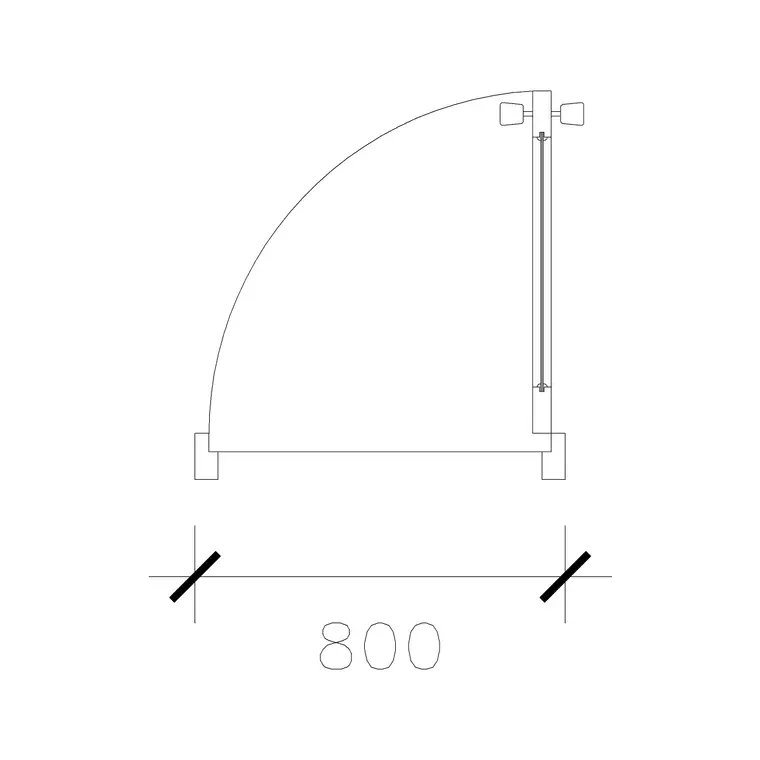
It also keeps complex symbols manageable. A detailed door assembly built from separate leaf, frame, threshold and hardware blocks is easier to maintain than one giant flat block: swap the hardware block for a different handle and every door updates. Nesting mirrors how things are actually assembled in the real world, which makes libraries cleaner and edits more surgical — change one component without rebuilding the whole assembly.
How editing works at each level
Editing respects the hierarchy. Open the outer block in the Block Editor (BEDIT) and you see the inner blocks as block references, which you can reposition, copy or delete within the assembly. To change an inner block's own geometry, you edit that inner block's definition — either open it directly with BEDIT, or, while inside the outer block's editor, select the nested block and open it to descend a level. Edit the inner definition and every place it appears, nested or not, updates.
A useful in-place tool is REFEDIT, which lets you reach into a nested block from the main drawing and edit a selected nested object without fully entering each editor level, then save changes back up the chain. Whichever route you take, the key principle holds: changing an inner block's definition propagates everywhere that inner block is used, so a deliberate edit can ripple widely — usually a feature, occasionally a surprise.
Exploding nested blocks, one layer at a time
EXPLODE peels off exactly one level of nesting per pass. Explode a nested 'workstation' block once and it breaks into its components — but those components are still blocks (the desk block, the chair block), not loose lines. Explode again and each of those breaks down further; keep exploding and you eventually reach raw geometry. This stepwise behaviour is deliberate and usually what you want: it lets you dismantle an assembly to the level you need and no further.
If you want to flatten everything to raw geometry in one go, the XPLODE command gives more control, and some workflows explode repeatedly until nothing remains a block. Be cautious, though — exploding severs the link to the definition for whatever you explode, so an exploded workstation no longer updates when you edit the workstation definition. Explode for one-off surgery on a single copy; keep the assembly intact when you want the reuse and update benefits.
Pitfalls: units, layers and over-nesting
Three things bite when nesting. Units: each block carries its own block units, and on insertion AutoCAD scales by the ratio of block units to drawing units. Nest blocks that were drawn in mismatched units and an inner part can arrive at the wrong scale — keep your whole library on one unit system (millimetres here) to avoid surprise resizing deep in an assembly. Layers: an inner block drawn on layer 0 inherits the layer of the outer block, which inherits the insertion layer; inner blocks on named layers keep those layers. Mixing the two carelessly makes a nested assembly hard to control with layer freezing.
The third pitfall is simply over-nesting. A few thoughtful levels make a library cleaner; ten levels of blocks-in-blocks become a maze where nobody can find which definition to edit and exploding takes forever. Nest where it mirrors real assemblies and aids reuse — workstation, door assembly, furnished room — and stop there. Deliberate, shallow nesting is a tool; deep accidental nesting is a liability.
Building nested assemblies from downloaded blocks
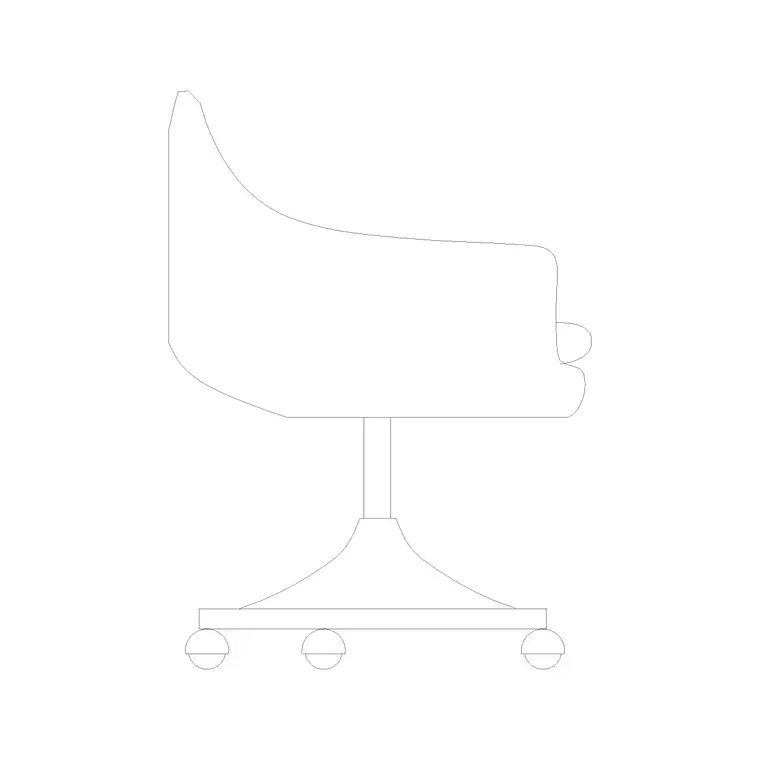
Downloaded blocks are perfect raw material for nesting. Grab a chair, a desk and a monitor as separate clean blocks, arrange them, then run BLOCK on the whole arrangement to create a reusable 'workstation' that nests all three. WBLOCK it to your library and you have a composite unit built entirely from free, licence-clear parts — each of which you can still use independently elsewhere.
Because the inner blocks remain editable definitions, your assembly stays flexible: swap the chair block for a different model and every workstation updates, or refine the desk once and the change flows through. This is exactly how rich block libraries grow — start with simple downloaded components, compose them into assemblies as your projects demand, and let nesting keep the parts reusable while the wholes save you placement time. Just keep everything on consistent units and sensible layers, and the hierarchy stays a help rather than a headache.
Free download
Browse the full library — DWG & DXF, no signup.
Questions
Frequently asked
What is a nested block in AutoCAD?+
A nested block is a block whose definition contains other blocks. For example, a 'workstation' block can nest separate desk, chair and monitor blocks, so the whole assembly is reusable while each part stays an editable block in its own right.
How do I edit a block inside another block?+
Open the outer block in the Block Editor (BEDIT) and select the nested block to descend a level, or open the inner block's definition directly. You can also use REFEDIT to edit a nested object in place. Editing the inner definition updates it everywhere.
Why does exploding a nested block leave more blocks?+
EXPLODE removes only one level of nesting at a time. Exploding a workstation block leaves its desk and chair blocks intact; explode again to break those down. Repeat until you reach raw geometry, or use XPLODE for more control.
Can nested blocks cause scaling problems?+
Yes. Each block has its own block units, and mismatched units between inner and outer blocks can make a nested part insert at the wrong size. Keeping your whole library on one unit system (millimetres here) prevents this.
Related downloads
Blocks for this guide
Popular blocks to download
Related categories
Related guides
Explainer
Dynamic Blocks Explained — AutoCAD Guide in 2026
Dynamic blocks explained simply — what they are, how parameters, actions and grips let one AutoCAD block flex into many sizes, and when to use them over plain blocks.
Explainer
Static vs Dynamic Blocks in AutoCAD Compared
Static vs dynamic blocks in AutoCAD — the real difference, the pros and cons of each, when to choose which, and how to convert a static block into a dynamic one.
Explainer
What Are Block Attributes in AutoCAD?
What are block attributes in AutoCAD? Learn how attributes attach editable text and data to a block, how to define them with ATTDEF, and how to extract schedules.