How-to guide · how to explode a block in autocad
How to explode a block in AutoCAD
By Sumana Kumar · Published 4 Jun 2024 · Updated 23 Feb 2026
Sometimes you don't want a block — you want the raw lines and arcs underneath it, free to edit individually. Exploding a block breaks the block reference apart into its component objects, so a chair stops being one selectable item and becomes the separate polylines, circles and lines it was built from. The command is EXPLODE, and it is one of the first edits every AutoCAD user learns.
This guide shows how to explode a block cleanly, what happens to layers, colours and attributes when you do, how to deal with nested blocks, and — importantly — when not to explode, because exploding throws away the very advantages that make a block useful.
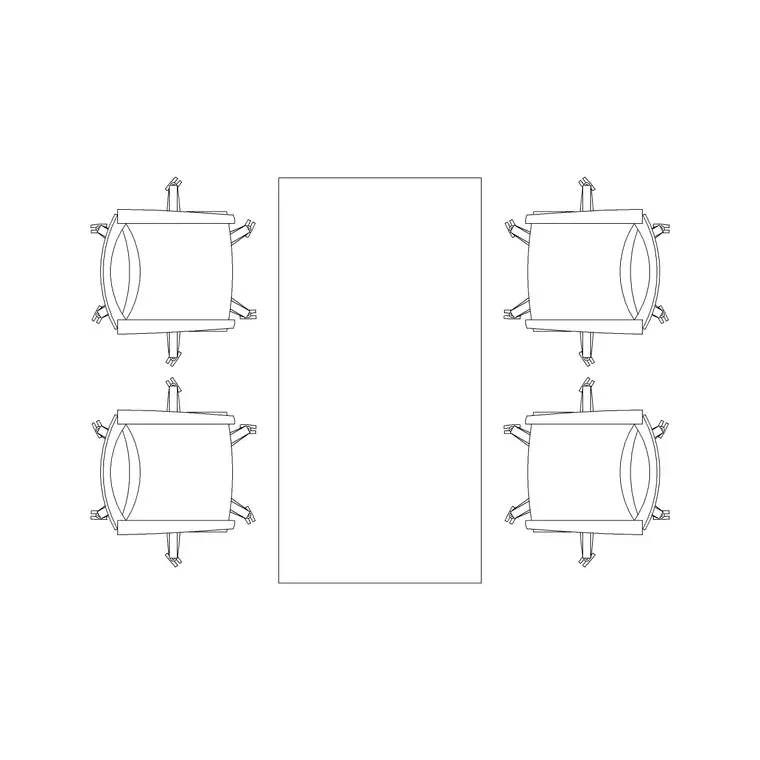
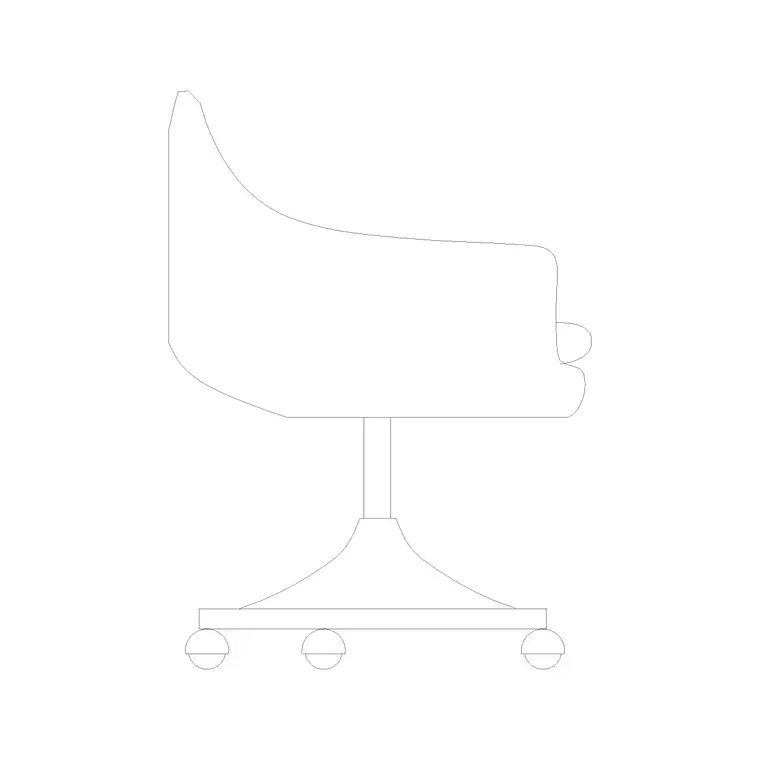
We will use a downloaded furniture block as the running example, but the same EXPLODE behaviour applies to any block, dimension, hatch or polyline you point it at.
Step 1 — Select the block and run EXPLODE
Pick the block reference you want to break apart, then type EXPLODE (or X) and press Enter — or run the command first and select the block when prompted. The block reference vanishes and is replaced by its constituent objects: the individual lines, arcs, circles and text that made up the symbol. They are now separate, editable entities you can grab one at a time.
You can explode several blocks at once by windowing a selection before the command. AutoCAD explodes each block by one level, which matters when blocks are nested, as we cover below.
Step 2 — Check where the geometry landed
After exploding, look at the layers and colours. If the block was drawn on layer 0 and inserted onto, say, a furniture layer, the exploded geometry usually drops back to layer 0 and takes layer 0's colour — which can make a freshly exploded chair suddenly turn white or change lineweight. That is expected behaviour, not a fault; the block was inheriting the host layer, and once exploded the parts revert to the layer they were authored on.
If colours or layers shift unexpectedly, select the exploded objects and reassign their layer in the Properties palette. This is the moment to tidy up before the loose geometry gets mixed into the rest of the drawing.
Step 3 — Handle nested blocks
Blocks often contain other blocks. A workstation block might be built from a desk block plus a chair block. EXPLODE only breaks the top level: explode the workstation and you get a desk block and a chair block, still intact as blocks, not loose lines. To get all the way down to raw geometry, explode again on each sub-block.
If you want to flatten a deeply nested block in one shot, the XPLODE command gives more control over the result (you can force a layer, colour or lineweight as it explodes), and exploding repeatedly will eventually reduce everything to primitives. Just remember each EXPLODE peels one layer of the onion.
Step 4 — Keep attributes with BURST
Here is a trap worth knowing: EXPLODE destroys a block's attribute values, turning them back into the original attribute definition tags (like 'DOORNO') rather than the value you typed ('D-04'). If you need to explode an attributed block but keep the visible text, use BURST instead of EXPLODE.
BURST explodes the block and converts each attribute into ordinary text that retains its current value, so a door tag reading 'D-04' stays as the text 'D-04'. Reach for BURST whenever an attributed block — a door tag, a title-block field, a furniture code — needs to become flat, readable text rather than reverting to its placeholder.
When you should NOT explode a block
Exploding is destructive in the sense that it throws away everything that makes a block valuable. Once exploded, the geometry no longer updates when the block definition changes, it no longer counts as one item in a block count or schedule, and it bloats the file because every copy now stores its own full geometry instead of a lightweight reference.
So before you explode, ask whether you actually need loose lines. If you only want to nudge the symbol, edit the definition with BEDIT instead. If you want a one-off variant, save a renamed copy with BSAVEAS rather than exploding. Reserve EXPLODE for cases where you genuinely need to dissect or repurpose the geometry — extracting a single profile, reusing one element, or cleaning up an imported drawing where everything arrived wrapped in unnecessary blocks.
Why a block won't explode
Occasionally EXPLODE seems to do nothing, and there are a few reasons. The most common is that the block was defined with 'Allow exploding' unchecked in its block definition — uniformly-scaled blocks can be locked against exploding on purpose, often to protect a standard symbol or title-block. You can re-enable exploding by editing the block definition (BEDIT, then the block's properties) if you authored it.
A non-uniformly scaled block (different X and Y scale) can also refuse to explode cleanly in older releases. Minsert blocks (inserted as an array) and external references behave differently too — an xref is not exploded but bound and then exploded. If a block resists, check its definition's explode setting first; that is the usual culprit, and it is a deliberate guard rather than a bug.
Free download
Browse the full library — DWG & DXF, no signup.
Questions
Frequently asked
What does exploding a block actually do?+
EXPLODE breaks a block reference back into its individual objects — the separate lines, arcs, circles and text it was built from — so you can edit each one on its own. The geometry is no longer a single block and no longer updates with the block definition.
How do I explode a block but keep its attribute text?+
Use BURST instead of EXPLODE. BURST explodes the block and converts each attribute to ordinary text that keeps its current value, whereas EXPLODE reverts attributes to their placeholder tag names and loses the values you entered.
Why won't my block explode?+
Most often the block was defined with 'Allow exploding' turned off, which locks it against EXPLODE on purpose. Edit the block definition to re-enable exploding. Non-uniformly scaled blocks and external references also behave differently and may need a different approach.
Does exploding a block reduce or increase file size?+
It increases it. A block reference stores only a name, position and scale, so many copies stay compact. Exploding replaces each reference with a full copy of all its geometry, so a drawing with lots of exploded blocks is larger and slower than one using block references.
Related downloads
Blocks for this guide
Popular blocks to download
Related categories
Related guides
How-to guide
How to Edit a Block in AutoCAD (BEDIT)
Edit a block in AutoCAD with BEDIT — open the Block Editor, change the geometry, save, and update every inserted instance at once. Tips and pitfalls.
How-to guide
How to Rename a Block in AutoCAD (RENAME)
How to rename a block in AutoCAD with RENAME — change a block's name without breaking its references, fix imported names, and apply a convention.
How-to guide
How to Redefine or Replace a Block in AutoCAD
How to redefine or replace a block in AutoCAD — update a block from an external DWG with INSERT, swap one block for another, push library edits in.