Room guide · wet room cad blocks
Free wet room CAD blocks for AutoCAD
By Sumana Kumar · Published 18 Apr 2026 · Updated 13 May 2026
A wet room is a bathroom where the whole floor is the shower. Instead of a tray and an enclosure, the entire room is tanked (waterproofed) and laid to a gentle fall toward a single drain, so the shower is open and level with the rest of the floor. There is no step, no door to the shower, often no screen at all — just a drained zone where the water falls and the rest of the room kept dry by gradient and a little glass. It is the most open, accessible and contemporary way to plan a shower bathroom.
This page gathers the free CAD blocks for a wet room in AutoCAD — WCs, basins and vanities, the section-with-shower elevation, a screen, plus lighting — to arrange on that open, falling floor. All drawn to true millimetre dimensions in DWG and DXF, free for personal and commercial use, no signup or watermark.
The wet-room design problem is not where to put an enclosure — there isn't one — but how to keep the rest of the room usefully dry: where the drain falls, where the splash reaches, and which fixtures must sit clear of the wet zone. Scaled blocks let you plan the dry fixtures around the wet area with confidence.
What makes a wet room different
A conventional shower contains the water in a tray and an enclosure. A wet room does the opposite: it accepts that water will reach the whole floor and waterproofs the entire room to suit, falling the floor toward one drain so it all clears. The shower becomes an open zone rather than an object, with at most a single fixed glass screen to deflect the worst of the spray.
That changes the whole plan. The floor finish, the fall and the tanking are now part of the layout, not just the construction. Accessibility improves dramatically — there is no threshold to step over, which is why wet rooms are the go-to for level-access and ageing-in-place bathrooms. And the room reads as one continuous space, so the dry fixtures — WC, basin, vanity — have to be positioned thoughtfully relative to where the water actually goes. The blocks here are those dry fixtures plus the shower elements; the wet zone is geometry you draw.
Drainage, fall and the wet-to-dry gradient
Everything in a wet room follows the drain. Decide the drain position first — usually under the shower head, at the low point of the fall — and let the floor slope gently toward it from all sides. The shower zone immediately around the drain is the wettest area; from there, distance and a screen keep the far end of the room dry enough for the WC and basin.
In AutoCAD, mark the drain and the direction of fall on the plan as the organising lines, then place the fixtures relative to them. The WC and basin want to sit in the drier zone, away from the direct spray, ideally with a fixed glass screen between them and the shower head to cut the splash. A common arrangement runs the shower at one end over the drain, a screen mid-room, and the WC and vanity at the dry end. The section-with-shower block helps you draw the elevation showing the riser, screen and the wall against the wet zone.
Blocks for an open wet room
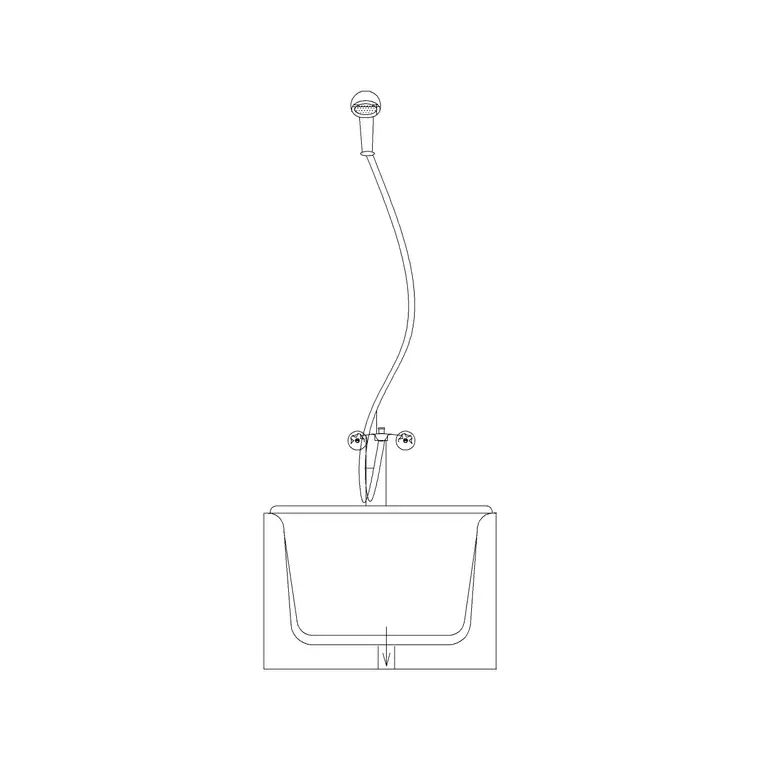
Because there is no shower tray or enclosure to place, the wet room's blocks are the shower fittings and the dry fixtures. Use the bath-front-section-with-shower block to draw the shower wall in elevation and section — the riser, the head and the screen line. A single fixed glass screen, rather than a full enclosure, is usually all the wet room needs to deflect spray; draw it as the divider between wet and dry.
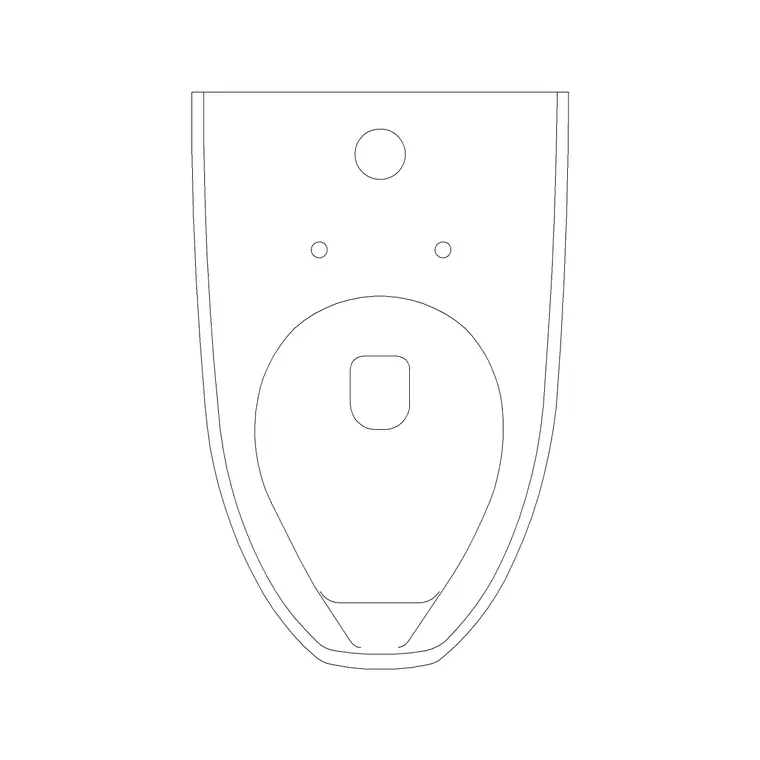
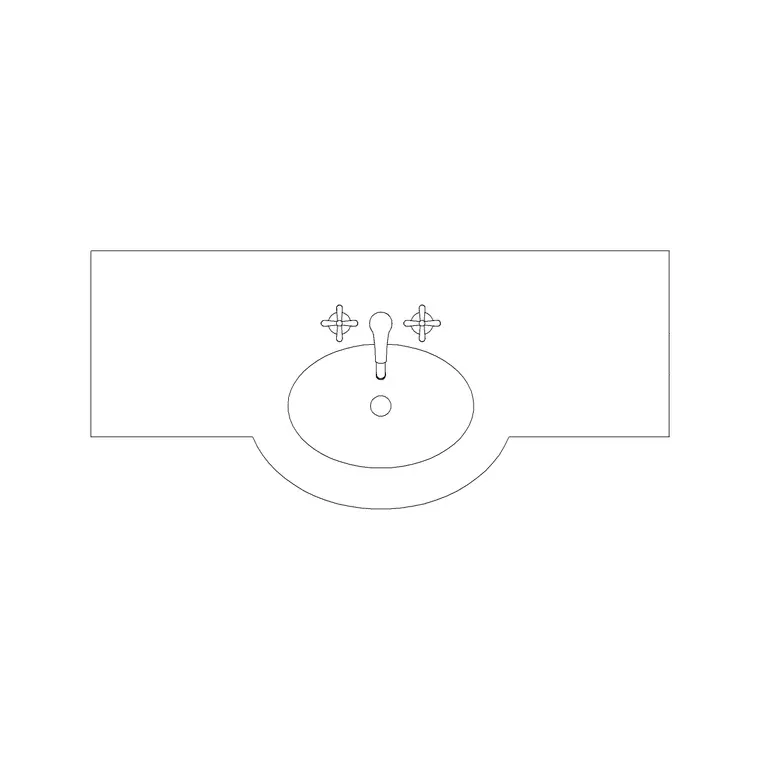
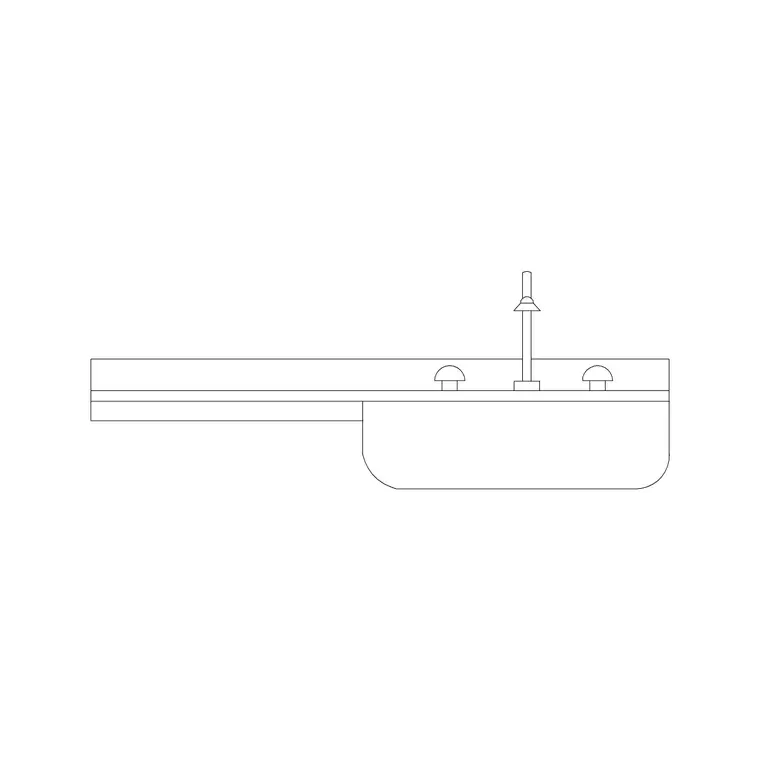
For the dry fixtures, place a toilet commode and a basin or vanity at the dry end. A wall-hung WC and a wall-hung basin suit a wet room especially well: with nothing meeting the floor, the tanked, falling floor runs unbroken beneath them and is far easier to keep clean and continuous. Pair the basin with a sink elevation for the wall drawing. Finish with damp-rated lighting — a ceiling lamp over the room and a wall lamp at the mirror — chosen for the wet environment, since in an open wet room the whole ceiling is effectively over a shower.
Wet room dimensions and clearances
Treat these as planning ranges and confirm against your fittings and the waterproofing detail. A wet room can be compact — the open shower needs no tray, so a small wet room works from roughly 1.5 by 2.0 m — but it scales up comfortably because the open floor is flexible. Shower zone: allow a clear area of around 900 by 900 mm or more under the head for comfortable washing. WC: 600–700 mm projection. Basin or vanity: from about 500–600 mm.
For clearances, keep the dry fixtures clear of the direct spray and beyond the screen line, give the open shower a generous clear area under the head, and ensure the door does not swing into the wettest zone where water could escape the threshold. Crucially, the floor fall and the tanked area are part of the design — the whole floor is waterproofed, and the fall to the drain has to be gentle enough to walk on safely yet positive enough to clear water.
Drawing the wet room in AutoCAD
Begin with the drain and the fall. Mark the drain at the shower's low point and indicate the slope direction across the floor — these lines drive the whole layout. Place the shower head and the fixed screen, then position the WC and basin at the dry end, beyond the screen, clear of the spray. Add the door so its swing stays out of the wettest zone.
Insert blocks at scale 1 in a millimetre drawing (0.001 in metres, or set INSUNITS to millimetres). Layer the tanked area, the floor fall, the fixtures, the screen and the lighting separately — the tanking and fall plan is a distinct drawing a wet room genuinely needs, so keeping it on its own layer pays off. Wall-hung fixtures keep the floor continuous, so favour them on the plan. As a final check, follow the water from the head to the drain and confirm the dry fixtures really are in the dry zone.
Common wet room mistakes
The first mistake is treating the wet room as an ordinary bathroom with the enclosure deleted. The floor fall, the drain position and full tanking are the design — leave them off the drawing and you have not designed a wet room, you have drawn a room that will leak.
Second, putting dry fixtures in the splash zone. A WC or vanity too close to an open shower head, with no screen, gets wet every time someone showers; place them beyond the screen in the dry end and confirm it on the plan.
Third, getting the fall wrong in principle — too flat and water pools, too steep and the floor is uncomfortable to stand on. Show the fall and the drain on the plan and coordinate them with the construction detail. Finally, floor-standing fixtures everywhere: they interrupt the tanked, falling floor and trap water at their bases. Favour wall-hung WCs and basins so the waterproof floor runs unbroken beneath — and watch the units when inserting, since a shower-section block out of scale is an INSUNITS mismatch, not a wrong block.
Free download
Browse the full library — DWG & DXF, no signup.
Questions
Frequently asked
What is the difference between a wet room and a shower room?+
A shower room has a shower in a tray with an enclosure or screen, keeping the rest of the floor dry by containment. A wet room waterproofs the entire floor and falls it to a single drain, so the shower is open and level with no tray and often no door — the whole room is built to get wet and drain.
How small can a wet room be?+
Because the open shower needs no tray or enclosure, a wet room can be compact — it works from roughly 1.5 by 2.0 m. Allow a clear shower area of around 900 by 900 mm under the head, and keep the WC and basin in the dry end beyond a screen. Drop the scaled blocks in to confirm the wet and dry zones separate cleanly.
Why use wall-hung fixtures in a wet room?+
Wall-hung WCs and basins leave the floor unbroken, so the tanked, falling floor runs continuously beneath them. That makes the waterproofing more reliable and the floor far easier to keep clean, with no fixture bases for water to pool around. They suit the open, drained nature of a wet room better than floor-standing units.
Are wet rooms good for accessible bathrooms?+
Yes. A wet room has no shower threshold to step over, which makes it one of the best choices for level-access, wheelchair-friendly and ageing-in-place bathrooms. Pair the open shower with wall-hung fixtures and confirm the drain, fall and clear floor against the accessibility standard governing your project.
Related downloads
Blocks for this guide
Related categories
Related guides
Room guide
Guest Washroom CAD Blocks — DWG Download
Design a guest washroom in AutoCAD with free CAD blocks — WC, vanity basin and compact shower drawn to scale. DWG & DXF, no signup, commercial-use OK.
Room guide
Free Bathroom CAD Blocks — Design a Bathroom
Design a full bathroom in AutoCAD with free CAD blocks — WC, basin, bath and shower drawn to scale in plan and elevation. DWG & DXF, no signup.
Room guide
Master Bathroom CAD Blocks — DWG Layouts
Design a master bathroom in AutoCAD with free CAD blocks — double vanity, freestanding bath, walk-in shower and WC drawn to scale. DWG & DXF, no signup.