Block landing · weight bench cad block
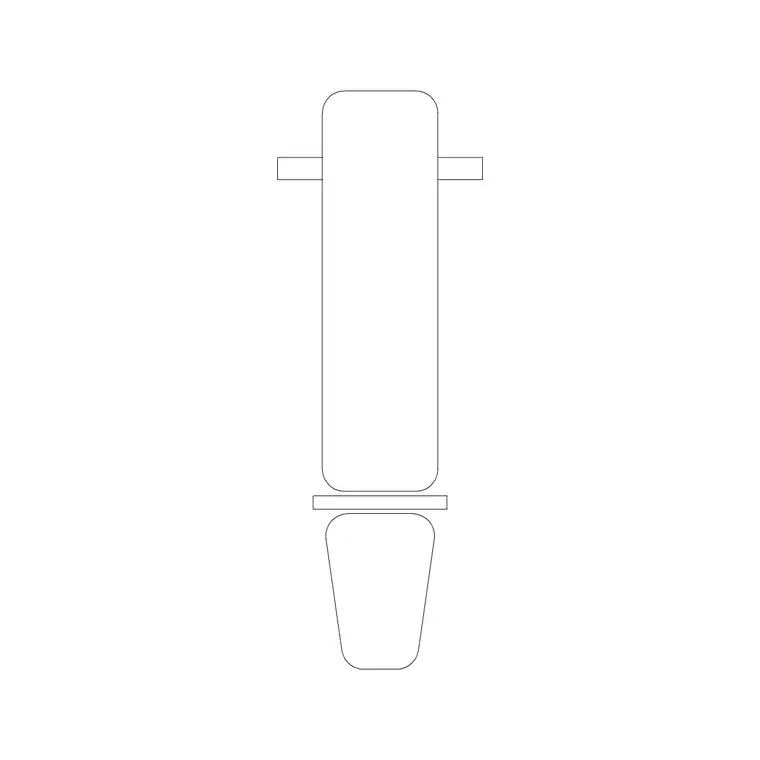
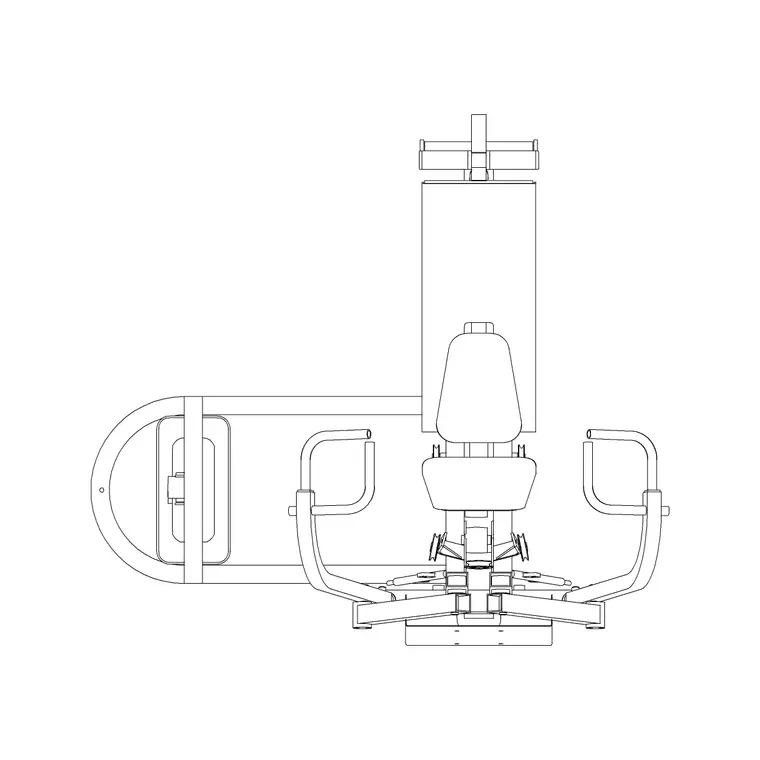
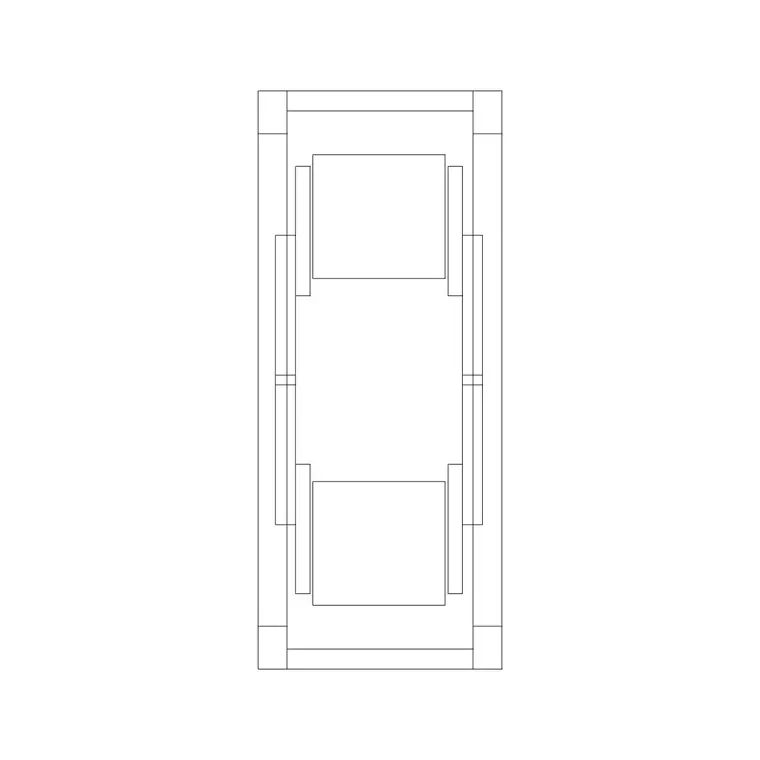
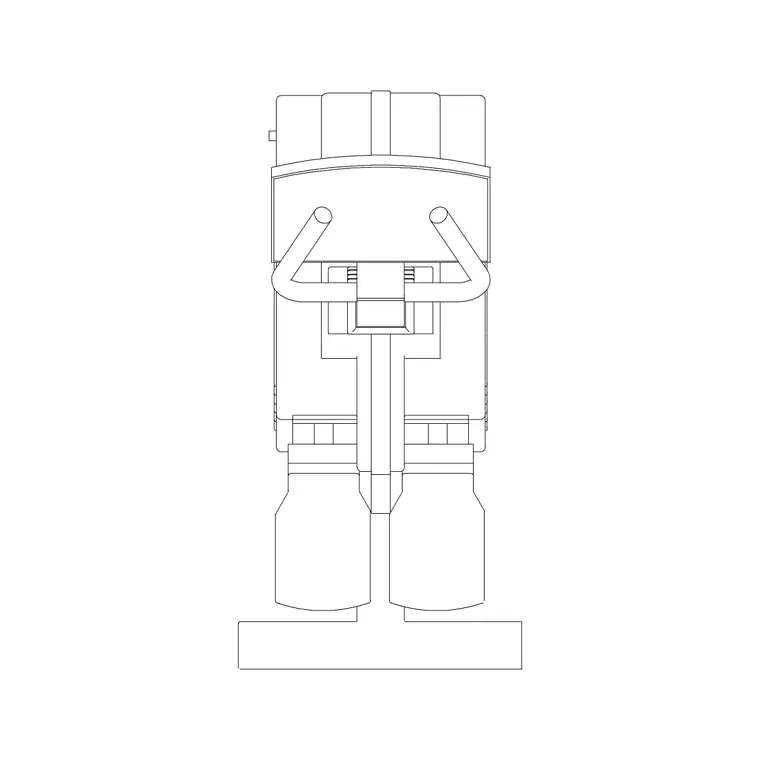
Free weight bench CAD block in DWG and DXF
By Saumyajit Maity · Published 25 May 2025 · Updated 7 Jan 2026
The weight bench is the anchor of a free-weights area, and laying one out is less about the bench itself than about the working space a lifter needs around it: room to load and unload a barbell, room to step over the bench, and room for a spotter to stand. A scaled weight bench CAD block lets you draw that working zone honestly. This page offers a free weight bench block in DWG and DXF — flat, incline and adjustable types — drawn to true millimetre dimensions in plan and elevation, ready for AutoCAD 2004 or later. It is free for personal and commercial use, with no signup, no watermark and no credit required.
A free-weights bay is the part of a gym most often laid out too tightly, because the bench frame is small and tempts you to pack benches close. The lifter, the loaded bar and the spotter need far more room than the frame suggests, and drawing the bench with its working zone is what keeps the bay safe on paper before it is safe in use.
Flat, incline and adjustable benches
Three bench types cover most layouts. A flat bench is the simplest — a low padded platform on a frame, used for pressing and as a base for dumbbell work. An incline bench raises the backrest to a fixed angle and so reaches further back in plan. An adjustable bench pivots through flat, incline and upright positions, which means its footprint changes with the setting; draw it in its longest (flat or decline) position to be safe on space.
Each type is drawn to its real envelope. When you mix them in a bay — a couple of flats, an incline, an adjustable by the dumbbell rack — the scaled blocks let you confirm a lifter on one bench does not crowd the next.
Typical weight bench dimensions
Design around these ranges. Bench footprint: roughly 1200–1800 mm long by 500–650 mm wide, the longer figure for benches with an attached rack or leg developer. Seat height: around 400–480 mm. An incline or adjustable bench reaches higher and, when reclined, longer.
The number that really drives the bay is the working zone, not the frame: allow space at the head end to load a barbell, a clear band each side for dumbbell work, and room for a spotter behind. A bench station commonly wants a working footprint well over 2000 mm in each direction once you account for the bar and the people. Draw that zone and the bay spaces itself correctly.
Plan for the bay, elevation for the bench
Free-weights bays are laid out in plan: benches arranged around the dumbbell racks and the mirror wall, each with its working zone drawn so they do not overlap. The plan block is what you copy around the bay and rotate to face the mirrors.
The elevation is useful for the mirror-wall elevation and for any bench paired with a rack or a barbell, where you want to show the bar height and confirm a loaded bar clears a wall fixing or a low soffit. On a section through a mezzanine free-weights area, the side view proves a standing lifter and an overhead press clear the floor above.
How to insert and lay out benches
The bench is drawn full size in millimetres. Insert at scale 1 in a millimetre drawing, 0.001 in a metre drawing, or set INSUNITS to millimetres so AutoCAD converts on insertion. Run INSERT, snap the base point to the centre of the bench, and rotate it to face the mirror or the rack it works with.
When you arrange a bay, place the dumbbell rack first, then position benches in front of it with their working zones clear of each other and of the main walkway. Keep benches on the equipment layer with the rest of the free-weights kit, and tag each as a block so the bench count drops into an equipment schedule for the supplier.
Where weight bench blocks are used
Weight bench blocks appear in commercial gym free-weights areas, hotel and residential gyms, strength-and-conditioning suites, school and university sports halls, and physiotherapy gyms. Equipment suppliers use them on layout drawings; architects and fit-out designers use them to prove a strength brief fits and that the floor loading and mirror fixings suit the bay.
Because free weights need solid floors and good ventilation, the tagged block also helps coordinate the bay with the structural and mechanical drawings — confirm the bench positions sit over a slab rated for the loading and under adequate air supply. Pair the bench with the wider gym equipment blocks to complete the strength side of a gym floor.
Pairing benches with racks and dumbbells
A bench rarely works alone. A flat or incline bench is usually paired with a barbell rack or a power rack for pressing, and with the dumbbell rack for seated and supported lifts, so the bench position is really set by what it works alongside. Place the rack first — its footprint and the bar's loaded length are fixed — then position the bench so a lifter can rack and unrack the bar safely, and the scaled blocks make that relationship obvious.
The dumbbell rack is the other anchor. Benches cluster in front of it so lifters can grab weights and sit straight down, which means the working zones of several benches and the access lane to the rack all have to coexist. Drawing the rack, the benches and their working zones together is what keeps the bay from becoming a bottleneck at busy times. Once a bay layout works, WBLOCK the rack-plus-benches arrangement as a reusable unit so it can be repeated cleanly across a multi-site brand.
Free download
Browse the full library — DWG & DXF, no signup.
Questions
Frequently asked
Does the block cover flat, incline and adjustable benches?+
Yes. The set covers the common types, drawn to their real envelopes. An adjustable bench changes footprint with its setting, so draw it in its longest position to stay safe on space when laying out a bay.
Should I draw the working zone around the bench?+
Yes — the working zone, not the frame, drives a free-weights bay. Allow room to load a barbell, space each side for dumbbell work and room behind for a spotter. The scaled block lets you draw that zone so benches do not crowd.
What scale is the weight bench drawn at?+
Full size in millimetres. Insert at scale 1 in a millimetre drawing, 0.001 in a metre drawing, or set INSUNITS to millimetres so AutoCAD rescales automatically on insertion.
Is the weight bench block free for commercial gyms?+
Yes. It downloads free in DWG and DXF with no signup, no watermark and no attribution, and it is cleared for commercial fit-out and project use.
Related downloads
Blocks for this guide
Related categories
Related guides
Block landing
Free Gym Equipment CAD Blocks — DWG Download
Download free gym equipment CAD blocks in DWG and DXF — treadmills, weight machines, racks and benches in plan and elevation, AutoCAD 2004+, no signup.
Block landing
Free Treadmill CAD Block — DWG & DXF Download
Download a free treadmill CAD block in DWG and DXF — drawn in plan and elevation with the run-off zone, true to size for AutoCAD gym layouts. No signup.
Block landing
Free Exercise Bike CAD Block — DWG Download
Download a free exercise bike CAD block in DWG and DXF — upright, spin and recumbent bikes in plan and elevation, true to size for gym layouts. No signup.