Block landing · sports car cad block
Free sports car CAD blocks for AutoCAD
By Sumana Kumar · Published 30 Apr 2025 · Updated 10 Jan 2026
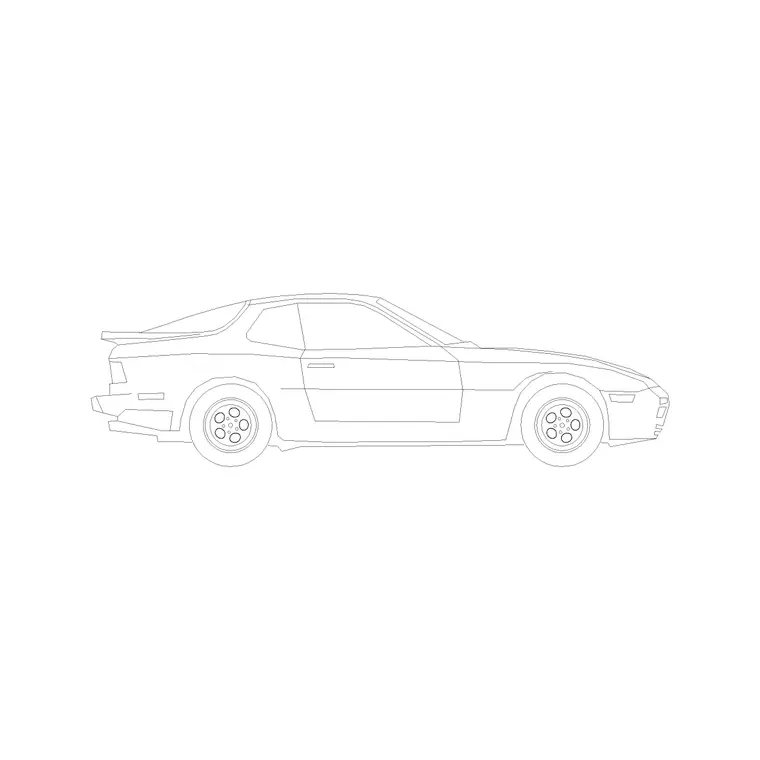
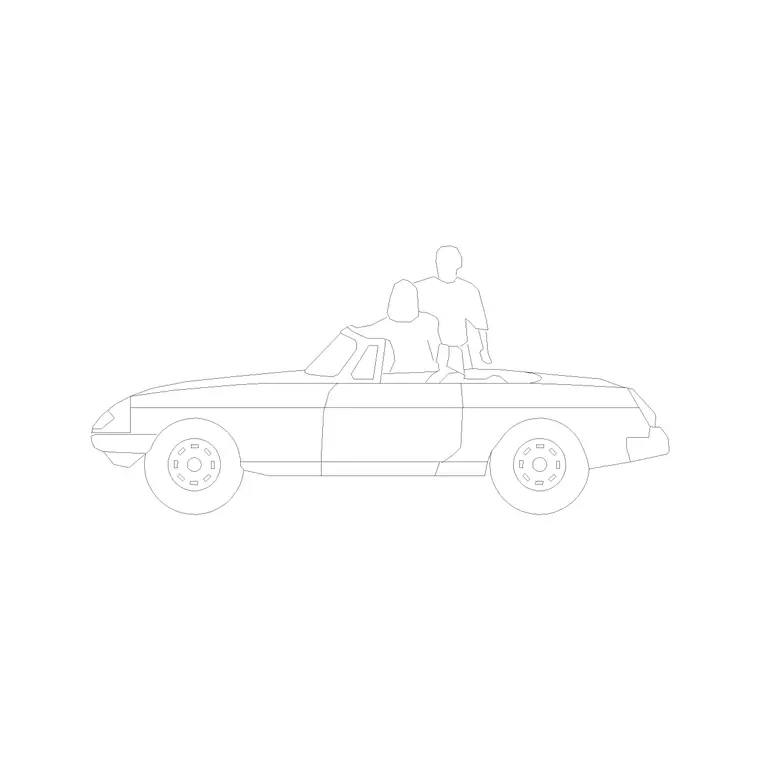
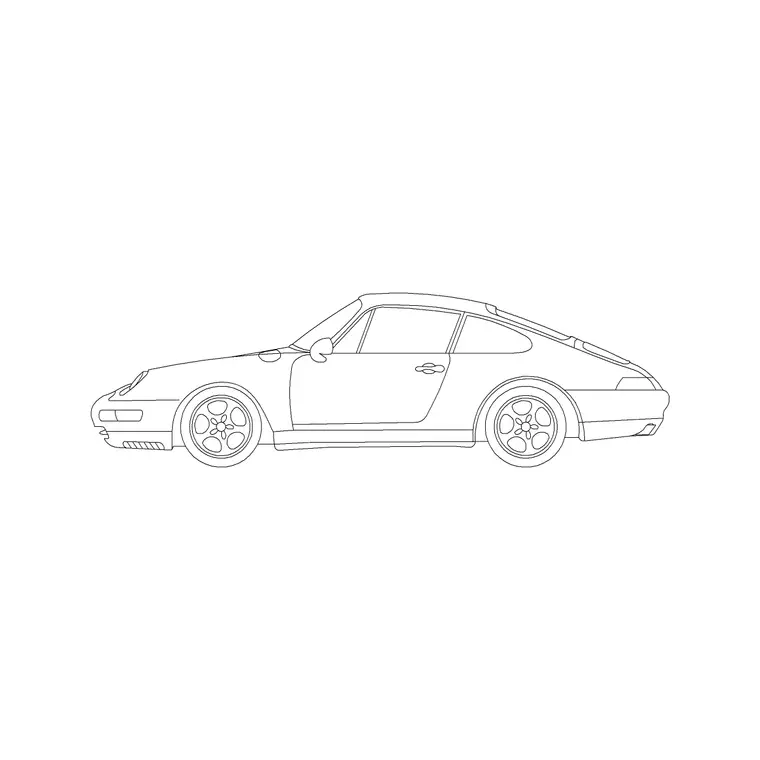
A sports car is the block you reach for when a drawing needs to look fast. Low, wide and aggressively proportioned, the performance car gives a showroom, a luxury driveway or a render-ready streetscape a hit of energy that a generic saloon cannot. This page collects free sports car CAD blocks in DWG and DXF, in plan and elevation, drawn at true millimetre dimensions for AutoCAD 2004 and later. Every file is free for personal and commercial work, with no signup, no watermark and no attribution required.
The sports car is as much a styling element as a functional vehicle. Its long bonnet, low roof and wide stance read instantly as performance, which makes it the natural choice for high-end dealership layouts, premium residential schemes, hotel forecourts and any presentation drawing that wants aspiration on the page. Use these blocks where the character of the vehicle matters — and remember that its low height and wide track behave a little differently from a standard car in a parking layout.
What gives a sports car block its look
A sports car block reads by its proportions: a long bonnet, a low, raked windscreen, a cabin pushed back toward the rear, and a wide, planted stance over large wheels. In plan the footprint is wide for its length, with the wheels filling the corners. In elevation the very low roof line — often well under a standard car's — and the dramatic, wedge-like profile are the giveaway.
The blocks here capture that aggressive geometry as clean references, with the body, wheels and glasshouse on separable layers. The sports car is primarily a presentation and styling block, so it shines as the subject of a showroom or premium-driveway drawing, but it can also serve as a characterful context vehicle to lift the tone of a streetscape.
Sports car dimensions to design around
Design against these proportions. A typical sports car runs roughly 4200–4700 mm long and 1850–2000 mm wide — note the width is often greater than a saloon despite a similar or shorter length, because the wide track is part of the look. The headline figure is the height: commonly 1150–1300 mm at the roof, dramatically lower than a saloon's 1450 mm and an SUV's 1700 mm.
For parking, the length fits a standard bay easily, but the extra width is worth checking against bay width and door clearance, and the very low ground clearance matters at ramps and speed bumps. In an elevation, that low roof line is the whole point: placed beside taller cars it reads instantly as the performance machine, so getting the height right is what sells the block.
Plan and elevation in presentation work
Sports cars earn their keep mostly in presentation, where the elevation does the heavy lifting. A side elevation along a showroom plinth or a premium forecourt reads as aspirational; a front elevation, low and wide, faces the viewer with intent. The low, wedge profile contrasts beautifully with taller vehicles and architecture, which is exactly why it lifts a render-ready line drawing.
The plan view still matters where the sports car sits in a real layout — a dealership display floor, a hotel drop-off, a luxury apartment's private parking. There the footprint and the wide track confirm the display or parking spaces suit the vehicle. Several downloads carry both views, so one file covers the showroom plan and the hero elevation.
Inserting the sports car block
Sports car blocks are drawn full size in millimetres. Insert at scale 1 in a millimetre drawing, 0.001 in a metre drawing, or set INSUNITS to millimetres so AutoCAD rescales on insertion if your template differs.
Use INSERT or a tool palette, place the insertion point at the centre for a display layout or on the ground line for an elevation, and rotate to present the car at its best angle on a plinth or forecourt. Because the low roof is the signature, snap elevations precisely to the ground line so the car sits planted rather than floating. Keep the cars on a dedicated layer so you can pick them out as the subject or grey them back as context.
Where sports car blocks are used
Sports cars suit premium and aspirational work. High-end and supercar dealership showroom layouts, where the display vehicle is the focal point. Luxury residential driveways and private parking. Hotel, casino and members'-club forecourts and drop-offs. Render-ready streetscapes that want energy and prestige. Marketing and competition boards where a hero vehicle sells the scheme.
They also work as an occasional character vehicle in an ordinary street scene to signal an upmarket location. Use them sparingly for impact — one sports car reads as special, a car park full of them reads as unrealistic. Mix one with sedans and an SUV from the vehicles category for a believable premium scene with a standout focal vehicle.
Sports car versus coupe, convertible and sedan
The sports car sits among several styling-led blocks, and the distinctions are about character and proportion. A coupe is a sleek two-door but usually taller and more practical than an outright sports car — the everyday sporty choice. A convertible shares the low, wide stance but loses the fixed roof, reading as open-top leisure rather than focused performance. A sedan is the formal, four-door contrast you use when you want restraint rather than drama.
Choose the sports car when you want maximum visual energy and the lowest, widest profile. Choose a coupe or convertible for a softer sporty or leisure mood, and a sedan for corporate or family restraint. All of these live in the vehicles category, so you can pick the exact level of drama each drawing calls for.
Free download
Browse the full library — DWG & DXF, no signup.
Questions
Frequently asked
How is a sports car block different from a coupe?+
A sports car is lower, wider and more aggressively proportioned, built to read as outright performance. A coupe is a sleek two-door but usually taller and more practical — the everyday sporty choice rather than the focal supercar.
How low is a sports car in elevation?+
Commonly 1150–1300 mm at the roof, well below a saloon's 1450 mm. That low profile is the whole point of the block, so place elevations precisely on the ground line to keep the car looking planted.
Does a sports car fit a standard parking bay?+
On length, yes — but the extra width is worth checking against bay width and door clearance, and the low ground clearance matters at ramps and speed bumps. Drop the scaled block in to confirm the fit.
Are the sports car CAD blocks free for commercial use?+
Yes. Every sports car block downloads free in DWG and, where available, DXF, with no signup, no watermark and no attribution requirement, and they are cleared for commercial project use.
Related downloads
Blocks for this guide
Related categories
Related guides
Block landing
Free Car Plan View CAD Block — DWG Download
Download a free car plan-view CAD block in DWG and DXF — the top-down footprint for parking layouts and site plans. AutoCAD 2004+, no signup.
Block landing
Free Car Elevation CAD Block — DWG Download
Download a free car elevation CAD block in DWG and DXF — side and front views for streetscapes, showrooms and presentations. AutoCAD 2004+, no signup.
Block landing
Free Sedan Car CAD Blocks — DWG Download
Download free sedan car CAD blocks in DWG and DXF — saloon and luxury sedans in plan and elevation for parking and showrooms. AutoCAD 2004+, no signup.