Block landing · reading lamp cad block
Free reading lamp CAD blocks in DWG and DXF
By Saumyajit Maity · Published 12 Jun 2022 · Updated 16 Feb 2026
A reading lamp is the task light positioned to throw a focused pool onto a page, a desk or a workspace — the adjustable desk lamp, the bedside reading light, the directional task fitting beside an armchair — and a scaled reading lamp CAD block lets you show that task lighting precisely where it is needed. This page collects free reading lamp CAD blocks in DWG and DXF: desk and task lamps, bedside reading lamps and adjustable-arm fittings, drawn at true millimetre dimensions for AutoCAD 2004 or later. Everything is free for personal and commercial work, with no signup and no watermark.
What sets a reading lamp apart from a decorative table lamp is intent: it is positioned for function, aimed at a reading or working plane, and its placement is governed by where a person sits and works. Use these blocks to detail studies and home offices, bedrooms and bedside cabinets, libraries, reading corners and desks, and to show task lighting that lands on the surface it is meant to serve.
What a reading lamp block represents
A reading lamp is a task fitting, so its position relative to the user is the point. In plan it reads as a small base footprint on a desk or bedside surface, placed to one side of the working area so it lights the page without shadowing the hand. In elevation it carries the recognisable task silhouette — a base, an adjustable or angled arm, and a directional head pointed down at the reading plane.
Because its job is focused light, the block helps you show where the task lighting actually falls. On a desk it sits at the back corner so the arm reaches over the work; at a bedside it sits where a seated reader can reach the switch. The fitting is drawn on an accessory or lighting layer alongside the other loose lighting, and the head and arm are separate elements so you can angle a directional lamp toward the seat.
Reading lamp vs decorative table lamp
A reading lamp and a table lamp can share a surface, but they are different in intent and that should show in the drawing. A decorative table lamp is chosen for ambience and form, casting a soft general glow; a reading lamp is chosen for task light, with a directional head aimed at a specific plane. The decorative lamp dresses a console; the reading lamp earns its place on a desk or beside a chair where someone actually reads.
Choosing the right block sets the right intent. On a home-office or study elevation, a directional task lamp on the desk communicates 'this is a working surface' in a way a soft drum-shade table lamp does not. Because both live in the lighting category here, you can mix ambient and task lighting deliberately across a room.
Typical reading lamp dimensions to design around
Use these ranges as you scale a reading lamp. Desk and task lamps: base footprint roughly 120–200 mm, arm reach 300–500 mm, overall height when upright 400–600 mm. Bedside reading lamps: similar base, overall height 350–500 mm. Clamp and architect-style task lamps reach farther on a sprung arm, often 500–700 mm of horizontal reach.
The figure that matters for a task lamp is the reach of the head over the working plane. On a desk, the arm needs to bring the head over the page or keyboard without the base eating the working area, so place the base at the back or side and let the arm reach in. At a bedside, the head should sit at a height that lights a book held by a propped-up reader. Drawing the scaled block in elevation lets you check that reach and height directly.
How to insert and place the block
These reading lamp blocks are drawn full size in millimetres. Insert at scale 1 in a millimetre drawing, 0.001 in a metre drawing, or set INSUNITS to millimetres so AutoCAD rescales on insertion.
Run INSERT or drag the DWG from a tool palette, snap the insertion point to the base, and place the lamp at the back or side of a desk in plan, or on the bedside surface beside the head of the bed. Rotate an adjustable lamp so the arm and head reach over the working plane. Because the lamp is a single block reference, you can copy it across a row of desks in a study or office and angle each head toward its own workstation.
Where reading lamp blocks are used
Reading lamps appear in home offices and studies, bedrooms and bedside arrangements, libraries and reading rooms, hotel rooms, desks and workstations, and reading corners with an armchair. They are a staple of residential and hospitality interiors and of any space where focused task light is part of the brief. In a lighting layout they mark a task fitting that needs a nearby socket rather than ceiling wiring.
Pair the reading lamp blocks with table lamp, floor lamp and wall light blocks to build a layered ambient-plus-task scheme, and with desk, bed and armchair blocks from the furniture set to show the lamp serving its user. As licence-clear blocks they suit working drawings, presentation packs and student schemes.
Placing task light where it is actually used
The discipline with a reading lamp is to place it for the person, not the surface — and a scaled block makes that easy to get right. On a desk, the lamp goes to the side opposite the writing hand so the head can light the page without the hand casting a shadow, and its base sits clear of the keyboard and work zone. At a bedside, it goes where a propped-up reader can reach the switch and where the head lights a held book rather than glaring across the room. Dropping the block into the plan and elevation with the user's position in mind catches the awkward placements before they are built.
The coordination habits mirror the other loose lighting. Keep reading lamps on a tagged accessory or lighting layer so the same drawing serves a clean technical issue and a dressed presentation. Provide a socket within the lamp's reach — a desk lamp needs a nearby outlet or a grommet, a bedside lamp a socket at the bedhead. And tag each with a specification reference so the task lighting flows into the FF&E or electrical schedule alongside the rest, keeping the count on the plan and the schedule in step.
Free download
Browse the full library — DWG & DXF, no signup.
Questions
Frequently asked
What's the difference between a reading lamp and a table lamp?+
A reading lamp is a task light with a directional head aimed at a reading or working plane; a table lamp is a decorative fitting casting a soft general glow. Choosing the right block sets the right intent in a study, office or bedside drawing.
Where should I place a reading lamp on a desk?+
At the back or side of the desk, on the side opposite the writing hand, so the arm reaches the head over the page without the base eating the work zone or the hand casting a shadow. The scaled block lets you check that reach in plan and elevation.
What scale are the reading lamp blocks drawn at?+
Full size in millimetres. Insert at scale 1 in a millimetre drawing, 0.001 in a metre drawing, or set INSUNITS to millimetres so AutoCAD rescales automatically on insertion.
Are the reading lamp blocks free for commercial use?+
Yes. Every block downloads free in DWG and, where available, DXF, with no signup, no watermark and no attribution requirement, and they are cleared for commercial project use.
Related downloads
Blocks for this guide
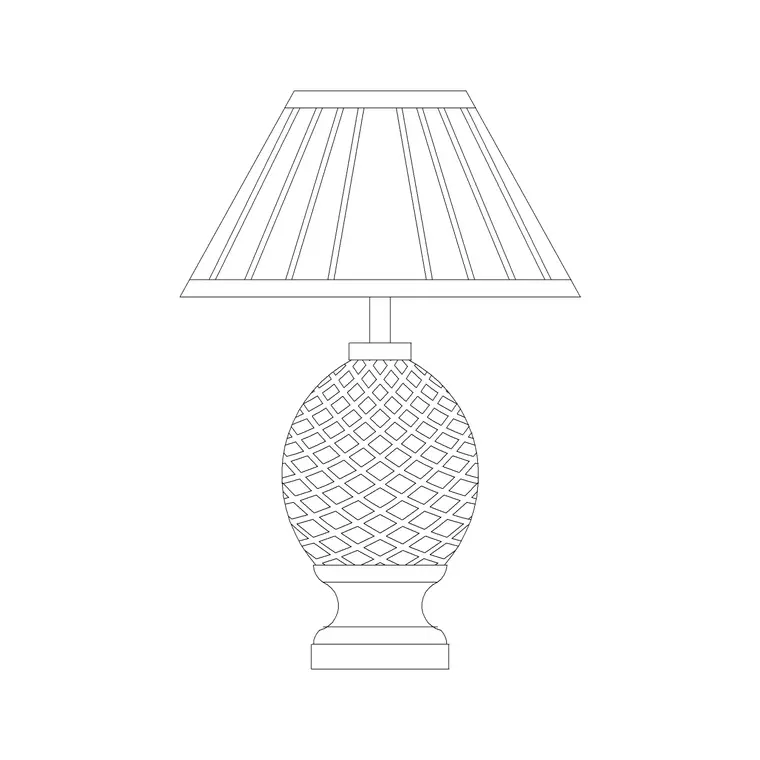
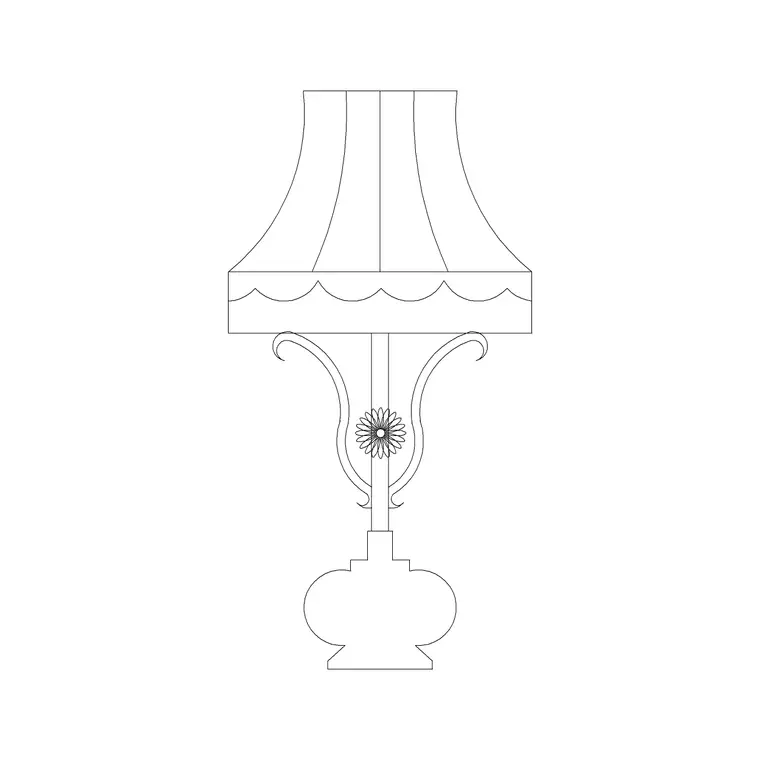
Popular blocks to download
Related categories
Related guides
Block landing
Free Lighting Fixtures CAD Blocks — DWG Download
Download free lighting fixtures CAD blocks in DWG and DXF — chandeliers, wall lights, downlights and pendants in plan and elevation for AutoCAD.
Block landing
Free Table Lamp CAD Blocks — DWG Download
Download free table lamp CAD blocks in DWG and DXF — classical and decorative table lamps in plan and elevation for AutoCAD 2004+. No signup, commercial-use OK.
Block landing
Free Floor Lamp CAD Blocks — DWG Download
Download free floor lamp CAD blocks in DWG and DXF — straight and arc floor lamps in plan and elevation for AutoCAD 2004+. No signup, free for commercial use.