Block landing · motorcycle cad block
Free motorcycle and heavy bike CAD blocks for AutoCAD
By Sumana Kumar · Published 23 Mar 2025 · Updated 5 Jun 2026
A motorcycle takes a fraction of a car's space, which is precisely why a scaled motorbike block is so useful when you are squeezing two-wheeler parking into a tight site or adding life to a street. From heavy touring and sports bikes to off-road machines, the motorcycle is the block for dedicated bike bays, mixed parking provision, dealership layouts and any drawing where two wheels belong. This page collects free motorcycle and heavy bike CAD blocks in DWG and DXF, in plan and elevation, drawn at true millimetre dimensions for AutoCAD 2004 and later. Every file is free for personal and commercial work, with no signup, no watermark and no attribution required.
Motorcycle parking is its own small discipline: bikes park at an angle or end-on, need stand clearance and a manoeuvring strip, and several fit in the space of one car bay. Use these blocks to lay out motorcycle bays correctly, to show that a development provides for two-wheelers, and to add a heavy bike or an off-roader to a streetscape, dealership or adventure-themed drawing.
What a motorcycle block represents
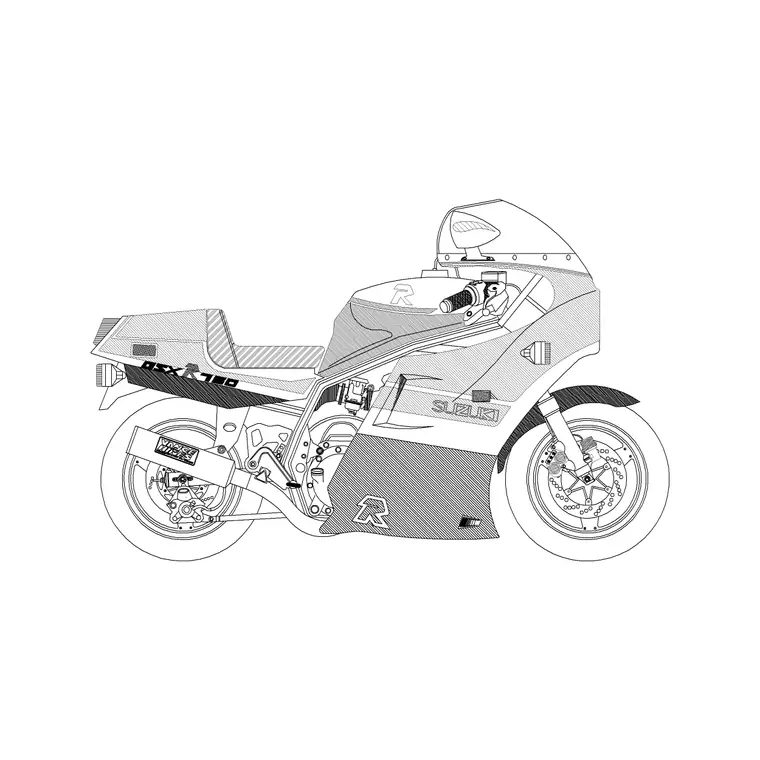
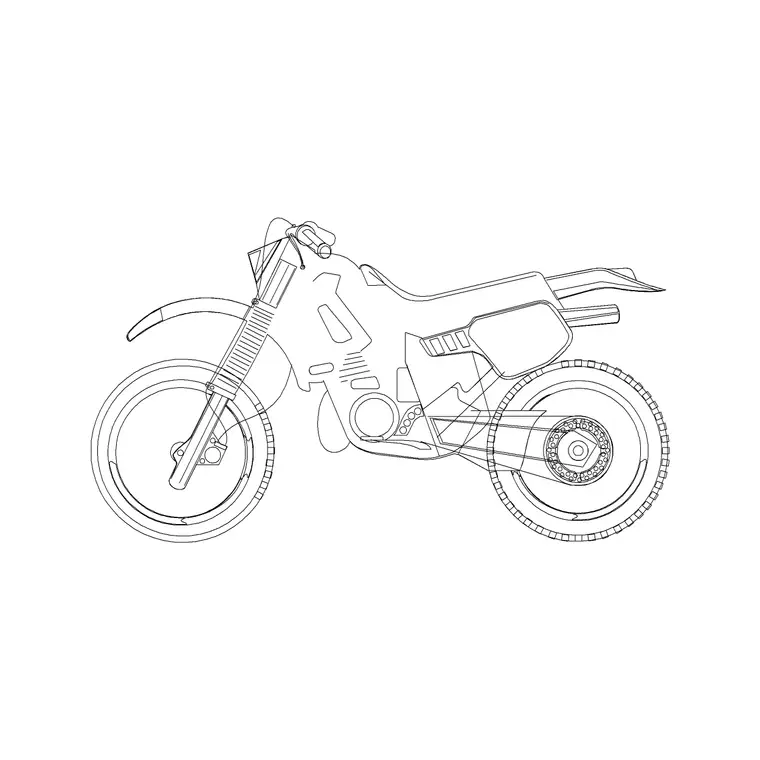
These blocks cover the motorcycle range: large heavy bikes — tourers, cruisers and big sports bikes — and lighter off-road and adventure machines. In plan a motorcycle is a slim, elongated shape, far narrower than any car, with the two wheels in line. In elevation the side profile shows the frame, tank, seat and wheels, and the handlebar height that matters for headroom under low cover.
The blocks here are clean references with the frame, wheels and rider area on separable layers. A heavy bike reads as a substantial machine in plan and elevation; an off-road bike reads as taller and more upright with knobbly-tyred wheels. Both serve as realistic vehicles for two-wheeler parking design and as character blocks in dealership, streetscape and adventure drawings.
Motorcycle dimensions to design around
Design against these ranges. A motorcycle runs roughly 2000–2400 mm long and just 700–900 mm wide at the handlebars — the width is the key figure, since it is what packs bikes into a small footprint. A heavy tourer or cruiser sits at the longer, wider end; a lighter off-road bike is shorter. Height to the top of the handlebars or screen is typically 1100–1400 mm.
For parking, a motorcycle bay is far smaller than a car bay, and several bikes — commonly two to four — fit in the space of one car bay depending on the angle and the manoeuvring allowance. Add stand clearance to the side and a strip to wheel the bike in and out. Drop the scaled block in and the number of bikes a given area holds, plus the room to manoeuvre them, becomes a direct visual count rather than a guess.
Laying out motorcycle parking
Motorcycle parking rewards a little care. Bikes are usually parked at an angle to a kerb or wall, or end-on in a marked bay, with a clear strip to wheel them in. Using the scaled block, you can lay out a row of angled bays, confirm the bikes do not overlap or block the manoeuvring strip, and count the provision against the development's requirement.
Because motorcycles are so space-efficient, showing dedicated bike bays is often a way to add parking capacity or meet a sustainable-transport requirement in a tight scheme. The block lets you demonstrate that provision concretely — so many bays, properly sized — rather than just labelling an area 'motorcycle parking'. Keep the bikes on their own layer so they read clearly against the car bays and the access routes.
Inserting the motorcycle block
Motorcycle blocks are drawn full size in millimetres. Insert at scale 1 in a millimetre drawing, 0.001 in a metre drawing, or set INSUNITS to millimetres so AutoCAD rescales on insertion if your template differs.
Use INSERT or a tool palette, place the insertion point at the centre or a wheel contact point, and rotate to the parking angle — bikes often read best set at 45 or 90 degrees to a kerb. For a streetscape, snap an elevation to the ground line so the wheels sit on the road. Because a bike is small, a row of them is a quick ARRAY, and varying the type (a heavy bike here, an off-roader there) keeps a bike park looking realistic.
Where motorcycle blocks are used
Motorcycles suit space-efficient and characterful work. Dedicated two-wheeler parking in car parks, transport hubs and developments meeting cycle- and motorcycle-provision requirements. Motorcycle and scooter dealership layouts. Streetscapes and building elevations that want a bike at the kerb. Adventure and off-road themed drawings, where a trail bike sets the mood alongside a jeep or 4x4.
They are also a neat way to populate the edges and corners of a car park that are too small for a car bay but perfect for bikes. Mix heavy bikes and off-road machines with cars and the occasional van from the vehicles category to show a realistic, varied transport mix in a parking or street scene.
Motorcycle versus bicycle and car blocks
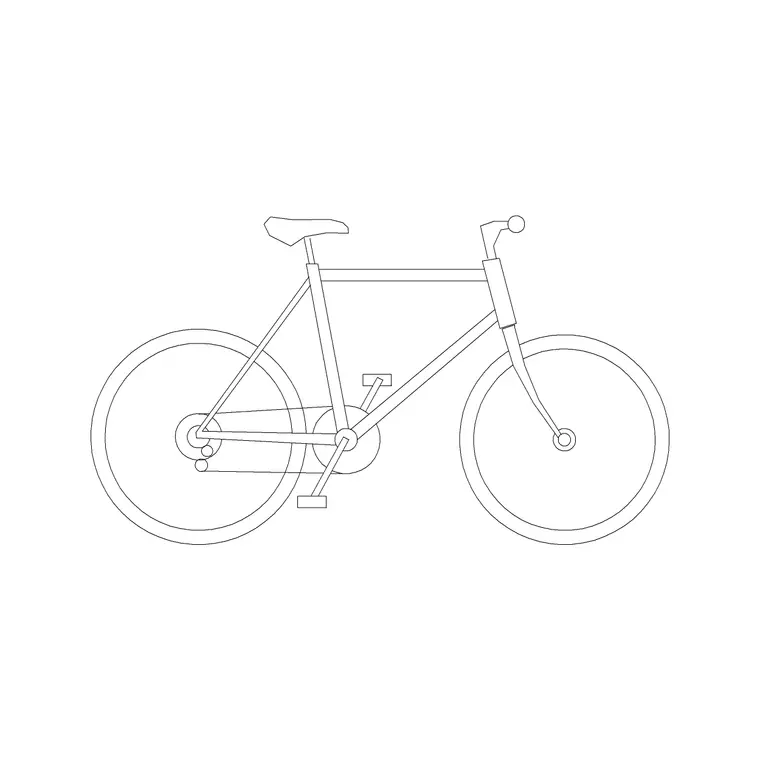
The motorcycle sits between the bicycle and the car, and the distinctions guide your choice. A bicycle is smaller still, human-powered and parked in stands or racks — reach for the bicycle block for cycle parking and active-travel drawings. A car is far larger and needs a full bay — use the car blocks for the main parking provision. The motorcycle is the powered two-wheeler in between, needing its own small bay and manoeuvring strip.
Within the motorcycle blocks, choose a heavy bike for a substantial road machine in a dealership or street scene, and an off-road bike for an adventure or trail context. For complete transport provision a good drawing often shows all three — cars, motorcycles and bicycles — each with its correct space, and all three sit in the vehicles category.
Free download
Browse the full library — DWG & DXF, no signup.
Questions
Frequently asked
How many motorcycles fit in one car parking bay?+
Commonly two to four, depending on the parking angle and the manoeuvring strip you allow. A motorcycle is just 700–900 mm wide, so several fit in the space of one car. Drop the scaled blocks in to count the provision for your bay size.
How big is a motorcycle block?+
A motorcycle runs roughly 2000–2400 mm long and 700–900 mm wide at the handlebars, with a height of 1100–1400 mm. Heavy tourers sit at the larger end and off-road bikes are shorter and more upright.
Do the blocks include both road and off-road bikes?+
Yes. The set includes heavy road bikes — tourers, cruisers and big sports bikes — and lighter off-road and adventure machines, so you can match the bike to a dealership, street or trail scene.
Are the motorcycle CAD blocks free for commercial use?+
Yes. Every motorcycle and heavy bike block downloads free in DWG and, where available, DXF, with no signup, no watermark and no attribution requirement, and they are cleared for commercial project use.
Related downloads
Blocks for this guide
Related categories
Related guides
Block landing
Free Car Plan View CAD Block — DWG Download
Download a free car plan-view CAD block in DWG and DXF — the top-down footprint for parking layouts and site plans. AutoCAD 2004+, no signup.
Block landing
Free Car Elevation CAD Block — DWG Download
Download a free car elevation CAD block in DWG and DXF — side and front views for streetscapes, showrooms and presentations. AutoCAD 2004+, no signup.
Block landing
Free Sedan Car CAD Blocks — DWG Download
Download free sedan car CAD blocks in DWG and DXF — saloon and luxury sedans in plan and elevation for parking and showrooms. AutoCAD 2004+, no signup.