Block landing · indoor plant cad block
Free indoor plant CAD blocks for AutoCAD
By Saumyajit Maity · Published 28 Jan 2026 · Updated 27 Feb 2026
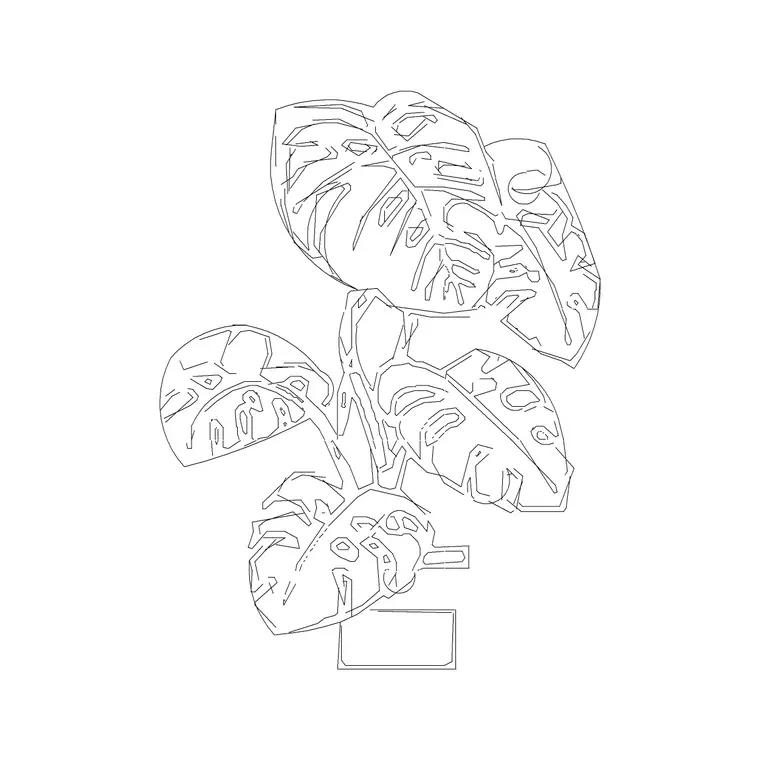
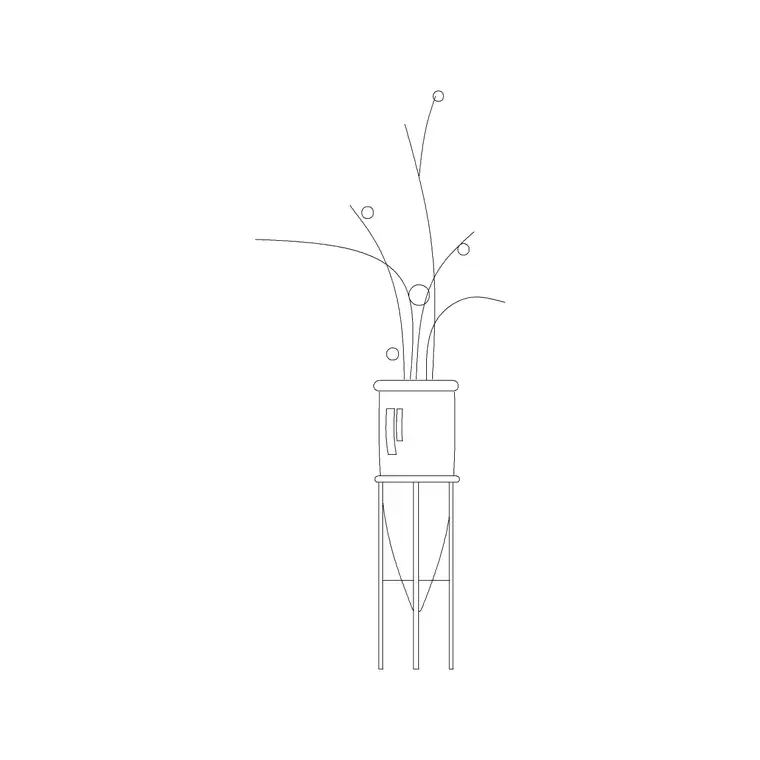
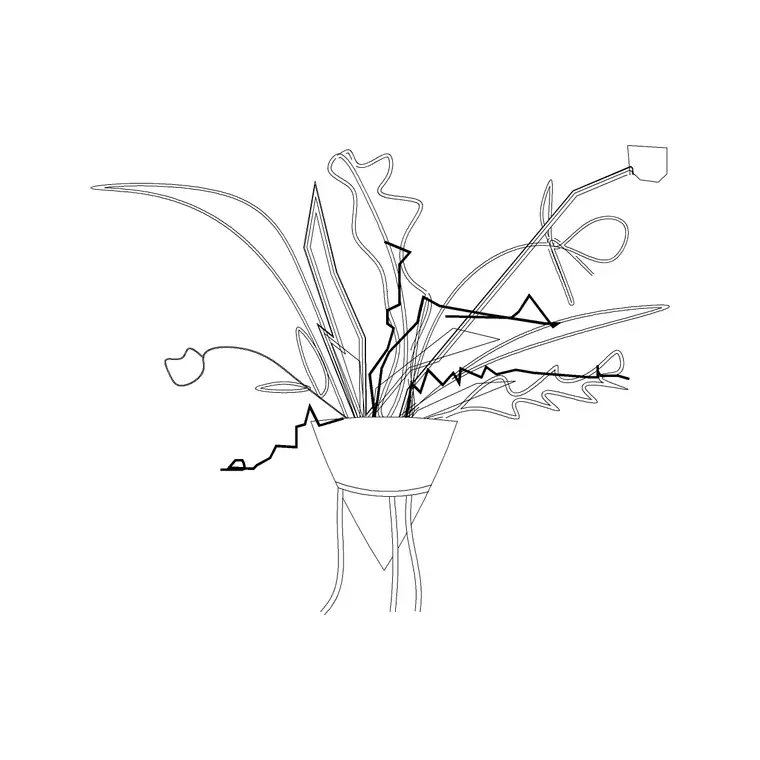
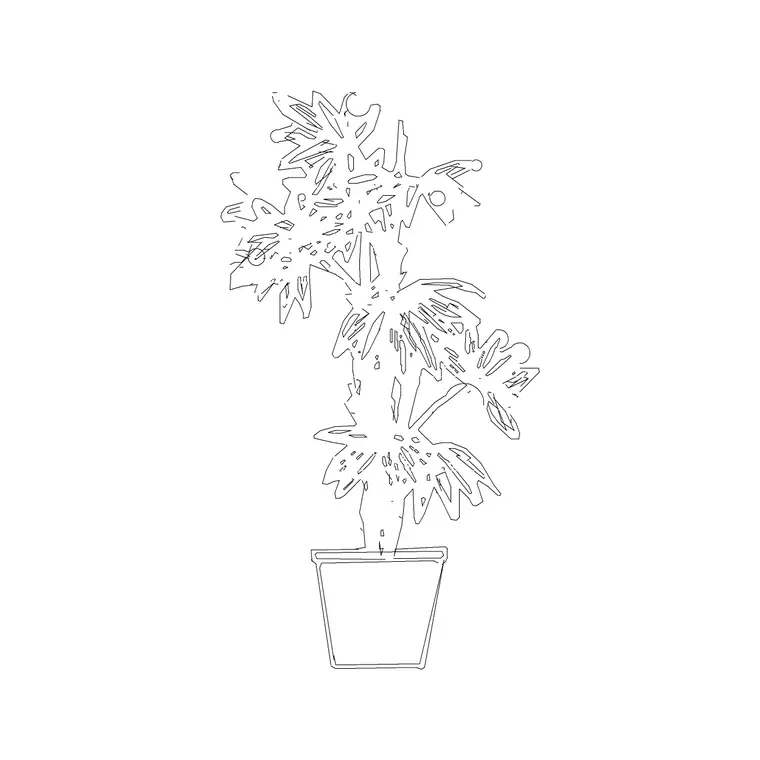
Indoor plant blocks are the greenery that fits out an interior — the floor-standing plants, desk plants and feature planters that bring life to offices, lobbies, homes and hospitality spaces. They sit firmly in the interior-design world rather than the landscape one: drawn alongside furniture, placed on a finished floor, and scaled to a room rather than a site. In plan an indoor plant is a small pot rim with foliage; in elevation it is a plant on a stand or in a container at a height that reads against furniture. This page collects free indoor plant CAD blocks in DWG and DXF, drawn to scale and ready for AutoCAD 2004 or later, free for personal and commercial use with no signup or watermark.
Indoor plants are a finishing layer on an interior drawing, but a meaningful one. A reception or office plan with a few well-placed plants reads as a designed, occupied space rather than an empty shell, and the plants also do practical work — softening corners, screening between desks, and marking thresholds inside a building.
Indoor plants as interior, not landscape
The key thing about an indoor plant block is its context: it lives on an interior layout next to sofas, desks and reception counters, not on a site plan. That changes how it is drawn and used — it is scaled to a room, placed on a finished floor, and read as part of the furniture and FF&E layer rather than the planting layer of an external drawing.
Indoor plants come in recognisable types: floor-standing feature plants in large pots, smaller plants on stands or tables, trailing plants on shelves, and desk plants. Some sit in decorative or metal-legged containers that are as much a piece of furniture as a planter. The blocks here draw plant and container together, so they read as the styled interior objects they are.
Indoor plant sizes to design around
Use these reference figures: a desk or table plant is small, well under 0.5 m across; a floor-standing plant in a pot might stand 1–1.8 m tall in a 0.3–0.5 m container; a large feature interior plant or small indoor tree can reach 2–2.5 m in a substantial planter. They are sized to sit comfortably among furniture and under typical ceiling heights.
That indoor scaling is what keeps a plant believable in a room. A landscape tree dropped onto an office plan looks absurd; a properly scaled floor-standing plant reads correctly beside a sofa or desk. In plan, size the pot rim to its real footprint so it does not crowd the circulation, and in elevation set the plant height so it sits naturally against the surrounding furniture and the ceiling.
Placing indoor plants in a layout
Indoor plant blocks are drawn full size in millimetres. Set INSUNITS to millimetres (or insert at 0.001 in a metre drawing) so the plant and pot land at the right size for the room. For elevations and interior views, snap the base of the pot or stand to the finished floor line; for plans, snap the insertion to the centre of the pot.
Place indoor plants where they finish the space: flanking a reception desk, softening an empty corner, screening between workstations, marking the entrance to a meeting room, or accenting a coffee-table arrangement. Keep them on the furniture or FF&E layer rather than a landscape layer so they read and schedule with the interior. As with any planting, a little variation in scale and rotation stops a row of plants looking stamped.
Containers and stands as design objects
Indoors, the container is often as much the point as the plant. A plant on slender metal legs, in a sculptural ceramic pot, or in a designed planter is a styling element that signals the character of the interior — and the block reflects that by drawing the container with care. Choosing the right container block can matter as much as the plant for how a reception or lounge reads.
That is why indoor plant blocks come in distinct container styles: pots on metal legs, floor planters, table-top vessels, hanging and trailing arrangements. On a drawing, picking a container that suits the interior's style — a clean metal-legged pot for a contemporary office, a substantial planter for a hotel lobby — makes the plant feel chosen rather than generic. The blocks here include several container types so you can match the plant to the room.
Where indoor plant blocks are used
Indoor plants appear on office and workplace layouts, reception and lobby plans, hotel and hospitality interiors, retail and showroom floors, residential interior schemes, and any drawing of an occupied indoor space. They are a standard part of an FF&E layout and one of the quickest ways to make an interior plan read as lived-in.
Keep them on the furniture or FF&E layer, and pair these blocks with the potted plant, ornamental tree and furniture-category blocks. An interior plan might use a large feature plant by the entrance, smaller plants on desks and tables, and a screening plant between work zones — and the indoor plant blocks cover that whole interior-greenery layer, complementing the outdoor potted plants for terraces and forecourts.
Finishing an interior with planting
Indoor plants are usually the last thing added to an interior layout, but they change how the whole drawing reads. An empty office plan looks unfinished; the same plan with plants by the reception, in the breakout corners and along the circulation reads as a real, occupied workplace. For client presentations and marketing layouts, that touch of green is what makes an interior feel inviting rather than clinical.
They also do quiet spatial work: a floor-standing plant can soften a hard corner, a run of planters can suggest a soft division between zones without a wall, and a feature plant can mark an entrance. Because the blocks are free and licence-clear, you can dress an entire interior — workstations, lounges, reception — with believable, scaled planting and then WBLOCK a styled corner as a reusable unit for the next similar space.
Free download
Browse the full library — DWG & DXF, no signup.
Questions
Frequently asked
How are indoor plant blocks different from landscape plant blocks?+
Indoor plant blocks are scaled and styled for interiors — placed among furniture on a finished floor and read as part of the FF&E layer — rather than on a site plan's planting layer. They are smaller, container-focused interior objects.
Are the indoor plant CAD blocks free for commercial use?+
Yes. Every indoor plant block downloads free in DWG and, where available, DXF, with no signup, no watermark and no attribution requirement, and is cleared for commercial project use.
What size should an indoor plant be on a drawing?+
Scale it to the room: a desk plant under 0.5 m, a floor-standing plant 1–1.8 m tall, and a large feature plant or small indoor tree up to 2–2.5 m, each in a container sized to match. Draw the pot footprint to keep circulation clear.
Which layer should indoor plants go on?+
Put them on the furniture or FF&E layer rather than a landscape planting layer, so they read and schedule with the rest of the interior fit-out rather than with external works.
Related downloads
Blocks for this guide
Related categories
Related guides
Block landing
Free Flower Plant CAD Blocks — DWG Download
Free flower plant CAD blocks in DWG and DXF — flowering annuals and perennials in plan and elevation for AutoCAD landscape plans. No signup, commercial OK.
Block landing
Free Flowering Shrub CAD Blocks — DWG Download
Free flowering shrub CAD blocks in DWG and DXF — ornamental shrubs in plan and elevation for AutoCAD planting and site plans. No signup, commercial OK.
Block landing
Free Herb Plant CAD Blocks — DWG Download
Free herb plant CAD blocks in DWG and DXF — herbs for kitchen gardens, raised beds and planters, in plan and elevation for AutoCAD. No signup, commercial OK.