Block landing · handbag cad block
Free handbag and tote bag CAD blocks for AutoCAD
By Saumyajit Maity · Published 2 Dec 2023 · Updated 13 Jan 2026
A handbag is a small block that does a lot of styling work. On a boutique shelf, a wardrobe cubby or a dressing-table surface, a single bag turns an empty plane into a merchandised, lived-in space. This page collects free handbag and tote bag CAD blocks in DWG and DXF — structured handbags and softer totes drawn in clean elevation — ready for AutoCAD 2004 or later, free for personal and commercial use with no signup and no watermark.
Because bags are accessories rather than fixtures, they appear mostly in elevation and detail drawings: accessory walls in a fashion shopfit, open-shelf wardrobe joinery, dressing-room displays and interior presentation sheets where a few well-placed props dress the scene. Each is a real block reference you can copy along a shelf, mirror for variety, recolour onto a styling layer and scale between a clutch and a large tote — so a single download covers a lot of merchandising ground.
Handbag and tote: what's in the block
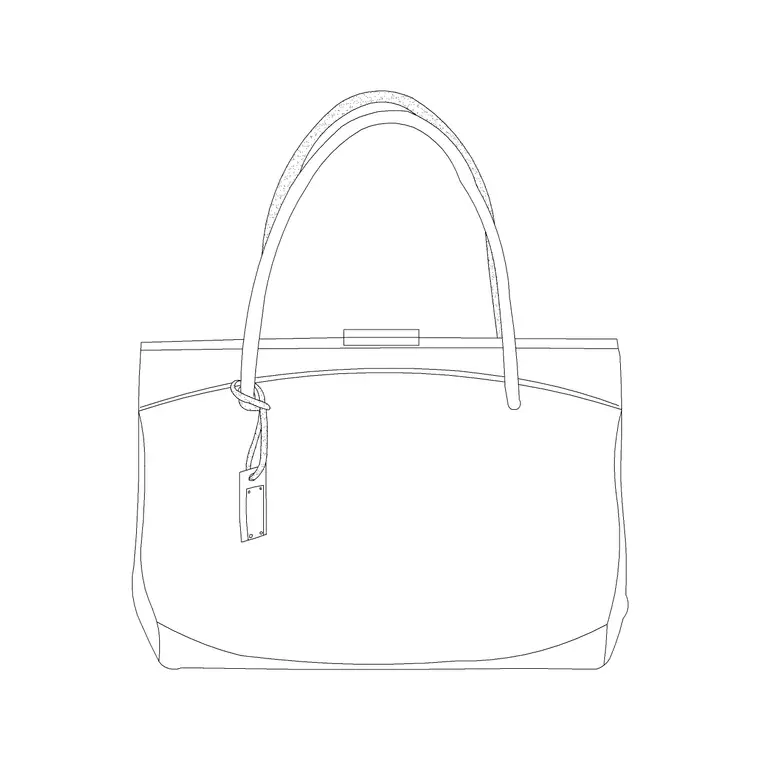
The set covers two broad shapes. A structured handbag reads as a defined body with a clasp or flap and a short top handle or shoulder strap arching above it — the recognisable silhouette of a day bag. A tote is softer and larger, a roughly rectangular open body with two parallel handles, drawn with a little slouch so it sits naturally on a shelf.
Each is an elevation block with just enough internal line — a seam, a clasp, a handle curve — to read as a bag at presentation scale without clogging the drawing. As a single block reference, a bag copies, mirrors and rotates as one object, so you can vary a shelf of accessories quickly and keep them all on a tidy styling layer.
Where bags sit in a drawing
Bags are accessory props, so they live on the surfaces and shelves of an elevation. You place a tote upright on an open wardrobe shelf, a row of handbags along a retail accessory wall, or a single bag on a dressing-table or console in an interior vignette. The view is almost always elevation or a close detail, because that is where a bag's shape reads.
In plan, a bag on a shelf is a small footprint you might show on a styled top-view but rarely dimension — its job is to dress the elevation. When you set out a boutique floor in plan, draw the shelving and gondolas as plan geometry and bring the handbag blocks in on the matching elevation and detail sheets where they sell the merchandising.
Bag sizes to draw against
Use these ranges to keep a styled shelf believable. A structured day handbag is roughly 250–350 mm wide and 200–280 mm tall in the body, with the handle adding 100–150 mm above. A large tote runs wider and taller — around 350–450 mm wide and 300–400 mm in the body — with longer handles arching 150–200 mm over the top. A small clutch or evening bag is much smaller, often 200–260 mm wide and shallow.
For shelving, those sizes tell you how deep and tall an open cubby needs to be: a shelf around 350–400 mm deep and 350–450 mm of clear height comfortably displays most bags upright. Because the blocks are drawn to these real proportions, dropping one onto a shelf elevation immediately shows whether the bag clears the shelf above and fits the cubby.
Inserting and arranging the bags
The bags are drawn full size in millimetres. Insert at scale 1 in a millimetre drawing, 0.001 in a metre drawing, or set INSUNITS to millimetres so AutoCAD rescales automatically. Use INSERT or drag the DWG from a tool palette, and snap the insertion point to the shelf line so the bag sits on the surface rather than floating.
To dress an accessory wall, place a few bags at different sizes and mirror or rotate them slightly so the display reads as curated rather than repeated. A small uniform scale takes the same block from clutch to tote, which means one or two downloads cover a whole shelf. Keep all the bags on a styling layer with a light lineweight so they can be frozen for the joinery drawing and thawed for the presentation.
Who uses handbag blocks
Retail and shopfit designers use them to merchandise accessory walls and shelving in fashion and leather-goods stores so the shopfit elevation reads as stocked. Interior designers add them to walk-in wardrobes, dressing rooms and bedroom vignettes where a styled shelf brings warmth and realism. Architects and visualisers drop them into presentation elevations and detail sheets where a few props lift an otherwise bare cabinet.
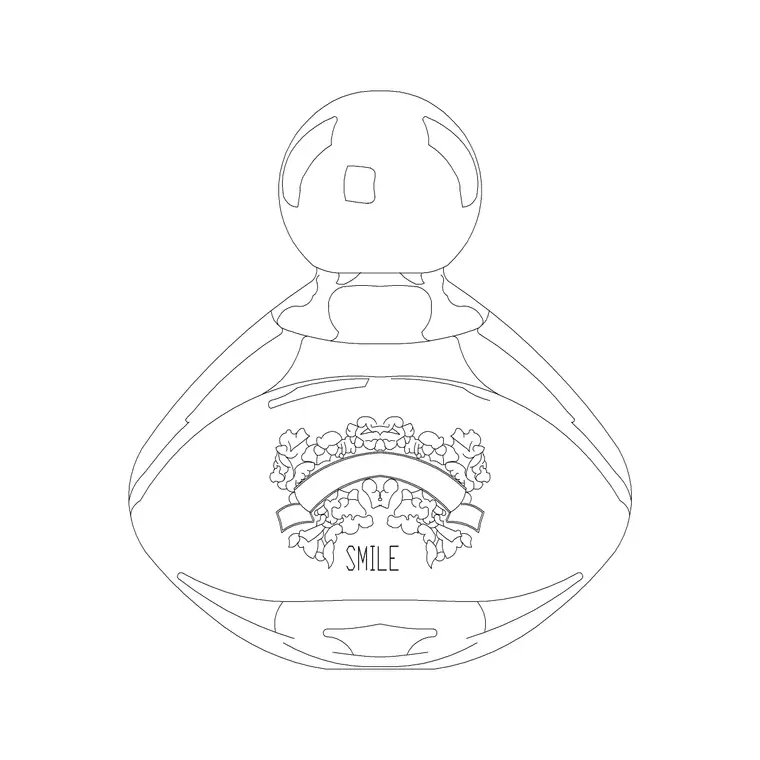
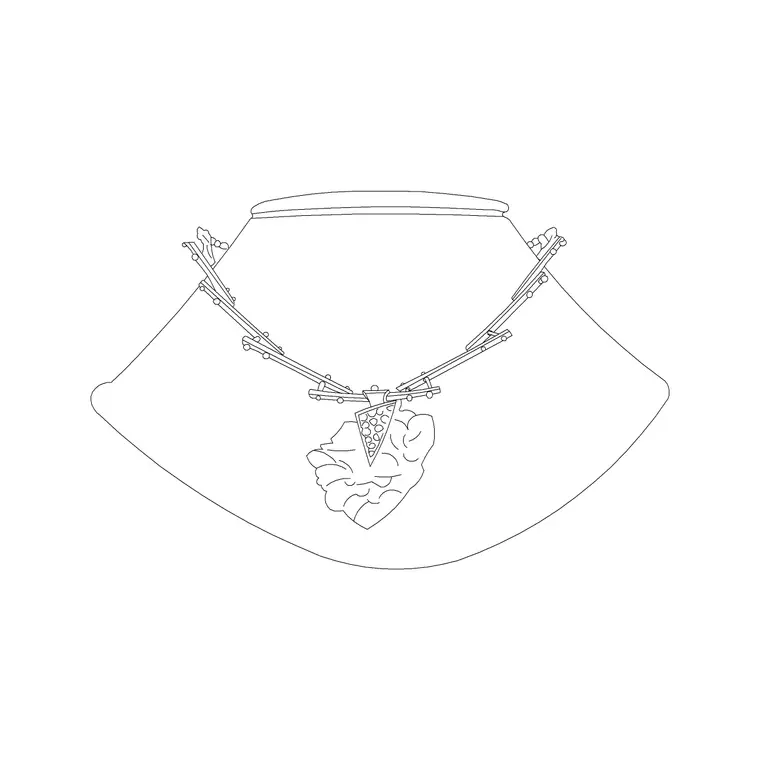
They pair naturally with the rest of the accessories category — hanging coats, suits, dresses and perfume bottles — to build a complete styled wardrobe or boutique. On a dressing-table vignette, a handbag beside a perfume bottle and a piece of jewellery instantly tells the story of how the space is used.
Styling-layer and reuse tips
Because bags are decorative props, keep them on a styling or merchandising layer separate from the joinery and shelving, with a lighter lineweight so they sit softly behind the construction lines. That lets one file issue a clean cabinetmaker's elevation (bags frozen off) and a dressed presentation elevation (bags thawed on) without duplicating geometry.
If you build a shelf display you like — a balanced run of totes, handbags and clutches — WBLOCK the whole arrangement as one reusable styling assembly. A pre-styled accessory shelf then drops into the next project in a single insert, and editing the source assembly updates every place you have used it, keeping a multi-sheet boutique drawing consistent.
Free download
Browse the full library — DWG & DXF, no signup.
Questions
Frequently asked
Are the handbag and tote blocks free to use commercially?+
Yes. Every bag block downloads free in DWG and, where available, DXF, with no signup, no watermark and no attribution requirement, and they are cleared for commercial retail and interior drawings.
Are bags drawn in plan or elevation?+
Mainly elevation, because a bag's shape reads face-on as it sits on a shelf or surface. A top-view footprint can help locate it on a styled plan, but the elevation block is the one that dresses retail and wardrobe drawings.
How deep should a shelf be to display a handbag?+
A shelf around 350–400 mm deep with 350–450 mm of clear height holds most handbags and totes upright. The blocks are drawn to real sizes, so dropping one onto a shelf elevation shows immediately whether it fits the cubby.
Can one block cover both a clutch and a large tote?+
A small uniform scale takes the same bag block from a clutch up to a large tote, and because each is a block reference you can mirror and recolour instances to build a varied, curated accessory shelf from one or two downloads.
Related downloads
Blocks for this guide
Related categories
Related guides
Block landing
Free Picture Frame CAD Blocks — DWG Download
Download free picture frame CAD blocks in DWG and DXF — framed photos drawn in elevation for AutoCAD interior drawings. No signup, commercial use OK.
Block landing
Free Wall Art & Painting CAD Blocks — DWG
Download free wall art and painting CAD blocks in DWG and DXF — abstract art and canvases for AutoCAD interior elevations. No signup, commercial OK.
Block landing
Free Decorative Vase CAD Blocks — DWG Download
Download free decorative vase CAD blocks in DWG and DXF — designer vases and vases with flowers in plan and elevation for AutoCAD. No signup, commercial OK.