Block landing · compact car cad block
Free compact car CAD blocks for AutoCAD
By Sumana Kumar · Published 28 Sep 2022 · Updated 18 Jan 2026
When the site is tight and the bays are small, the compact car is the block that proves the layout works. Smaller than a full saloon, the compact — a city car or small hatchback — is the realistic vehicle for dense urban schemes, mechanical car stackers, compact-bay parking and any plan where space is the binding constraint. This page collects free compact car CAD blocks in DWG and DXF, including compact sedans and small hatchbacks, drawn at true millimetre dimensions for AutoCAD 2004 and later. Every file is free for personal and commercial work, with no signup, no watermark and no attribution required.
The compact block earns its keep in exactly the situations where a generic full-size car would mislead you. If you are designing compact or small-car-only bays, a residential courtyard, or a parking deck squeezed into an urban footprint, sizing against a real compact gives an honest answer instead of an optimistic one. Use these blocks for urban site plans, small-bay layouts, mews and courtyard parking, and street scenes where the cars should read as city-sized.
What counts as a compact car block
A compact car block represents the smaller end of the passenger range: city cars, superminis and small hatchbacks, plus the compact sedan that shares their short footprint. The defining feature in plan is the short overall length — noticeably tighter than a family saloon — which is exactly why it suits small-bay work.
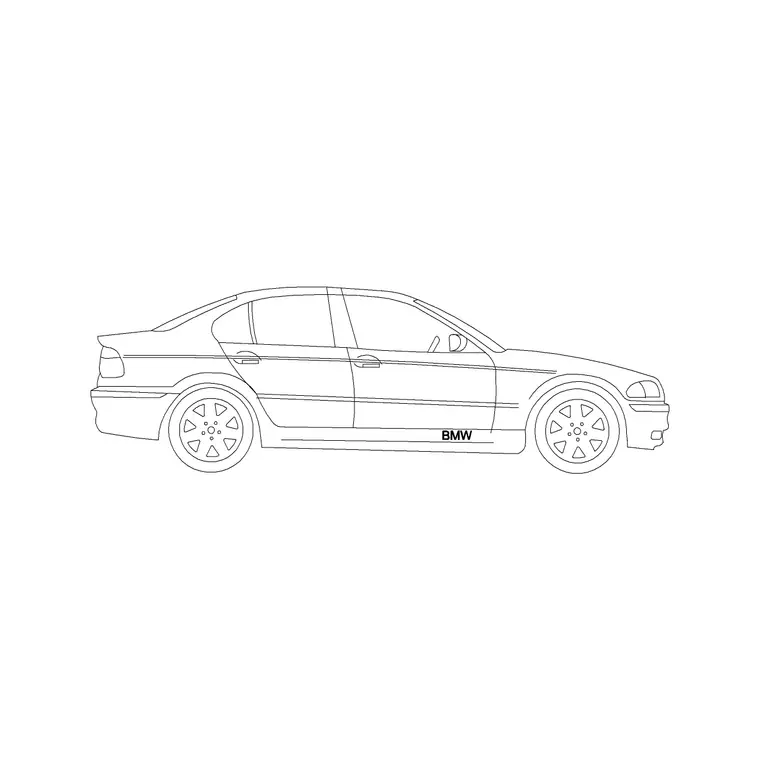
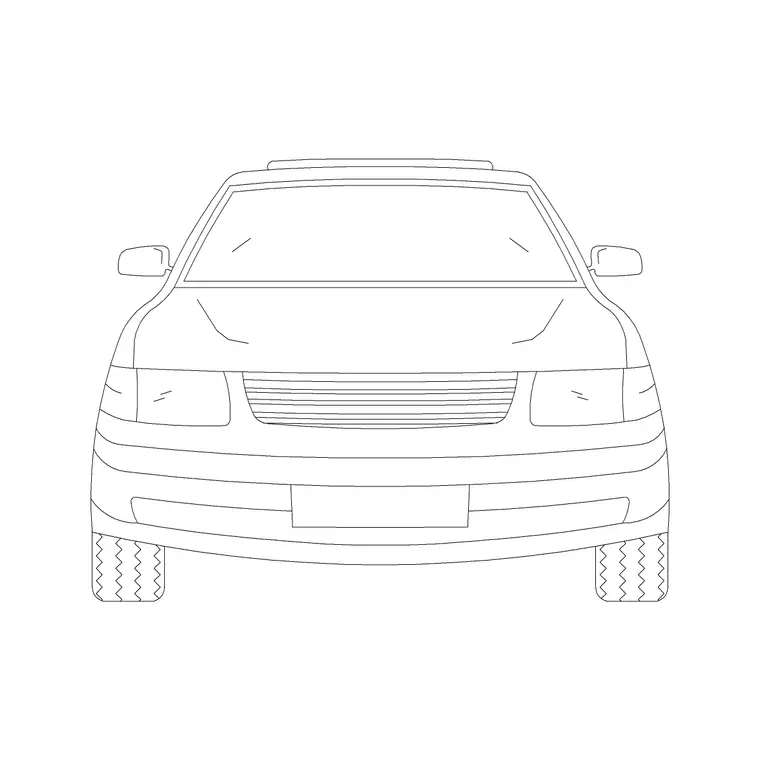
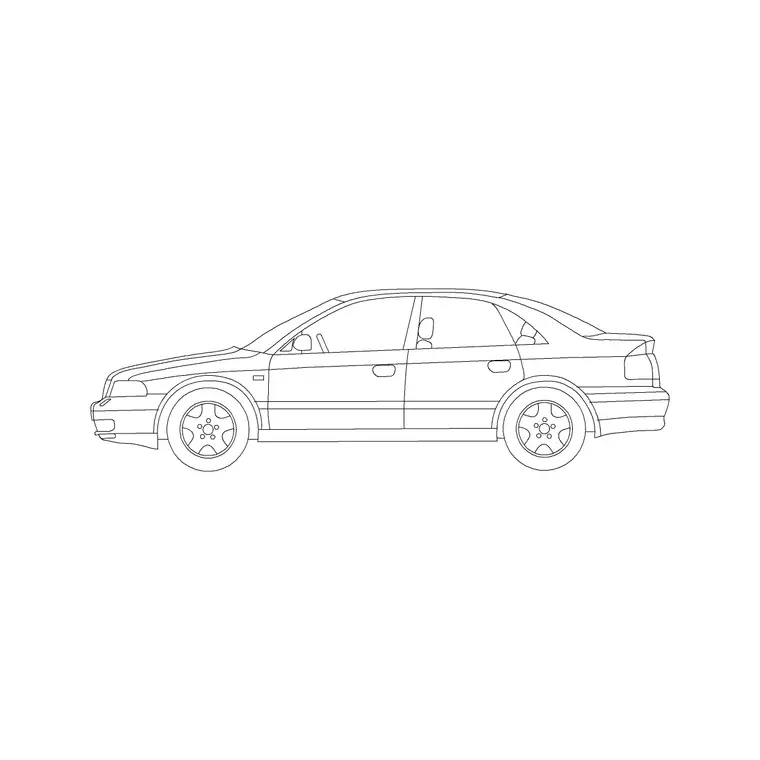
The blocks here include both the two-box hatchback silhouette (a short bonnet running into a near-vertical tailgate) and the compact three-box sedan. Both are drawn as clean references with the body, wheels and glasshouse on separable layers, so you can use them as scaled context or as the subject of a tight-parking study.
Compact car dimensions to design around
Design against the small end of the range. A city car runs roughly 3400–3700 mm long and 1600–1700 mm wide; a supermini or small hatchback sits around 3700–4100 mm long and 1700–1800 mm wide. A compact sedan reaches toward 4300–4500 mm. Roof height in elevation is typically 1450–1550 mm — often a touch taller than a low saloon despite the shorter body.
These footprints are what make compact-only bays viable. A small-car bay is often drawn narrower and shorter than a standard bay, and the only honest way to confirm it works is to drop a true compact block into it and check the door clearance and the gap to the next car. Wheelbase sits around 2300–2600 mm, the figure for any tight turning-circle check.
Why compacts matter for tight layouts
Using a compact block is about honesty in a constrained design. If you size a small-car bay against a full saloon it will look cramped or fail; size it against a generic car and you may oversize the deck and lose spaces. The compact block lets you test compact-bay dimensions against the vehicles those bays are actually intended for.
This is especially true for mechanical and stacker parking, where the system has a maximum vehicle envelope, and for urban infill where every square metre counts. The compact is also the right block for historic mews, narrow courtyards and tight drop-offs, where a real small car threads through but a large one would not. Showing the constraint with a correctly-sized vehicle makes the drawing defensible.
Inserting and arraying the block
Compact car blocks are drawn full size in millimetres. Insert at scale 1 in a millimetre drawing, 0.001 in a metre drawing, or set INSUNITS to millimetres so AutoCAD rescales on insertion if your template uses other units.
Use INSERT or a tool palette, place the insertion point at the car centre for parking work, and ARRAY the footprint across a row of small bays. Because compact bays pack more cars into a given length, the array count is higher — a useful capacity comparison if you array both compact and standard cars across the same deck and compare the totals. Keep the cars on a dedicated layer so you can freeze them for the engineering plan.
Where compact car blocks are used
Compacts suit dense and small-scale work. Urban parking decks and basements where the footprint is squeezed. Small-car and compact-only bays in mixed-bay car parks. Residential mews, courtyards and rear-parking schemes. Drop-off and pick-up zones in tight streets. Showroom layouts for the small-car range.
They also read well in street scenes for European and dense-city contexts, where the traffic genuinely is smaller than a North American norm. Mix compacts with a few sedans, an SUV and a van from the vehicles category to show a realistic spread of vehicle sizes in a car park or along a street.
Compact versus the larger car classes
The compact is the smallest of the everyday car blocks, and choosing it is a deliberate decision to design for the tight case. It is shorter and usually slimmer than a sedan, so it fits where a saloon will not — but it would flatter a layout if you used it to claim a standard bay works for all cars. The rule of thumb is simple: design bays for the largest vehicle you expect, then use the compact to confirm small-car-only areas.
Where the brief specifically allows compact-only parking, the compact block is the correct test vehicle and lets you legitimately fit more bays. For general capacity, mix it with sedans and SUVs so the count reflects real traffic. Both the compact and its larger siblings live in the vehicles category, so you can swap between them as the study demands.
Free download
Browse the full library — DWG & DXF, no signup.
Questions
Frequently asked
When should I use a compact car block instead of a standard car?+
Use a compact when the bays are small-car-only, the site is tight, or you are designing mechanical stackers and urban infill. For general capacity, design bays for the largest expected car and use the compact only to confirm small-car areas.
How small is a compact car footprint?+
A city car runs roughly 3400–3700 mm long and 1600–1700 mm wide; a supermini around 3700–4100 mm long. That short length is what makes compact-only bays viable.
Do the blocks cover hatchbacks and compact sedans?+
Yes. The set includes the two-box hatchback silhouette and the compact three-box sedan, so you can show whichever small-car style suits your scene or study.
Are the compact car blocks free for commercial use?+
Yes. Every compact car block downloads free in DWG and, where available, DXF, with no signup, no watermark and no attribution requirement, and they are cleared for commercial project use.
Related downloads
Blocks for this guide
Related categories
Related guides
Block landing
Free Car Plan View CAD Block — DWG Download
Download a free car plan-view CAD block in DWG and DXF — the top-down footprint for parking layouts and site plans. AutoCAD 2004+, no signup.
Block landing
Free Car Elevation CAD Block — DWG Download
Download a free car elevation CAD block in DWG and DXF — side and front views for streetscapes, showrooms and presentations. AutoCAD 2004+, no signup.
Block landing
Free Sedan Car CAD Blocks — DWG Download
Download free sedan car CAD blocks in DWG and DXF — saloon and luxury sedans in plan and elevation for parking and showrooms. AutoCAD 2004+, no signup.