Curated pack · cad blocks for interior designers
Free CAD blocks for interior designers
By Saumyajit Maity · Published 17 Aug 2025 · Updated 11 Jun 2026
Interior design is furniture-led work, and a designer's drawings are built almost entirely from scaled furniture, soft furnishings, planting and figures arranged inside the architectural shell. This free CAD block pack for interior designers gathers that kit — seating and sofa groups, tables, beds, indoor planting, people and doors — in DWG and DXF, drawn to true millimetre dimensions in plan and elevation and ready for AutoCAD 2004 or later. Everything is free for personal and commercial work, with no signup and no watermark.
For an interior designer the block does two jobs at once: it has to be dimensionally honest so the layout actually works, and it has to read well enough to carry a presentation. A sofa group has to leave a walkable gap and a coffee-table reach; the same block, in elevation, has to sit at a believable height against the wall for the client drawing. Because the items here ship in both views and are drawn full size, they serve the planning and the presentation from one consistent library.
This is the layer of a drawing where interiors come to life. Drop these blocks into a furnished plan to study circulation and FF&E, then switch to elevation to show the client how the room will feel — all from the same scaled, licence-clear kit.
What interior designers need from a block
The interior designer's test for a block is part technical, part visual. Technically it must be correctly scaled, because interiors live in the gaps — the reach to a coffee table, the pull-out space for a dining chair, the walkway behind a sofa. A footprint that's even slightly wrong throws the whole layout. Visually it has to read on a presentation: furniture that looks like furniture, a sofa with its cushions and rug, an elevation that conveys proportion and style.
Soft furnishings and styling details matter more in interiors than in most disciplines, so blocks that include the rug, the cushions or the table setting save real time. And because the same scheme is shown in plan for layout and in elevation for the client, the most useful blocks carry both views. This pack is chosen around those needs: scaled, view-complete, and detailed enough to present.
What's in the interior designer's pack
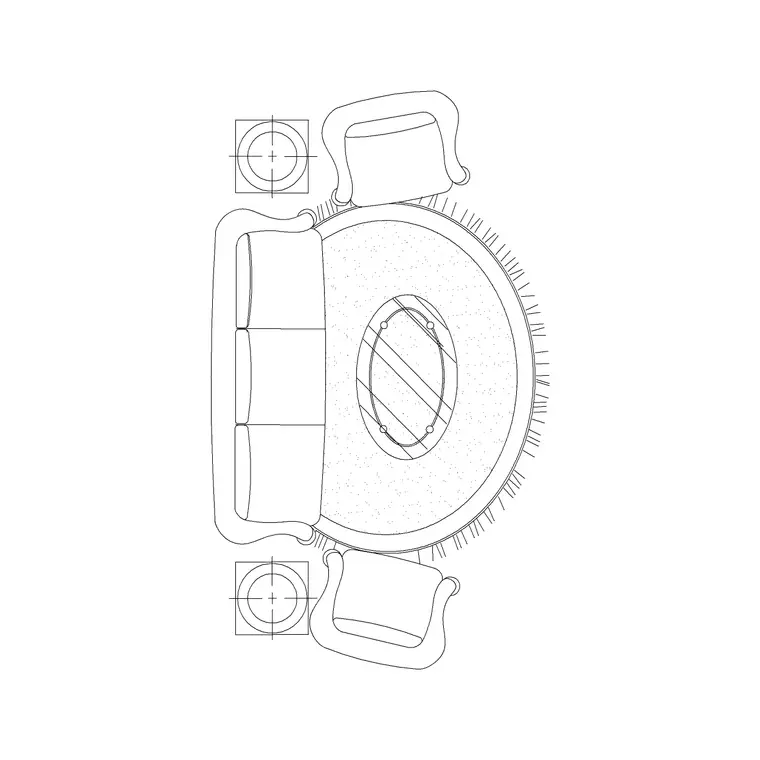
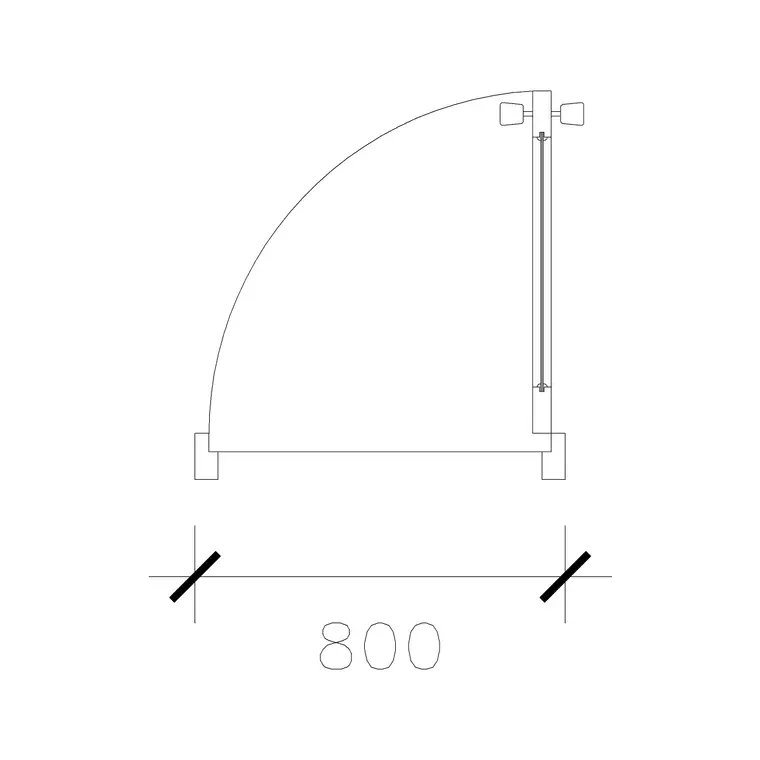
The pack covers the furnishing kit a designer reaches for. Seating: sofa groups — including a set drawn with its rug — armchairs and occasional seating that fix a room's circulation. Tables: coffee, dining and side tables to complete the seating arrangements. Beds and bedroom furniture for residential schemes. Indoor planting: pot plants and greenery that style a space and read on both plan and presentation. People: figures in plan for occupancy and at height in elevation to give a room scale and life. Doors: leaves with swings in plan and face-on leaves in elevation.
Together these furnish a complete interior — a living room arranged around a sofa and rug, a bedroom, a planted, peopled space — and switch between the layout plan and the client elevation from one consistent library. Extend any part of it from the furniture and trees-and-plants categories as a scheme develops.
Laying out a room with the blocks
Work inside the architectural shell and lead with the largest pieces, because they set everything else. In a living room, place the sofa group first — it fixes the focal point and the circulation; leave a walkable gap behind it and a comfortable reach to the coffee table. Add occasional seating and side tables to complete the arrangement, then style with indoor plants. Drop a figure in plan as a living scale check: if it can't move comfortably through the arrangement, the layout is too tight.
Keep furniture, soft furnishings, planting and people on their own layers so you can produce a clean FF&E plan, a furniture layout and a styled presentation from the same drawing. Mirror and copy honestly — because the blocks are scaled, flipping a layout or repeating a seating group keeps every clearance real, which is exactly what a furniture plan needs to be trusted.
Per-item notes for interior blocks
The sofa-and-rug block is the centrepiece: place it first in a living space, and decide whether the rug belongs on the furniture layer or a separate finishes layer so you can present the floor finishes independently. Coffee and side tables should sit at a real reach from the seating — drop them in scaled and the geometry tells you if the arrangement is comfortable. Indoor plant blocks are styling elements; vary them so a scheme doesn't look repetitive, and keep them on the planting layer.
The human figure earns its place twice: in plan as an occupancy and circulation marker, and in elevation as a height anchor that makes a client drawing read instantly. Doors carry their swing in plan, which matters in tight interiors where a leaf can eat usable space; check the swing against the furniture before you commit the layout. Where furniture ships both views, you get a footprint for the plan and a front view for the elevation from one file.
From layout to client presentation
The strength of a view-complete library is that one drawing serves the whole process. In plan you do the design thinking — circulation, FF&E, clearances — and you can issue a clean furniture layout to the contractor. Switch to elevation and the same scheme becomes a client drawing: furniture front views against the wall, a figure for scale, planting for life, all at true height so the proportions are honest.
Because the blocks are scaled and consistent, the presentation never contradicts the plan — the sofa that fits the room is the same sofa the client sees on the wall elevation. That coherence is what makes a designer's drawings feel professional, and producing both views from one library, just by toggling layers and switching view, is far faster than redrawing the room for the presentation. It also means revisions stay in sync: change the layout and the elevation follows.
Who uses the interior pack
Interior designers and decorators use it to turn round furnished layouts and client presentations quickly. Architects use the furniture and planting to populate residential and hospitality plans believably. Home-staging and lettings professionals use the seating and styling blocks to show a space dressed. Students use it for studio interiors and portfolio boards where scaled, licence-clear furniture matters.
Every block is free and licence-clear, so the pack suits a live commission, a quick concept and a portfolio equally. Pair it with the furniture and trees-and-plants categories to widen the furnishing and planting palette, and keep the kit in a structured, category-based library so you can drag any piece straight into a room layout.
Free download
Browse the full library — DWG & DXF, no signup.
Questions
Frequently asked
Are these interior design CAD blocks free for commercial use?+
Yes. Every block downloads free in DWG and DXF with no signup, no watermark and no attribution requirement, and is cleared for commercial use, so it slots straight into a paid interiors commission.
Do the furniture blocks include soft furnishings like rugs?+
Some do — the pack includes a sofa set drawn with its rug, for example. Where soft furnishings are included you can keep them on the furniture layer or move them to a separate finishes layer for presentation.
Can I use the same blocks for the layout and the client elevation?+
Yes. Many blocks ship both a plan view for the furniture layout and an elevation for the client presentation in the same DWG, so the scheme stays consistent between your working plan and your presentation drawing.
What scale are the interior blocks drawn at?+
Full size in millimetres. Insert at scale 1 in a millimetre drawing, or set INSUNITS to millimetres so AutoCAD rescales automatically if your template uses different units, and the furniture lands at true size.
Related downloads
Blocks for this guide


Related categories
Related guides
Curated pack
Free Plan View CAD Block Pack — DWG & DXF
Free plan view CAD block pack in DWG and DXF — furniture, trees, people and vehicles drawn from above for AutoCAD floor plans. No signup, commercial OK.
Curated pack
Free Elevation CAD Block Pack — DWG & DXF
Free elevation CAD block pack in DWG and DXF — trees, doors, furniture and figures drawn face-on at real heights for AutoCAD elevations. No signup.
Curated pack
Free 2D CAD Block Pack — DWG & DXF Download
Free 2D CAD block pack in DWG and DXF — furniture, trees, people and doors as clean 2D symbols for AutoCAD plans and elevations. No signup, commercial OK.