Block landing · big tree cad block
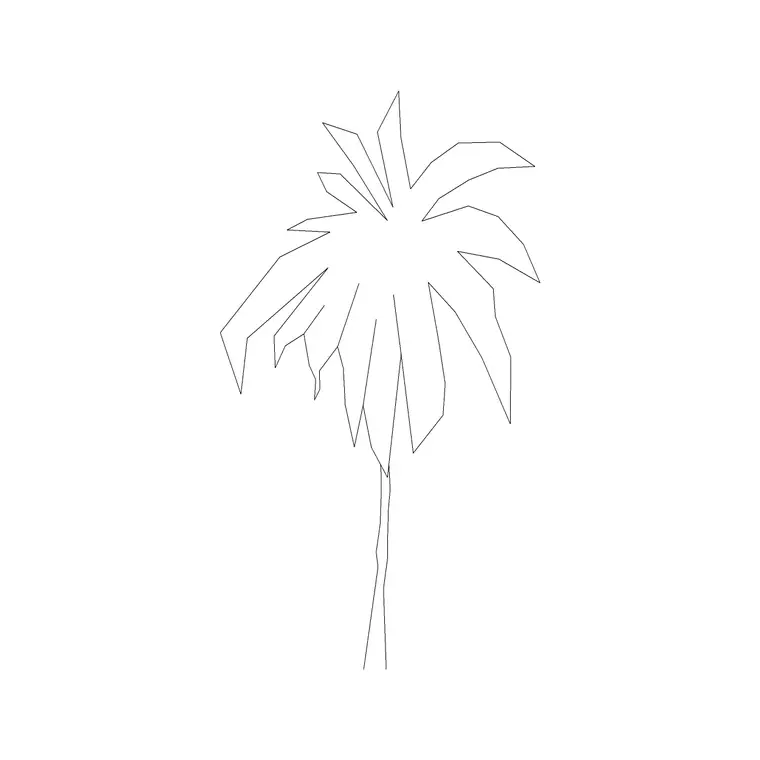
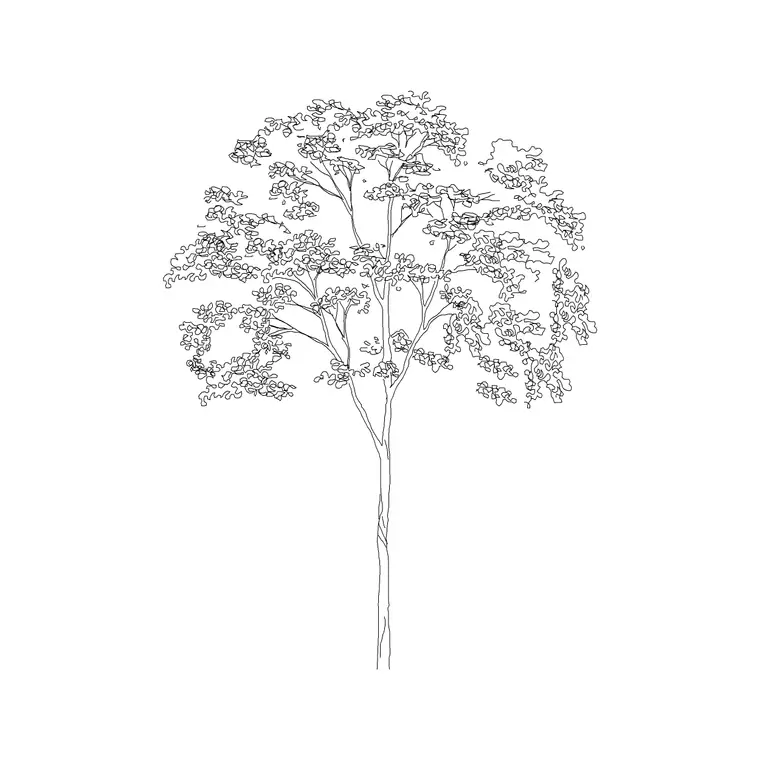
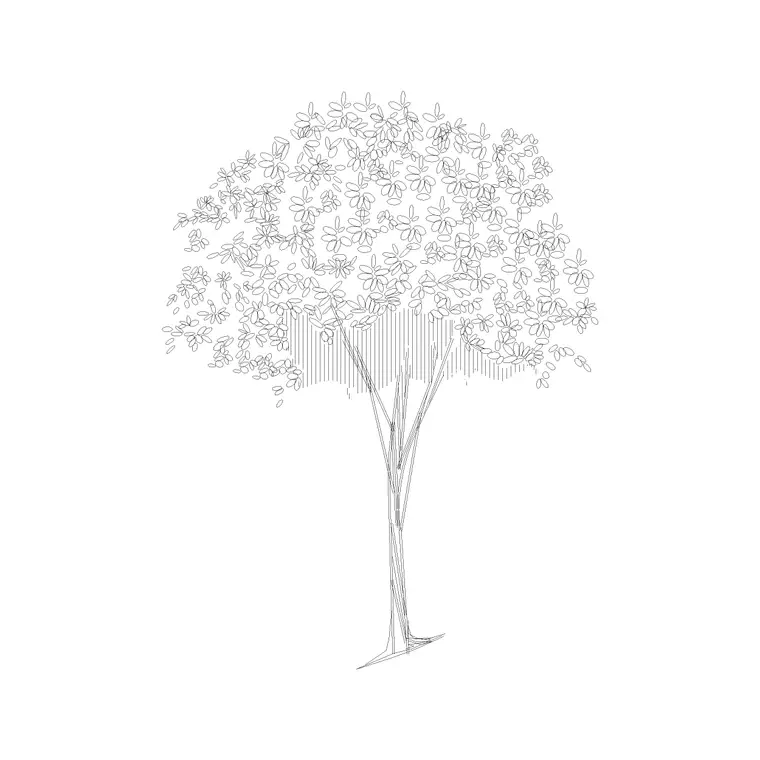
Free big and mature tree CAD blocks
By Sumana Kumar · Published 2 Feb 2025 · Updated 30 Jan 2026
A big, mature tree is the one that shapes a whole space, and it needs a block with the spread to match. In elevation a large tree is a tall trunk under a deep, wide canopy that dominates the frame; in plan it is a broad circle that often defines where seating, paths and buildings can and cannot go. This page collects free big and mature tree CAD blocks in DWG and DXF, drawn to scale and ready for AutoCAD 2004 or later, free for personal and commercial use with no signup or watermark.
Large trees do disproportionate work on a drawing. A single mature canopy can shade an entire courtyard, anchor a view, or block a sightline — so its position and spread are design decisions, not afterthoughts. Drawing it at its true, generous size from the start means the space is planned around the tree it will actually become, not the sapling that gets planted.
What counts as a big tree on a drawing
A 'big tree' block is the large-canopy category — mature shade and parkland trees such as planes, limes, beeches, chestnuts and the like — drawn at the scale they reach in maturity rather than at planting. In elevation it is a substantial trunk carrying a deep, broad crown; in plan it is a wide canopy circle, usually the largest tree symbol you will place on the sheet.
These blocks are about spread and presence. Where a small ornamental tree is a polite circle tucked into a bed, a big tree is a defining element that other things arrange themselves around. The blocks here carry that visual weight in both views, with trunk, branch structure and canopy on separate layers so you can show summer mass or a winter framework.
Sizing for maturity, not for planting
The single most important decision with a big tree is which size you draw. Use these reference figures for the mature state: a large shade tree typically reaches 15–25 m tall with an 8–15 m crown spread, and the biggest parkland and forest species go beyond that. A newly planted version of the same tree might be a quarter of that size, which is why drawing maturity matters.
Design to the mature canopy, because that is the footprint the tree will actually occupy for most of its life. Reserve the crown's worth of clear space — away from buildings, under-canopy paving that can cope with leaf fall and roots, and services routed clear of the root zone. A space planned around the sapling becomes overcrowded the moment the tree grows in.
Inserting and placing a large tree
Big tree blocks are drawn full size in millimetres. Set INSUNITS to millimetres (or insert at 0.001 in a metre drawing) so the canopy lands at its real, generous diameter. For elevations, snap the trunk base to your ground line; for plans, snap the insertion to the trunk at the canopy centre.
Because a big tree dominates, place it first and design around it rather than slotting it in last. On a plan, drop the mature canopy and immediately check what it overhangs and what falls into its shade; on an elevation, set its height against the building so the scale relationship is honest. One well-placed large tree often does more for a space than a dozen small ones scattered around the edges.
Using a big tree to organise a space
A mature tree is a placemaking device. On a plaza or courtyard plan, a single large canopy creates a shaded gathering point that seating, paving patterns and circulation can be composed around. On a residential plan, an existing big tree often dictates where the building footprint and garden go. On a street, a row of mature shade trees defines the character of the whole frontage.
Draw the big tree at its true spread and these relationships become design tools rather than accidents. You can position a bench in the shade, run a path to the edge of the canopy rather than under the heaviest leaf fall, and keep foundations clear of the root zone — all decisions that depend on the canopy being drawn at the size it will really reach.
Where big tree blocks are used
Large tree blocks belong on parkland and estate plans, civic squares and plazas, campus and institutional grounds, generous residential gardens, and any masterplan where mature trees give the scheme its structure. They are the trees that anchor a landscape composition and the ones most likely to be retained from an existing site survey.
Keep them on the planting layer, distinct from smaller background planting, and pair these blocks with the medium and small ornamental tree blocks in the trees-and-plants category. A composition that uses a few big trees for structure, medium trees for the middle ground and small ornamentals for detail is the classic three-tier planting approach these blocks are sized to support.
Big trees and long-term coordination
Because a big tree changes the drawing the most as it grows, it is the tree most worth coordinating carefully. Its mature crown spread tells you where overhang, leaf fall and shade will land; its root zone tells you where foundations, hard paving and underground services should not go. Drawing the mature footprint up front lets the whole team — architect, engineer and landscape designer — work to the same future condition rather than discovering the clash years later.
It is also worth thinking about the time dimension. You can keep two versions of a big tree in the drawing — a smaller 'as planted' canopy and a larger 'mature' canopy on a separate layer — and toggle between them to show the scheme at year one and year twenty. That comparison is persuasive in a planning submission and honest about how the space will evolve, and the generously sized blocks here are drawn to make the mature condition clear.
Free download
Browse the full library — DWG & DXF, no signup.
Questions
Frequently asked
How big should I draw a mature shade tree block?+
A large shade tree typically reaches 15–25 m tall with an 8–15 m crown spread at maturity. Draw to the mature spread, not the planting size, so the space is planned around the canopy the tree will actually occupy.
Are the big tree CAD blocks free for commercial use?+
Yes. Every large-tree block downloads free in DWG and, where available, DXF, with no signup, no watermark and no attribution requirement, and is cleared for commercial project use.
Should I draw a big tree at planting size or mature size?+
Draw it at mature size for layout, because that is the footprint it occupies for most of its life. You can keep a separate smaller 'as planted' canopy on its own layer to show the year-one condition too.
Do the big tree blocks include both plan and elevation views?+
Many do. They ship with an elevation showing the tall trunk and deep canopy for sections and a wide canopy circle in plan for site plans, in the same DWG where both are included.
Related downloads
Blocks for this guide
Related categories
Related guides
Block landing
Free Flower Plant CAD Blocks — DWG Download
Free flower plant CAD blocks in DWG and DXF — flowering annuals and perennials in plan and elevation for AutoCAD landscape plans. No signup, commercial OK.
Block landing
Free Flowering Shrub CAD Blocks — DWG Download
Free flowering shrub CAD blocks in DWG and DXF — ornamental shrubs in plan and elevation for AutoCAD planting and site plans. No signup, commercial OK.
Block landing
Free Herb Plant CAD Blocks — DWG Download
Free herb plant CAD blocks in DWG and DXF — herbs for kitchen gardens, raised beds and planters, in plan and elevation for AutoCAD. No signup, commercial OK.