Explainer · what is a dxf file
What is a DXF file?
By Sumana Kumar · Published 9 Jun 2022 · Updated 24 May 2026
DXF is the format you reach for when a drawing has to leave the AutoCAD world and land somewhere else — a laser cutter, a CNC router, Illustrator, Inkscape, or someone else's CAD program. Where DWG is AutoCAD's private, native language, DXF is the common tongue every CAD, CAM and vector tool can understand. The name stands for Drawing Exchange Format, and the word "exchange" is the whole point: Autodesk published it specifically so drawing data could move between different software.
Most blocks on this site offer a DXF download alongside the DWG, and for some workflows DXF is the better choice from the start. This page explains what a DXF actually is, why it reads like a text file, what software opens it, where it shines, and the small fidelity trade-offs to keep in mind.
DXF, defined
DXF (Drawing Exchange Format) is an Autodesk format, like DWG, but it was designed from the opposite philosophy. Instead of a compact, proprietary, native database, DXF is an openly documented interchange format whose entire structure Autodesk has published. That published specification is the reason almost every drawing tool on the planet can read and write DXF, even tools that have never heard of AutoCAD.
A DXF carries the same kinds of objects a DWG does — lines, arcs, circles, polylines, text, layers, blocks — but it lays them out in a documented, predictable structure so that other programs can parse them reliably. It is the handshake format: when two pieces of software need to exchange geometry and don't share a native format, DXF is usually the answer.
Why a DXF reads like a text file
Classic DXF is plain ASCII text. Open one in a text editor and, with a little patience, you can actually read it: the file is a long list of "group codes" paired with values, organised into sections (HEADER, TABLES, BLOCKS, ENTITIES and so on). A line entity, for example, appears as its start and end coordinates spelled out explicitly.
That readability is a feature, not an accident. Because the format is text and documented, a developer can write a parser for it without reverse-engineering anything, and a savvy user can even hand-edit or script a DXF. The cost is size: spelling everything out in text makes a DXF noticeably larger than the same drawing saved as compact binary DWG. (A binary DXF variant exists too, which trades some of that readability back for a smaller file.)
What opens a DXF file
Just about everything. Every mainstream CAD program reads DXF: AutoCAD, BricsCAD, DraftSight, LibreCAD, QCAD, FreeCAD and the rest. So does CAM software that drives machines — the laser cutters, CNC routers, plasma cutters and vinyl cutters that turn a drawing into a physical part.
DXF also crosses out of engineering entirely into the graphics world. Vector editors like Adobe Illustrator and Inkscape import DXF, which is how a CAD outline becomes a piece of artwork, a sign, or a die-line. That breadth is exactly why DXF is the safe default whenever you are unsure what software the person at the other end is using.
Why DXF is the laser and CNC standard
If you are cutting a part, DXF is almost always what the machine wants. CAM software — the program that converts a drawing into toolpaths — overwhelmingly imports DXF, because the format reliably preserves the clean 2D geometry a cutter needs: the closed profiles, the holes, the cut lines.
For machine work, an older DXF version often gives the cleanest result. Exporting to R12 or 2000-era DXF strips out advanced object types that a simple machine controller might not understand, leaving plain lines, arcs and polylines that any CAM package can read without confusion. That is why, when you grab a DXF here for laser cutting, choosing an older version is frequently the most reliable path.
The fidelity trade-off
DXF preserves geometry and common entities reliably, but it is an interchange format, not a perfect clone of a DWG. The most advanced or exotic AutoCAD objects — certain custom objects, some dynamic block intelligence, particular annotation features — may not survive a round trip through DXF intact, or may come across simplified.
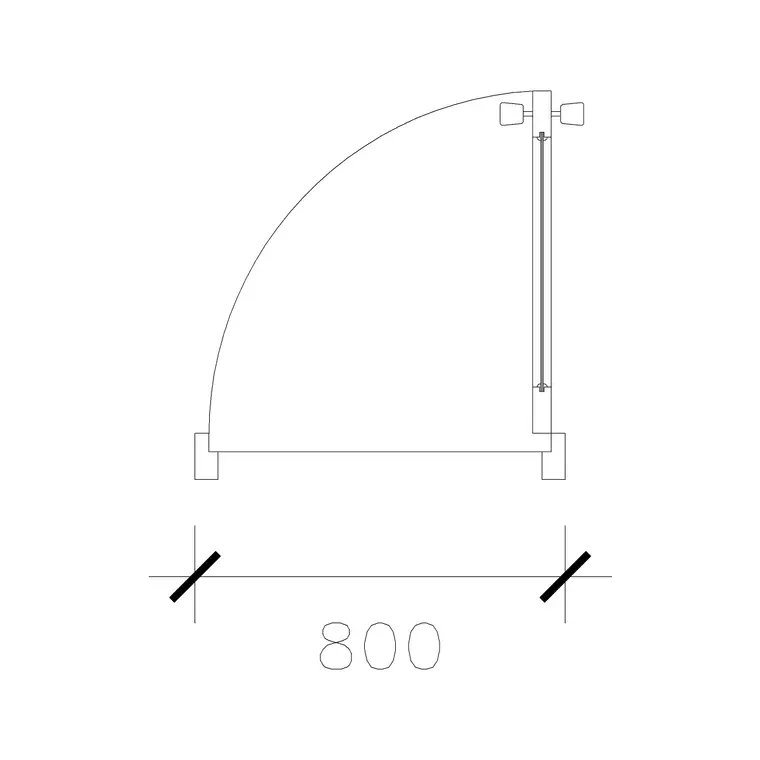
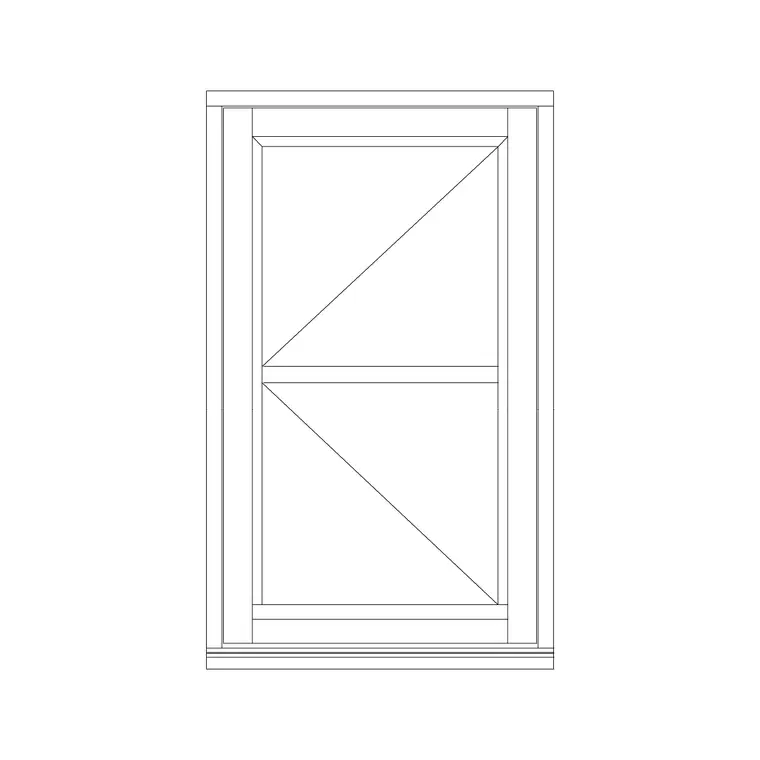
For the kind of clean 2D blocks in this catalogue, that is rarely a problem: a door, a window symbol, a north arrow translates to DXF without loss. But if you are exchanging a complex, feature-rich drawing between two AutoCAD users, DWG keeps everything; reserve DXF for when the file genuinely has to cross into different software. Use the right format for the destination, and the trade-off never bites.
When to choose DXF over DWG
A simple rule covers most cases. If both ends of your workflow speak AutoCAD — you and a colleague, or two AutoCAD-compatible programs — use DWG: it is smaller and keeps everything. The moment the drawing has to leave that ecosystem, switch to DXF.
Reach for DXF when you are sending geometry to a laser cutter or CNC machine, importing an outline into Illustrator or Inkscape for graphics, handing a file to someone whose software you can't confirm, or feeding any program that simply doesn't read DWG. Where a block here offers both, you will see DWG and DXF buttons side by side — pick DWG for CAD drafting and DXF for everything that leaves CAD.
Free download
Browse the full library — DWG & DXF, no signup.
Questions
Frequently asked
What does DXF stand for?+
DXF stands for Drawing Exchange Format. It is an Autodesk format created specifically to exchange CAD drawing data between different software, which is why its structure is openly documented and so widely supported.
Can I open a DXF file without AutoCAD?+
Yes, easily. Because DXF is an open, documented format, free programs like LibreCAD, QCAD, DraftSight, Inkscape and FreeCAD open it, as does virtually all CAM software for laser cutters and CNC routers.
Why is a DXF file bigger than the DWG?+
Classic DXF stores the drawing as plain text rather than compact binary, so the same drawing is typically several times larger as a DXF. That readable, documented structure is the price of its broad compatibility.
Is DXF good for laser cutting?+
Yes — DXF is the standard format CAM software imports for laser cutters and CNC machines. For the cleanest result, export to an older DXF version such as R12 or 2000, which strips out advanced objects a machine controller may not understand.
Related downloads
Blocks for this guide
Popular blocks to download
Related categories
Related guides
Explainer
DWG vs DXF: Complete Guide to CAD File Formats in 2026
DWG vs DXF explained — what each CAD format is, how they differ, which to use, file size and compatibility, and how to convert between them in AutoCAD.
Explainer
What Is a DWG File? AutoCAD's Native Format
What is a DWG file? Learn what DWG means, what it stores, how to open one with or without AutoCAD, and why it's the standard format for CAD drawings.
Explainer
DWG vs DXF for Laser Cutting: Which to Use
DWG vs DXF for laser cutting explained — why laser cutters want DXF, which version to export, and how to prepare clean cut-ready geometry from AutoCAD.