Explainer · rvt vs dwg
RVT vs DWG: AutoCAD and Revit files explained
By Sumana Kumar · Published 17 Mar 2026 · Updated 26 Apr 2026
Both AutoCAD and Revit are Autodesk products, both are used by architects and engineers, and both produce files you'll be asked to open — so it's easy to assume an RVT and a DWG are interchangeable. They are not. They represent two fundamentally different ways of working: DWG is a CAD drawing format, while RVT is a BIM model format. Understanding that difference explains why you can't open one in the other, why Revit and AutoCAD sit side by side in so many offices, and how data actually moves between them.
This page explains what an RVT file is, how it differs from a DWG in concept and content, why neither program opens the other's native file, and the practical routes for getting drawings and models to talk to each other. The free blocks on this site are DWG, and this is where they fit in that picture.
What an RVT file is
RVT is the native file format of Autodesk Revit, and it stores a Building Information Model — a BIM model — not a drawing. Where a DWG holds lines and arcs, an RVT holds a coordinated, parametric 3D model of a building made of intelligent objects: walls that know they're walls, doors that know they're hosted in a wall, rooms that calculate their own area, and schedules that update automatically when the model changes.
Crucially, an RVT is a single model from which many views are generated. The plans, elevations, sections and 3D views are all live cuts through one model, so a change in any view ripples through all of them. That coordinated, data-rich model is what "BIM" means, and it's a different kind of thing from a CAD drawing entirely.
How a DWG differs in concept
A DWG, by contrast, is a drawing-centric format. AutoCAD draws lines, arcs, circles, text and blocks, and a floor plan, an elevation and a section are separate drawings that you create and maintain independently. There's no underlying model linking them — if you move a wall in the plan, the elevation doesn't update unless you change it too.
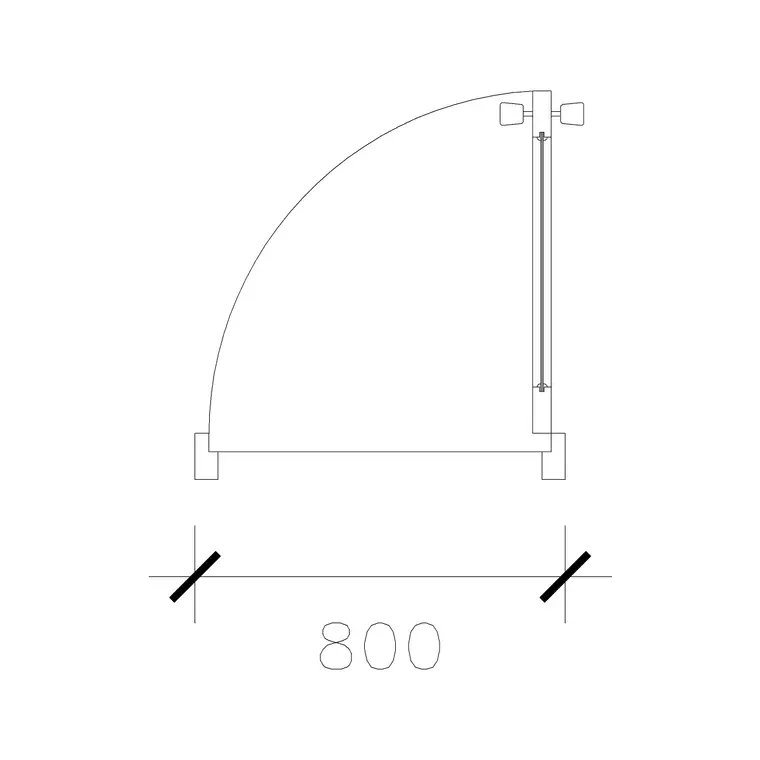
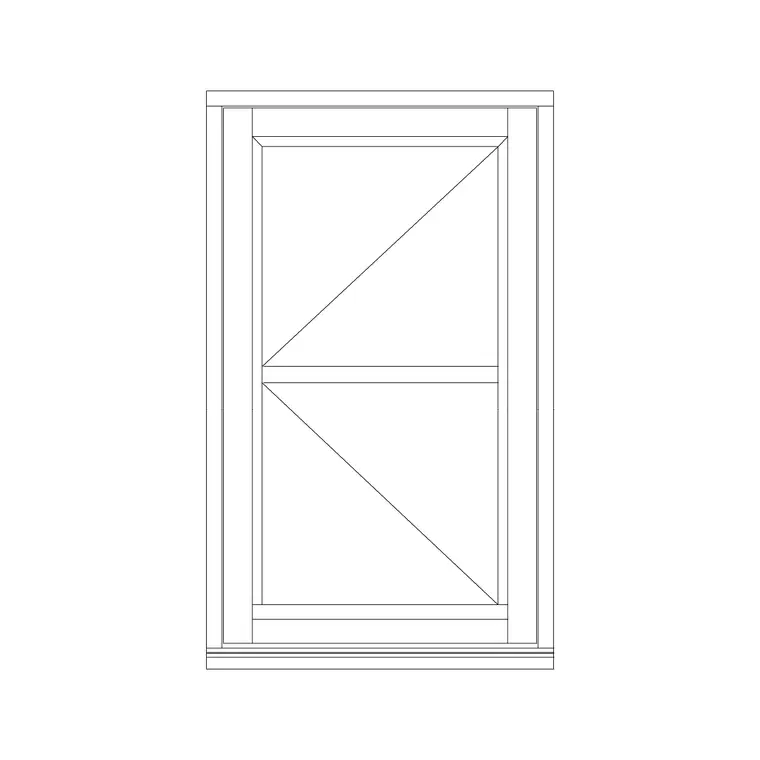
This isn't a flaw; it's a different paradigm. CAD is enormously flexible and fast for 2D drafting, detailing, and exactly the kind of reusable symbol library this site provides. A door block, a window symbol, a north arrow — these are DWG concepts. BIM trades some of that drawing freedom for a coordinated model where data and geometry stay consistent automatically. Most practices use both: Revit for the model, AutoCAD for 2D details, legacy drawings and quick work.
Why you can't open an RVT in AutoCAD
Because they store fundamentally different things, AutoCAD cannot open an RVT and Revit cannot natively open a DWG as a model. AutoCAD has no concept of the parametric, hosted, data-rich objects inside an RVT — there's nowhere for a self-scheduling wall to go in a format built for lines and arcs. So you can't simply double-click an RVT in AutoCAD and start editing.
If you only need to view an RVT and don't have Revit, free options exist: Autodesk offers viewers (including web-based viewing through Autodesk's platform) that open RVT files for inspection without a Revit licence. But viewing is not editing — to change the model you need Revit, just as to fully edit a DWG you need DWG-capable CAD software.
Moving data from Revit to AutoCAD
The practical bridge between the two is export, not direct opening. From Revit, you export views to DWG: open the plan, elevation or section you want, run Export > CAD Formats > DWG, and Revit generates a flat 2D DWG of that view, with the model's objects translated into lines, layers and blocks. This is how Revit work gets handed to consultants who live in AutoCAD.
The key thing to understand is that the exported DWG is a flattened snapshot, not the live model. It captures how that view looks, decomposed into CAD geometry, but it loses the parametric intelligence — the exported walls are now just lines on layers. That's usually exactly what the recipient wants: a clean 2D drawing they can work with in AutoCAD. You can control layer mapping during export so the DWG arrives with sensible, standard layer names.
Bringing DWG into Revit
The reverse direction is just as common. Revit imports and links DWGs so you can bring CAD information into a BIM project. A surveyor's site plan, a consultant's 2D layout, or a library of standard 2D details can be linked or imported into Revit and used as an underlay or reference to model against.
This is also where 2D CAD blocks stay relevant in a BIM workflow. Even Revit users keep DWG details, symbols and standard drawings, importing them where building a full parametric family would be overkill. A 2D detail, a symbol, or a drafting block is often cleaner as imported DWG geometry than as a modelled element. So the DWG blocks here aren't only for AutoCAD users — they're useful reference and detail content inside a Revit project too.
Which one are you actually working with?
If you've been handed a file and aren't sure, the extension tells you the paradigm immediately. A .rvt is a Revit BIM model — rich, parametric, 3D, and editable only in Revit (viewable in free Autodesk viewers). A .dwg is an AutoCAD-family drawing — 2D-centric (though it can hold 3D), editable in any DWG-capable CAD program, and the format of choice for drafting, details and symbol libraries.
For most people downloading blocks, the answer is simple: you want DWG (or DXF), because blocks are a drawing-world concept. If your office runs Revit, you'll still pull these DWG blocks in as linked details and 2D content. RVT and DWG aren't competitors so much as two layers of the same toolkit — the coordinated model and the flexible drawing — and knowing which you're holding tells you which program and which workflow you need.
Free download
Browse the full library — DWG & DXF, no signup.
Questions
Frequently asked
What is the difference between an RVT and a DWG file?+
An RVT is a Revit BIM model — a coordinated, parametric 3D model of a building. A DWG is an AutoCAD drawing — 2D-centric geometry like lines, arcs and blocks. RVT stores an intelligent model; DWG stores a drawing.
Can I open an RVT file in AutoCAD?+
No. AutoCAD can't open Revit's native RVT model. To use Revit data in AutoCAD, export the views you need from Revit to DWG. To just view an RVT without Revit, use a free Autodesk viewer.
How do I get a Revit model into AutoCAD?+
Export from Revit using Export > CAD Formats > DWG. Revit flattens the chosen view into 2D DWG geometry with layers and blocks. The result is a snapshot drawing, not the live model — the parametric intelligence doesn't carry over.
Can I use DWG blocks in Revit?+
Yes. Revit can import or link DWG files, so 2D CAD blocks, details and symbols — including the free ones here — are useful as underlays, reference geometry and standard details inside a Revit project.
Related downloads
Blocks for this guide
Popular blocks to download
Related categories
Related guides
Explainer
DWG vs DXF: Complete Guide to CAD File Formats in 2026
DWG vs DXF explained — what each CAD format is, how they differ, which to use, file size and compatibility, and how to convert between them in AutoCAD.
Explainer
What Is a DWG File? AutoCAD's Native Format
What is a DWG file? Learn what DWG means, what it stores, how to open one with or without AutoCAD, and why it's the standard format for CAD drawings.
Explainer
What Is a DXF File? The CAD Exchange Format
What is a DXF file? Learn what DXF means, why it exists, what software opens it, and why it's the universal format for laser cutters, CNC and graphics tools.