How-to guide · how to insert blocks from another drawing
Insert blocks from another drawing into AutoCAD
By Saumyajit Maity · Published 2 Dec 2024 · Updated 30 Mar 2026
Often the block you need is not in a library — it is sitting inside another drawing a colleague sent, or a previous job you want to harvest a detail from. AutoCAD gives you several clean ways to move a block definition from one drawing into another without redrawing it, and picking the right one depends on whether you want a single block, a handful, or everything in the source file.
This guide covers the four practical methods: DesignCenter for browsing and dragging named blocks across files, the Blocks palette's Other Drawing option, copy-and-paste with a base point for a quick one-off, and inserting the whole external DWG as a single block. Each lands the geometry as a proper reusable block reference, not loose lines.
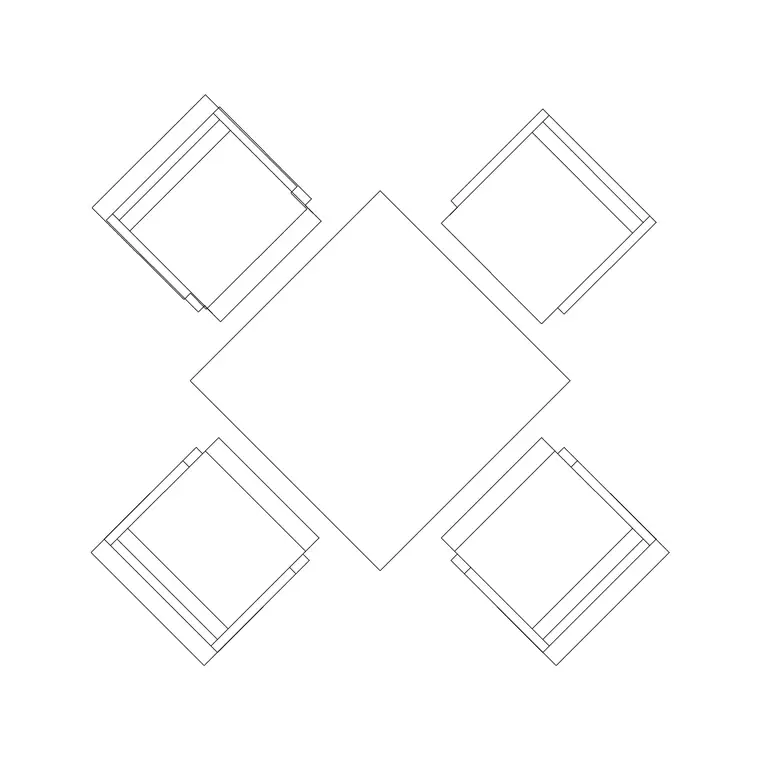
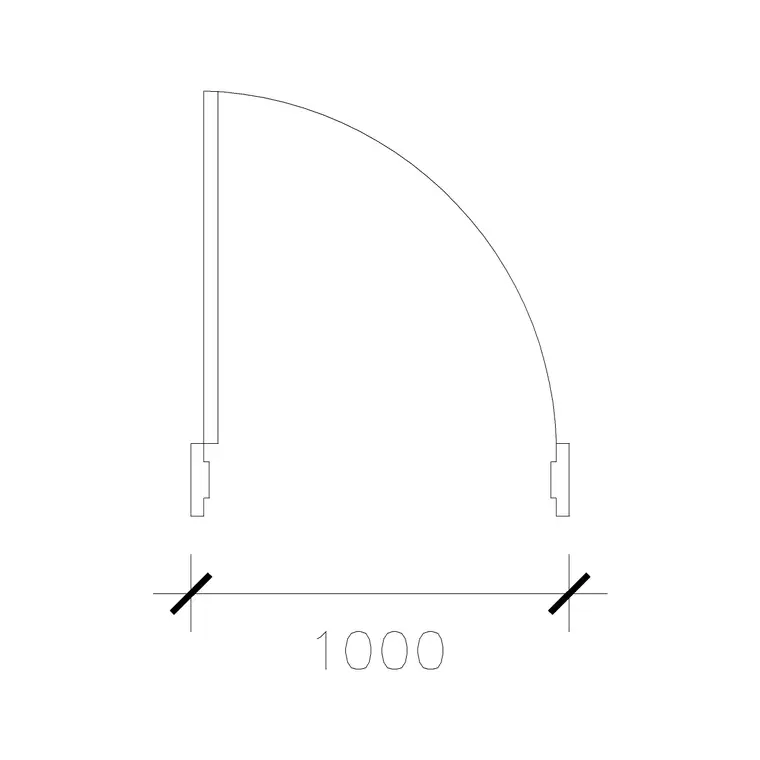
We will use a furniture table and a single door as the running examples, because furniture and doors are the blocks people most often lift out of an old plan to reuse in a new one.
Method 1 — DesignCenter (best for browsing many blocks)
Type ADCENTER or press Ctrl+2 to open DesignCenter. In the folder tree on the left, navigate to the source DWG, expand it, and click the Blocks node. The right pane fills with thumbnails of every block defined in that drawing.
Drag the block you want straight onto your current drawing to insert it, or double-click it to open the standard insert dialog and set scale and rotation. DesignCenter is the method to use when a source file holds dozens of blocks and you want to cherry-pick a few without opening the file.
Method 2 — Blocks palette, insert from another drawing
Open the Blocks palette with BLOCKSPALETTE. On the Libraries tab (or via the folder icon at the top of the palette), browse to the source DWG. AutoCAD lists the blocks contained in that file, and you click a thumbnail to insert it just like any other.
This keeps you inside the same palette you use for everything else, with the same scale, rotation and Repeat Placement options at the bottom. It is the most consistent route if the Blocks palette is already your main insertion tool.
Method 3 — Copy and paste with a base point
For a quick single grab, open both drawings. In the source, select the block, then press Ctrl+Shift+C (Copy with Base Point) and click a meaningful base point — the centre of a table, the hinge of a door. Switch to the target drawing and press Ctrl+V, then click to place. The base point you chose becomes the insertion handle, so the block lands predictably.
Plain Ctrl+C and Ctrl+V also works, but Copy with Base Point gives you control over where the block grabs from, which matters for anything you need to align precisely against a wall or grid.
Method 4 — Insert the whole DWG as one block
If you want the entire source drawing to come in as a single block — useful for dropping a complete furnished room or a standard detail — run INSERT and browse to the DWG file itself. AutoCAD inserts the whole file as one block reference named after the file.
You can explode it afterwards if you only wanted a couple of items, but for reusable assemblies it is often better to leave it whole. This is the same mechanism that lets you build a furnished workstation in one file and drop it into many plans as a unit.
Watching out for name clashes and binding
When you import a block whose name already exists in the target drawing, AutoCAD keeps the existing definition and does not overwrite it — so the imported instance may use the target's geometry, not the source's. If the two genuinely differ, rename one before importing, or use INSERT's redefine behaviour deliberately.
If the source block was itself an xref or contained nested xrefs, those references come along too. Use BIND or detach them as appropriate so your new drawing is not quietly depending on a file path that will not exist on another machine.
Nested blocks are a related trap. A furnished workstation block might contain a chair block and a desk block inside it; importing the parent brings the children along, and if a child shares a name with something already in your drawing, the same keep-existing rule applies to it too. When in doubt after a complex import, run PURGE to clear anything that came in unused, and check the Layer Properties Manager for foreign layers so your drawing's standards stay clean.
Keeping layers and units sane on import
Imported blocks bring their layers with them, so a careless import can flood your Layer Properties Manager with foreign layer names. Decide upfront whether the incoming furniture or doors should sit on their own layer in your scheme, and move them after insertion with the Properties palette if needed.
Units travel too. If the source was drawn in millimetres and your target is a millimetre template, everything lands at true size. If they differ, set INSUNITS correctly in both files so AutoCAD rescales the block on insertion rather than dropping it in at the wrong size.
Free download
Browse the full library — DWG & DXF, no signup.
Questions
Frequently asked
What is the fastest way to copy one block between two open drawings?+
Use Copy with Base Point: select the block in the source drawing, press Ctrl+Shift+C, click a sensible base point, switch to the target drawing and press Ctrl+V. The base point becomes the insertion handle so the block aligns predictably.
How do I see all the blocks inside another drawing without opening it?+
Open DesignCenter (Ctrl+2), browse to the DWG in the folder tree, and click its Blocks node. The right pane shows a thumbnail of every block defined in that file, ready to drag into your current drawing.
What happens if the imported block has the same name as one in my drawing?+
AutoCAD keeps the existing definition and will not silently overwrite it, so the new instance may display your drawing's version of that block. If the two are genuinely different, rename one before importing to avoid confusion.
Will inserting another DWG bring its layers into my drawing?+
Yes. Block and file inserts carry their layers across, which can add foreign layer names to your file. Plan which layer the imported doors or furniture should live on and reassign them with the Properties palette after insertion if needed.
Related downloads
Blocks for this guide
Popular blocks to download
Related categories
Related guides
How-to guide
How to Insert a DWG Block in BricsCAD
Insert a DWG block in BricsCAD — use the Blocks panel or INSERT command, fix unit scaling, place and rotate, then build a reusable BricsCAD library.
How-to guide
How to Insert a DWG Block in DraftSight
Insert a DWG block in DraftSight — use INSERTBLOCK or Design Resources, set units so it scales right, place it, and save it to a reusable library.
How-to guide
How to Insert a DXF in LibreCAD
Insert a DXF file in LibreCAD — why LibreCAD needs DXF not DWG, how to import or insert a block, fix the millimetre scaling, and place it cleanly on a layer.