How-to guide · how to insert a dwg block in bricscad
How to insert a DWG block in BricsCAD
By Saumyajit Maity · Published 5 Apr 2025 · Updated 1 Feb 2026
BricsCAD reads and writes native DWG, so any block you download here drops into it the same way it would into AutoCAD — but the menus, panels and a couple of habits are different enough to trip people up the first time. This guide walks through inserting a downloaded DWG block in BricsCAD, from the Blocks panel and the classic INSERT command through to getting the scale right and saving the symbol into your own library.
Because BricsCAD shares the .dwg file format and most of AutoCAD's command names, almost everything you already know carries across. The differences are mostly in where things live: the Blocks panel sits in the Drawing Explorer family rather than a separate ribbon tab, and BricsCAD leans a little more on drag-and-drop than AutoCAD does. Once you have placed one block you will place every block the same way.
Step 1 — Download the DWG and check its units
Download the block you need as a DWG and save it into a project or library folder you can find again. Every block on this site is drawn full size in millimetres, which matters in a moment when BricsCAD decides how to scale it on insertion.
Before you insert, glance at your drawing's own units. Type UNITS at the command line to open the Drawing Units dialog and check that the insertion scale is set to Millimeters if you are working in a metric template. BricsCAD honours the same INSUNITS system variable as AutoCAD, so when both the block and the drawing declare millimetres, the block lands at true size with no manual rescaling.
Step 2 — Open the Blocks panel or run INSERT
BricsCAD gives you two routes. The fastest for a one-off is the classic command: type INSERT (or just I) and press Enter to open the Insert Block dialog, then click Browse and pick the DWG you downloaded. The dialog mirrors AutoCAD's — insertion point, scale and rotation, each with a 'Specify on-screen' tick box.
The alternative is the Blocks panel, reached from the Drawing Explorer or the Tools menu. If you keep a folder of downloaded DWGs, you can also drag the file straight from Windows Explorer (or macOS Finder) onto the drawing canvas; BricsCAD treats the dropped DWG as a block and starts the insertion prompt automatically, which is the quickest way to audition several blocks in a row.
Step 3 — Place, scale and rotate the block
With the insert started, leave 'Specify on-screen' ticked for the insertion point and click where the block's base point should sit. If you want to set a scale factor or rotation as you place it, tick those boxes too and type the values when prompted, or drag to set rotation visually.
For a block whose units already match the drawing, leave the scale at 1 — the geometry is already true size. If you work in metres rather than millimetres, insert at scale 0.001; if you are on an imperial template, the cleanest fix is to set your insertion units to millimetres in the UNITS dialog so BricsCAD converts automatically rather than juggling a 0.03937 factor by hand. The placed block becomes a single block reference you can copy, mirror and array as one object.
Step 4 — Put the block on the right layer
A downloaded block usually carries its own geometry on layer 0 or on its internal layers. After placing it, decide where the reference itself should live: select the block, open the Properties panel (Ctrl+1), and change its layer to a sensible one such as a furniture or fixtures layer rather than leaving it on layer 0.
Keeping inserted blocks on dedicated layers is what lets you freeze furniture for a clean structural plan and thaw it for a furnished one, all from the same BricsCAD drawing. If the block was drawn on layer 0, it will also take on the colour and lineweight of whatever layer you move it to, which is the standard trick for making one block read correctly in different drawings.
Step 5 — Save it into a reusable BricsCAD library
Once a block is in the drawing you can reuse it across the project without re-downloading. To pull it out as a standalone DWG for a permanent library, use the EXPORT command with the Block option, or open Drawing Explorer, find the block definition, and export it. BricsCAD's WBLOCK equivalent writes the block to its own .dwg exactly as AutoCAD does.
Better still, point a BricsCAD tool palette or the Blocks panel at a folder of your downloaded DWGs. From then on the whole library is one drag away on every drawing, and because the files are plain DWG they stay usable if you ever move between BricsCAD, AutoCAD or any other DWG-native program.
Pitfalls to watch for in BricsCAD
Two issues account for most insertion problems. The first is the units mismatch: if a block arrives microscopic or the size of a building, the cause is almost never the file — it is that the drawing's insertion units and the block's don't agree. Fix it in UNITS by setting the insertion scale to millimetres, then re-insert; manual scaling is a workaround, not the cure.
The second is the exploded-block trap. It is tempting to explode a downloaded block to tidy it, but once exploded it is no longer a single reference and you lose the ability to edit every copy at once. Keep blocks as blocks, and if you genuinely need to change the symbol, use BEDIT (the Block Editor) so the change propagates to every instance. Finally, watch proxy or custom objects from exotic sources — pure geometry blocks like the ones here insert cleanly, but a block laden with third-party custom entities can come in as a non-editable proxy.
Free download
Browse the full library — DWG & DXF, no signup.
Questions
Frequently asked
Does BricsCAD open DWG blocks made for AutoCAD?+
Yes. BricsCAD uses native DWG as its file format, so blocks drawn for AutoCAD insert directly with no conversion. The DWG files here target AutoCAD 2004 and later, which BricsCAD reads without issue.
Why does my block insert at the wrong size in BricsCAD?+
It is an insertion-units mismatch. Type UNITS, set the insertion scale to Millimeters to match the block, then insert again. With matching units, BricsCAD rescales the block automatically and it lands at true size.
Can I drag a DWG into BricsCAD instead of using INSERT?+
Yes. Drag the DWG from Windows Explorer or macOS Finder onto the drawing and BricsCAD treats it as a block, starting the insertion prompt. It is the quickest way to try several blocks in succession.
How do I save an inserted block into my own BricsCAD library?+
Use EXPORT with the Block option, or export the definition from Drawing Explorer, to write the block out as a standalone DWG. Point a tool palette or the Blocks panel at that folder to reuse the whole library by drag-and-drop.
Related downloads
Blocks for this guide
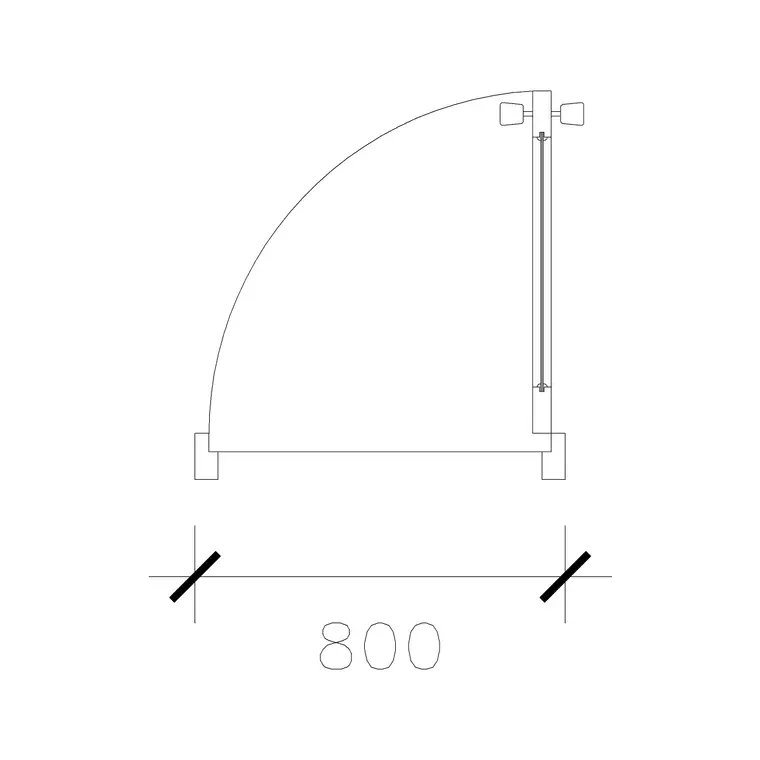
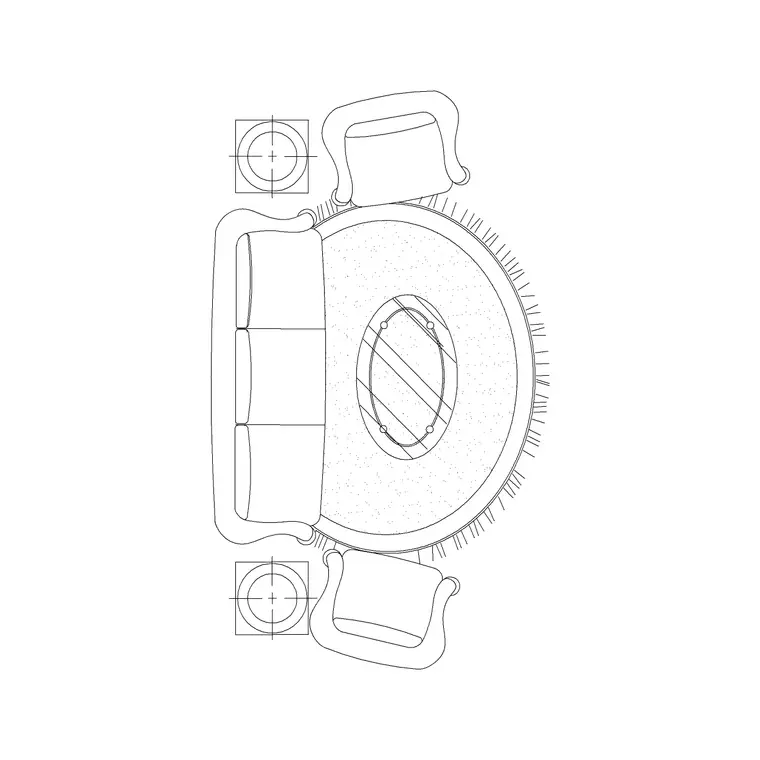
Popular blocks to download
Related categories
Related guides
How-to guide
How to Insert a DWG Block in DraftSight
Insert a DWG block in DraftSight — use INSERTBLOCK or Design Resources, set units so it scales right, place it, and save it to a reusable library.
How-to guide
How to Insert a DXF in LibreCAD
Insert a DXF file in LibreCAD — why LibreCAD needs DXF not DWG, how to import or insert a block, fix the millimetre scaling, and place it cleanly on a layer.
How-to guide
How to Insert a CAD Block in AutoCAD LT
Insert a CAD block in AutoCAD LT — use the Blocks palette or INSERT, fix unit scaling, place it, and learn what LT can and can't do with blocks.