How-to guide · how to export a block to its own dwg file
Export a block to its own DWG file in AutoCAD
By Saumyajit Maity · Published 16 Sep 2024 · Updated 24 May 2026
When a block is good enough to reuse on other jobs, the natural next step is to pull it out of the drawing and save it as its own DWG file. AutoCAD's WBLOCK command (Write Block) does exactly that: it writes a block, a selection of objects, or even the whole drawing out to a separate DWG you can store in a library and insert anywhere. It is the foundation of building your own reusable block collection.
This guide walks through exporting a single named block to its own file with WBLOCK, setting the base point and units so it inserts cleanly later, and the alternative of selecting loose objects and writing them out as a fresh block file. It finishes with how to organise the exported files into a library you can drive from a tool palette.
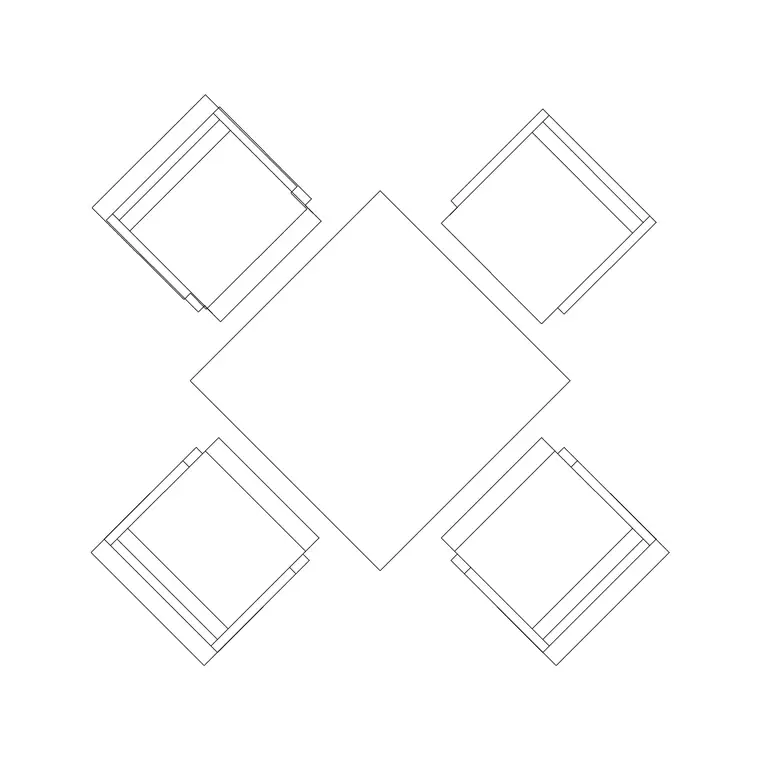
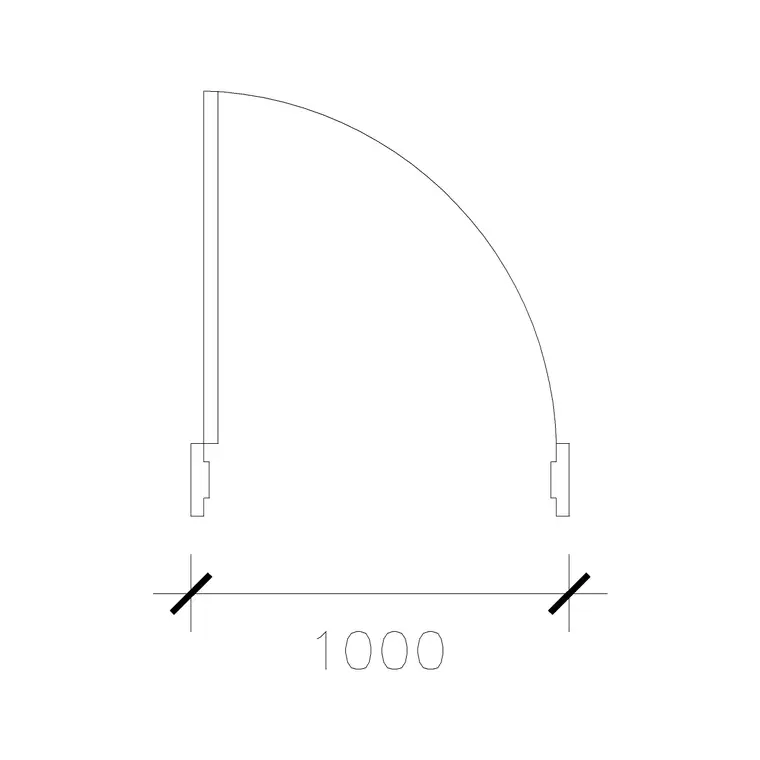
We will use a door and a table as examples, since doors and furniture are the components most worth exporting into a personal library for reuse across drawings.
Running WBLOCK on an existing block
Type WBLOCK and Enter to open the Write Block dialog. Under Source, choose Block, then pick the named block you want to export from the dropdown — for example a 1000 mm wide single door or a 4-person table already defined in the drawing.
WBLOCK uses the existing block's own base point and units, so an already-well-built block exports cleanly with little fuss. Set the Destination file name and folder, click OK, and AutoCAD writes a standalone DWG containing just that block's geometry, ready to insert into any other drawing.
Exporting loose objects as a new block file
If the geometry is not yet a block — just lines and arcs you have drawn — choose Objects under Source instead. Click 'Select objects', pick the geometry, and decide whether to retain, convert to block, or delete the originals in the current drawing.
Crucially, set the Base point with Pick point before writing. Click a sensible insertion handle — a door hinge, the centre of a table — because that point becomes the grab handle when the file is later inserted. Choosing it deliberately is what makes the exported block easy to place on a wall or grid.
Getting the base point right
The base point you set in WBLOCK is where the block will hang off the cursor on every future insert. A door is easiest to place from its hinge or jamb; a table from a corner or its centre, depending on how you align furniture. Pick the point that matches how you will actually position the component in plans.
If you get it wrong, you can fix it later by opening the exported DWG and running the BASE command to reset the drawing's base point. But it is far quicker to choose well at export time than to repath every future insert around a bad handle.
Matching units so it inserts at true size
Set the Insert units in the WBLOCK dialog to the units the geometry is drawn in — millimetres for the millimetre blocks used across most architectural libraries. When you later insert this file into a drawing whose INSUNITS is also millimetres, AutoCAD lands it at true size with no manual scaling.
If you leave units as Unitless, the file will insert at raw size and you will have to scale by hand every time, which defeats the point of a tidy library. Setting units correctly at export is a one-time step that pays off on every future insert.
Cleaning the exported file
WBLOCK writes only the geometry you asked for, but the new DWG can still carry along layers, linetypes and text styles referenced by that geometry. Open the exported file and run PURGE to strip anything unused, so your library files stay lean and do not drag foreign styles into drawings you later insert them into.
It is also worth confirming the exported block sits on sensible layers — ideally a clearly named furniture or door layer rather than layer 0 with hard-coded colours — so it behaves predictably when inserted into different drawings. A few minutes of cleanup makes a library file genuinely reusable.
Building a reusable library from exported files
Once you have a folder of WBLOCK'd DWG files — doors here, furniture there — you have the makings of a personal block library. Point a tool palette at that folder (drag the DWGs onto a palette tab) so each exported block becomes a one-click insert, exactly the workflow a curated library is built for.
Keep the folder in a stable, backed-up location, because tool palettes and Favorites store the file path. Move the files later and the links break. Park your exported blocks somewhere permanent first, then build the palette on top, and your library will keep working for years.
A naming convention pays off here too. If every exported door file starts with a consistent prefix and carries its leaf width in the name, and every furniture file names its type and seat count, the library stays browsable as it grows to hundreds of files. The few seconds spent naming a WBLOCK file sensibly at export time is what lets you find the right 1000 mm door or 4-person table months later by glancing at the folder rather than opening files one by one to see what is inside.
Free download
Browse the full library — DWG & DXF, no signup.
Questions
Frequently asked
What command exports a block to its own DWG file?+
WBLOCK (Write Block). Run WBLOCK, choose Block under Source, pick the named block, set a destination file and folder, and click OK. AutoCAD writes a standalone DWG containing just that block's geometry, ready to insert elsewhere.
How do I export loose lines as a reusable block file?+
Run WBLOCK, choose Objects under Source, select the geometry, and set a base point with Pick point before writing. The base point becomes the insertion handle, and the result is a fresh DWG you can insert as a block into other drawings.
Why does my exported block insert at the wrong size?+
The Insert units in the WBLOCK dialog were probably left Unitless or set wrong. Set them to the units the geometry is drawn in (millimetres for most architectural blocks) so AutoCAD rescales correctly when INSUNITS in the target drawing matches.
How do I clean up an exported block file?+
Open the exported DWG and run PURGE to remove unused layers, linetypes and styles that came along with the geometry. Confirm the block sits on a sensible named layer too, so it behaves predictably when inserted into other drawings.
Related downloads
Blocks for this guide
Popular blocks to download
Related categories
Related guides
How-to guide
How to Insert a DWG Block in BricsCAD
Insert a DWG block in BricsCAD — use the Blocks panel or INSERT command, fix unit scaling, place and rotate, then build a reusable BricsCAD library.
How-to guide
How to Insert a DWG Block in DraftSight
Insert a DWG block in DraftSight — use INSERTBLOCK or Design Resources, set units so it scales right, place it, and save it to a reusable library.
How-to guide
How to Insert a DXF in LibreCAD
Insert a DXF file in LibreCAD — why LibreCAD needs DXF not DWG, how to import or insert a block, fix the millimetre scaling, and place it cleanly on a layer.