How-to guide · how to create a block palette in autocad 2024
Create a block palette in AutoCAD 2024
By Sumana Kumar · Published 1 Dec 2022 · Updated 17 Jan 2026
A tool palette is the fastest place to keep blocks you reach for every day. Instead of hunting through folders with INSERT, you click a thumbnail and drop the block straight onto the drawing. AutoCAD 2024 ships the Blocks palette for inserting from the current drawing and from libraries, but a custom tool palette is what you build when you want your own curated tray of doors, furniture and title-block parts sitting one click away.
This guide shows how to create a tool palette from scratch in AutoCAD 2024, fill it with DWG blocks, set the insertion behaviour (scale, rotation and units) for each tool, and then group and export the palette so it travels with you between machines. The steps are the same whether you are assembling a furniture tray or a door-type tray.
Nothing here needs a subscription add-on. Everything uses the stock Tool Palettes window (the TOOLPALETTES command, Ctrl+3) that has shipped with AutoCAD for years, so the workflow also works in AutoCAD LT 2024 with only minor menu differences.
Step 1 — Open the Tool Palettes window
Press Ctrl+3, or type TOOLPALETTES and Enter, to open the Tool Palettes window. It usually docks to the right of the drawing area. If it is empty or shows only the sample palettes Autodesk ships (Architectural, Mechanical, Hatches), that is fine — you are about to add your own tab beside them.
Right-click the title bar of the window and choose Allow Docking off if you prefer it to float while you build it, so the thumbnails are easier to drag onto. You can re-dock it once the palette is populated.
Step 2 — Create a new palette tab
Right-click anywhere on the grey body of the Tool Palettes window and choose New Palette. Type a clear name such as Doors, Furniture or Project Library and press Enter. A fresh empty tab appears. Give each kind of block its own tab rather than dumping everything into one — a Doors tab and a Furniture tab read far faster than one long scroll.
To keep related tabs together, right-click the tab area, choose Customize Palettes, and drag your new palettes into a named group on the left. Groups let you show only the relevant tabs for a given task with a right-click.
Step 3 — Drag DWG blocks onto the palette
There are two reliable ways to add a block. If the block already exists in the open drawing, select it on screen and drag it by an edge onto the palette tab — AutoCAD creates a tool that re-inserts that block definition. If the block lives in its own DWG file, open Windows File Explorer, find the .dwg, and drag the file itself onto the palette; AutoCAD makes a tool that inserts the whole file as a block.
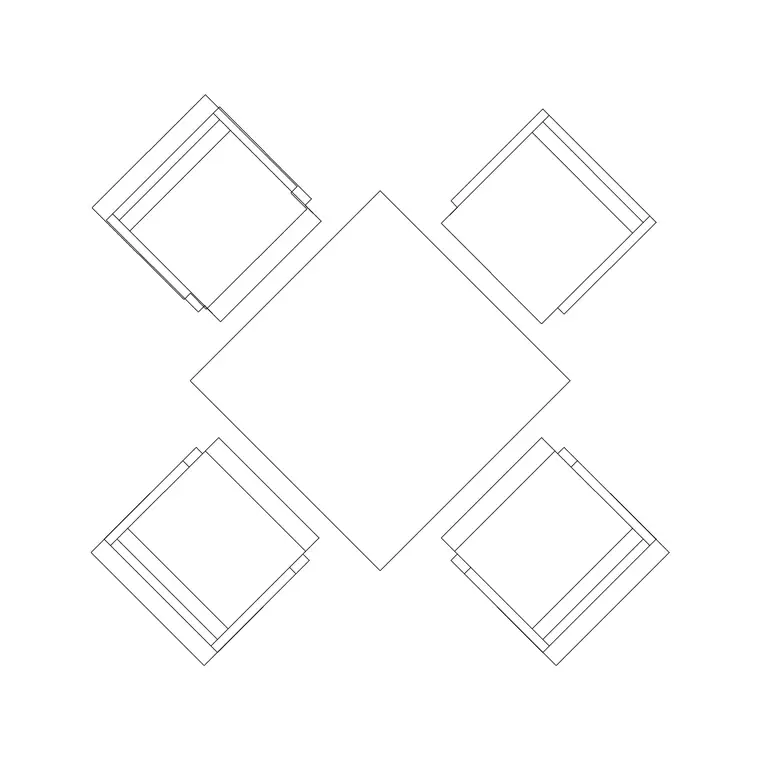
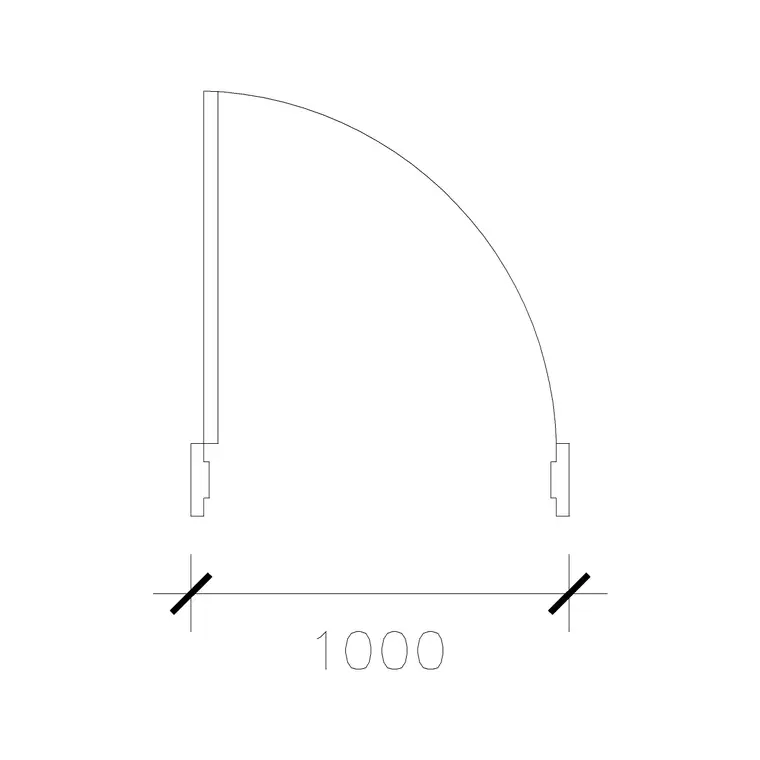
Each drop creates a thumbnail tile. Drag a 1000 mm wide single door file and a 4-person table file onto the relevant tabs and you have the start of a real working tray.
Step 4 — Set scale, rotation and units per tool
Right-click a tool tile and choose Properties to control how the block lands. The important fields are Auxiliary scale and the Insert section's Scale and Rotation. If your blocks are drawn in millimetres and your templates are millimetre templates, leave the scale at 1. Set the tool's source-file units so AutoCAD rescales automatically if a drawing is set up in different units.
You can also pre-set a rotation — handy for a door tool you always place at 90 degrees against a wall — and assign the tool a target layer so every door you drop lands on your door layer without an extra step.
Step 5 — Group, export and reuse the palette
Once the tabs are built, right-click the tab area and choose Customize Palettes. From here you can Export a single palette to an .xtp file or export an entire group, which is how you move your library to another PC or share it with a colleague. They Import the .xtp from the same dialog and your whole tray appears.
For a team, point everyone's Tool Palette File Locations (in OPTIONS > Files) at a shared network folder so the palettes update centrally. That turns a personal tray into a standard office library that everyone inserts from, keeping block versions consistent across a project.
Tips and common pitfalls
Keep the source DWG files in a stable folder — a tool palette stores a path to the file it inserts, so if you later move the source DWGs the tools break with a 'file not found'. Park your library in a permanent location before you build the palette.
Avoid exploding blocks on insertion from a palette unless you mean to; an exploded door is no longer a single editable reference. And resist the urge to put a hundred blocks on one tab — palettes stay usable when each tab holds a focused set you can scan in a couple of seconds.
Free download
Browse the full library — DWG & DXF, no signup.
Questions
Frequently asked
What is the difference between the Blocks palette and a tool palette in AutoCAD 2024?+
The Blocks palette (BLOCKSPALETTE) inserts block definitions from the current drawing, recent inserts and configured libraries. A tool palette is a custom tray you build yourself by dragging in blocks, hatches and commands, with per-tool scale, layer and rotation. Use the Blocks palette to find blocks; build a tool palette to curate the ones you place every day.
Can I create tool palettes in AutoCAD LT 2024?+
Yes. AutoCAD LT 2024 includes the Tool Palettes window (Ctrl+3) and supports creating palettes, dragging DWG files onto them and setting tool properties. The export and import workflow through Customize Palettes works the same way.
How do I move my block palette to another computer?+
Right-click the tab area, choose Customize Palettes, then Export the palette (or the whole group) to an .xtp file. On the other machine, open the same dialog and Import the .xtp. Make sure the source DWG files the tools point to are also available on that machine, ideally on a shared path.
Why does a block insert at the wrong size from my palette?+
That is almost always a units mismatch. Open the tool's Properties and check its source units against the drawing's insertion units (UNITS / INSUNITS). When both are set to millimetres, the block lands at true size; set the tool's units correctly so AutoCAD rescales automatically.
Related downloads
Blocks for this guide
Popular blocks to download
Related categories
Related guides
How-to guide
How to Insert a DWG Block in BricsCAD
Insert a DWG block in BricsCAD — use the Blocks panel or INSERT command, fix unit scaling, place and rotate, then build a reusable BricsCAD library.
How-to guide
How to Insert a DWG Block in DraftSight
Insert a DWG block in DraftSight — use INSERTBLOCK or Design Resources, set units so it scales right, place it, and save it to a reusable library.
How-to guide
How to Insert a DXF in LibreCAD
Insert a DXF file in LibreCAD — why LibreCAD needs DXF not DWG, how to import or insert a block, fix the millimetre scaling, and place it cleanly on a layer.