How-to guide · how to copy a block multiple times in autocad
How to copy a block multiple times efficiently in AutoCAD
By Saumyajit Maity · Published 8 Feb 2026 · Updated 22 Feb 2026
Placing the same block again and again — a bollard, a desk, a tree, a parking symbol — is one of the most common drafting tasks, and AutoCAD has several ways to do it quickly. The COPY command alone is more capable than most people use: it stays in multiple-copy mode by default, and it hides an Array suboption that drops copies at equal spacing along a direction.
This guide shows how to copy a block efficiently with COPY, how to use its Array and Fit suboptions for evenly-spaced runs, and how to decide when a plain copy is right versus when an associative array or a smarter block would serve you better. Pick the right tool and a job that looks like a hundred clicks becomes three.
The theme throughout is that repetitive placement should never be repetitive work. AutoCAD gives you the shortcuts; this is which one to grab when.
COPY stays in multiple mode by default
Many people copy one block at a time, pressing Ctrl+C and Ctrl+V or running COPY once per instance. They don't need to. In current AutoCAD, the COPY command stays active after the first copy, letting you keep clicking to drop more copies until you press Enter or Escape.
Type COPY (or CO/CP), select the block, press Enter, pick a base point, then click as many destination points as you like — each click places another copy. This 'multiple' mode is the default, so a row of bollards down a path is just: select, base point, click, click, click, Enter. No repeated command, no re-selecting the block.
Step 1 — Set a clean base point
As with MOVE and ROTATE, the base point is the handle for every copy, so pick it deliberately. Snap it to a meaningful feature — the insertion point of the block, a corner, a centre — so each copy lands predictably when you snap the destination points to grid intersections or existing geometry.
With Object Snap on (F3), you can copy a block and snap each new instance exactly onto a node, endpoint or grid point. This is how you place furniture on a setting-out grid or drop fixtures at exact locations: the base point and the destination snaps do the precision for you, no typing required.
Step 2 — Use the Array suboption for equal spacing
Here is the hidden gem. After you pick the base point in COPY, type A for Array. AutoCAD asks for the 'number of items', then for the spacing or the second point. Give it a count and a direction, and it drops that many evenly-spaced copies in a line — a quick linear array without leaving the COPY command.
This is perfect for a straight run at a known spacing: ten bollards 1500 mm apart, a row of parking symbols, a line of seats. It is faster than ARRAYRECT for a simple one-dimensional run because there's no ribbon to configure — you stay on the command line and the copies are plain block references, not an associative array object.
Step 3 — Fit copies between two points
Within that COPY Array suboption there is a further Fit option. Instead of giving a fixed spacing, you can specify the total distance (by picking an end point) and AutoCAD divides the run so the chosen number of items fits evenly between the start and end.
Use Fit when you know how many copies you need and the overall length they must span, but not the per-item gap — for example, spacing five identical features evenly along a wall of a known length. AutoCAD calculates the spacing so the items distribute neatly across the span, first and last at the ends.
When to use a real array or a block instead
Plain copies are simple and independent, which is their strength and their weakness. If you might later change the spacing or count of a regular run, an associative array (ARRAYRECT or ARRAYPATH) is better because you can edit those numbers live. If the run is genuinely a grid — rows and columns — ARRAYRECT is the natural fit.
And if you are copying the same block hundreds of times, remember that block references are already efficient: each copy stores only a name, position, scale and rotation, not a fresh copy of the geometry, so the file stays small. The mistake to avoid is exploding blocks before copying — that bloats the drawing with duplicate geometry. Keep them as blocks, copy freely, and the file stays lean.
Copying between drawings
To reuse a block in another open drawing, COPY won't help across files — for that, use Copy with Base Point (Ctrl+Shift+C) in the source drawing, pick a base point, switch to the target drawing, and Paste (Ctrl+V) or Paste to Original Coordinates (Ctrl+Shift+V). The base point gives you control over where it lands rather than dropping it at an arbitrary spot.
For blocks you copy between drawings often, a better long-term move is to WBLOCK the symbol out to a standalone DWG and build a tool palette or library folder. Then you drag it into any drawing on demand, with no copy-paste at all. Copy-paste is for one-offs; a library is for blocks you'll reuse across projects.
Efficiency habits that add up
A few small habits make repetitive placement genuinely fast. Learn the COPY Array and Fit suboptions so you reach for them instead of clicking copies by eye. Keep blocks as blocks — never explode before copying. Set the source block on the right layer before you start so every copy inherits it. And use Object Snap and grid snaps so copies land exactly rather than approximately.
For anything that repeats in a regular pattern, ask whether an associative array would let you tune the result later; for anything you copy across many drawings, ask whether it belongs in your block library. Those two questions, asked routinely, are what separate slow, click-heavy drafting from fast, structured work.
Free download
Browse the full library — DWG & DXF, no signup.
Questions
Frequently asked
How do I copy a block multiple times without repeating the command?+
Run COPY once. After picking the base point it stays in multiple-copy mode, so you keep clicking destination points to drop more copies until you press Enter. There is no need to restart the command for each copy.
How do I copy a block at equal spacing in a straight line?+
In the COPY command, after the base point type A for Array, then enter the number of items and the spacing or direction. AutoCAD places that many evenly-spaced copies in a line as plain block references.
Should I use COPY or an array for repeated blocks?+
Use COPY for one-off or irregular placement and quick equal-spacing runs via its Array suboption. Use ARRAYRECT or ARRAYPATH when the pattern is a regular grid or path and you may want to edit the count or spacing live afterwards.
How do I copy a block into a different drawing?+
Use Copy with Base Point (Ctrl+Shift+C) in the source drawing, pick a base point, switch to the target drawing and paste (Ctrl+V). For blocks you reuse often, WBLOCK them to a standalone DWG and build a library instead.
Related downloads
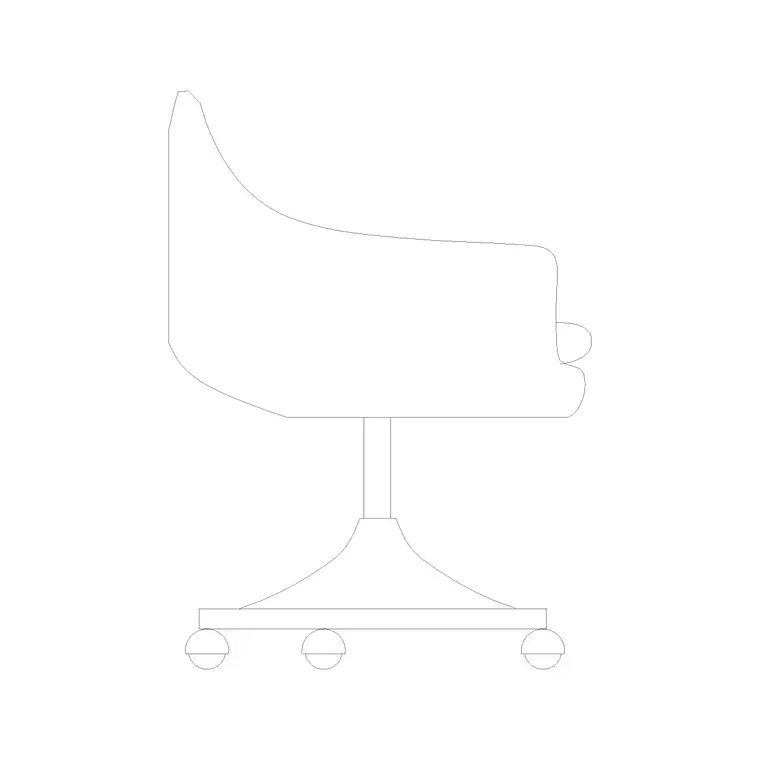
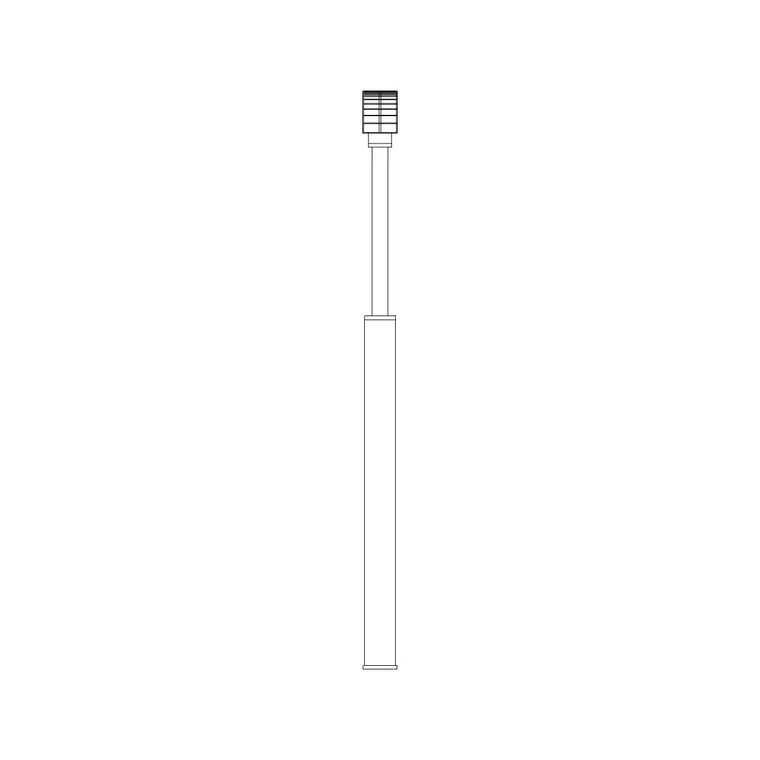
Blocks for this guide
Popular blocks to download
Related categories
Related guides
How-to guide
How to Place Street Lights Along a Road in AutoCAD
Lay out street lights along a road in AutoCAD — path-array lighting columns at the right spacing, stagger or oppose them, and keep them on their own layer.
How-to guide
How to Insert a Chandelier Block in AutoCAD
Insert a chandelier block in AutoCAD — download the DWG, match units, run INSERT, centre it on the table and set the drop on the RCP.
How-to guide
How to Insert a Floor Lamp Block in AutoCAD
Insert a floor lamp block in AutoCAD — download the plan or elevation DWG, set units, run INSERT and tuck it into a corner or beside a sofa.