Curated pack · kids room cad block pack
Free kids room CAD block pack for AutoCAD
By Saumyajit Maity · Published 11 Jan 2026 · Updated 5 Mar 2026
A children's room has to do more jobs in less space than almost any other bedroom: sleep, study, storage and play all share a small footprint, and the layout has to flex as the child grows. This free kids room CAD block pack collects the furniture those rooms are built from — single beds and bunks, study desks, toy and clothes storage, and child-height scale figures — in DWG and DXF, drawn at true millimetre sizes and ready to insert into AutoCAD 2004 or later. Free for personal and commercial work, no signup, no watermark.
Use the pack to lay out children's bedrooms, nurseries, shared kids' rooms and play areas. Because the beds and desks are drawn to real sizes and the pack includes a child figure for scale, you can judge a layout against how a small person actually uses the room — the clear floor to play on, the reach to storage, the space to climb a bunk.
The set is built to pack a lot into a little: bunks and cabin beds that lift sleeping off the floor to free play and study space, compact desks, and storage scaled for a child to reach.
What's in the kids room pack
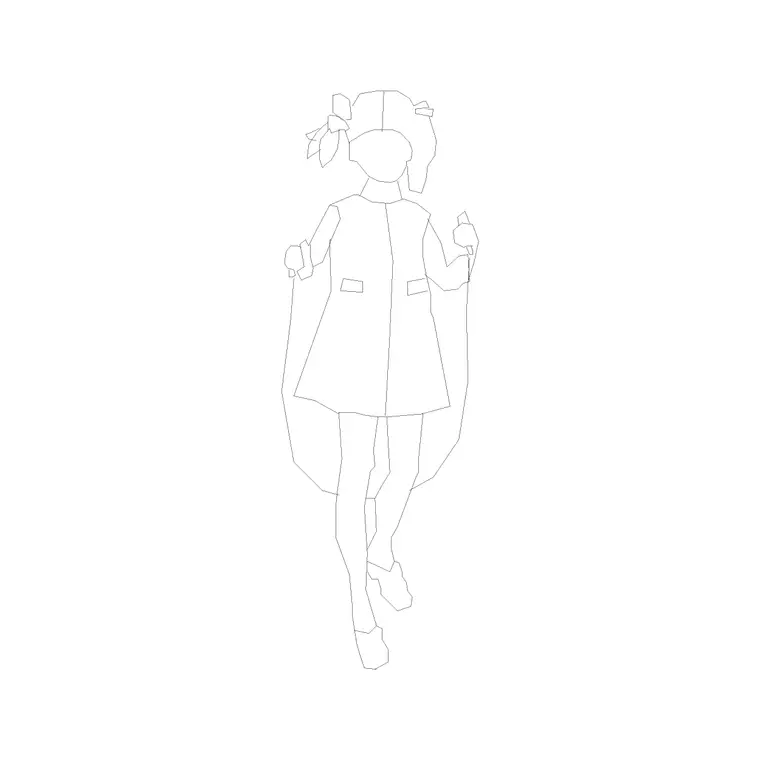
The pack covers the furniture a child's room needs and the figure that proves the scale. Sleeping: single beds, bunk beds and cabin or mid-sleeper beds that lift the mattress to free the floor beneath for a desk or storage. Study: compact desks sized for a child, with a small chair. Storage: low toy boxes, bookshelves and clothes storage scaled so a child can reach. Scale: a child figure block (a kid drawn at child height) to drop into the plan so the room reads at the right human scale.
Each is a clean plan-view block you can copy, mirror and array as a unit. Keep them on a furniture layer and the room's furnishing toggles independently of the shell. The child figure is the quiet hero of the set: it instantly shows whether the furniture is sized and spaced for a small person rather than borrowed from an adult bedroom.
How to use the set together
Decide how the small footprint is split between sleep, study, storage and play, then place the bed first, because it's the largest piece. A single bed against a wall is the simplest; a bunk or cabin bed is the space-saver, freeing the floor beneath for a desk or toy storage and the floor around it for play. For a shared room, a bunk or two singles handed about a central play strip both work — drop both and compare.
Add the desk near the window for daylight, the storage within a child's reach, and protect a clear floor zone for play — that open floor is as important as any piece of furniture in a kids' room. Drop the child figure in to sanity-check the scale: if the figure looks lost beside the furniture, the pieces are too big or too spread; if it can't pass between them, they're too tight.
Beds and bunks
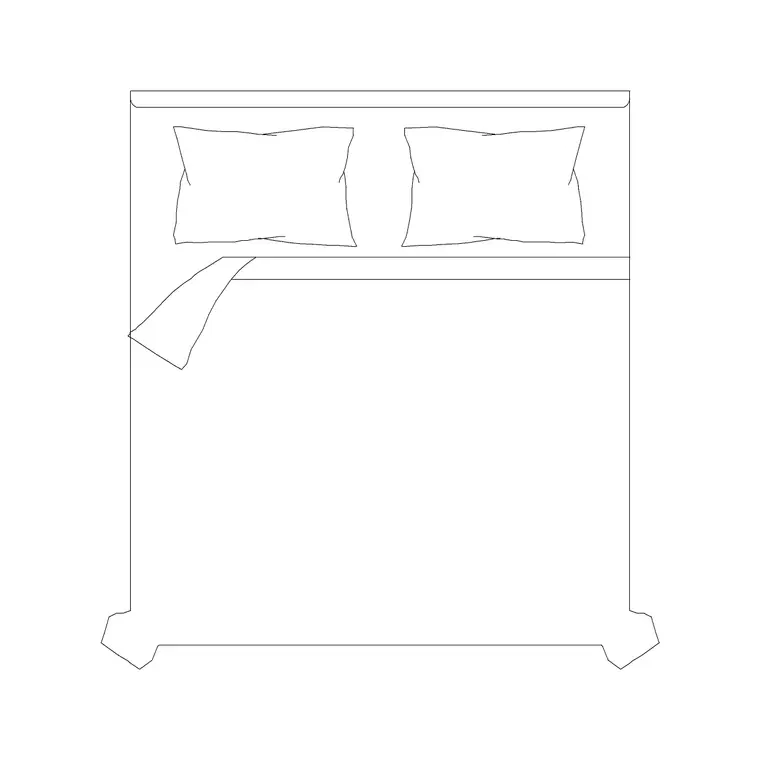
A standard single mattress is around 900 × 1900 mm, and that's the footprint to design the room around. A bunk bed stacks two singles in one footprint — the single biggest space-saver in a shared room — but it needs headroom above the top bunk and clear floor for the ladder, so check the ceiling height and the climb space on the plan. A cabin or mid-sleeper raises one bed to free the space beneath for a desk, drawers or a play den, which is how you fit three functions under one piece of furniture.
Leave at least 700 mm of clear floor down the side a child uses to get in and out, and remember a young child needs more forgiving clearances than the figures for an adult bedroom suggest. The bunk and cabin beds are where this pack earns its place, because they're the pieces that make a genuinely small room work.
Desk, storage and scale figures
A child's desk is smaller than an adult's — a compact 1000–1200 mm surface is plenty — and it wants daylight, so place it near the window with the small chair tucked under. Keep the desk on the furniture layer with the bed so the study zone freezes and thaws with the rest.
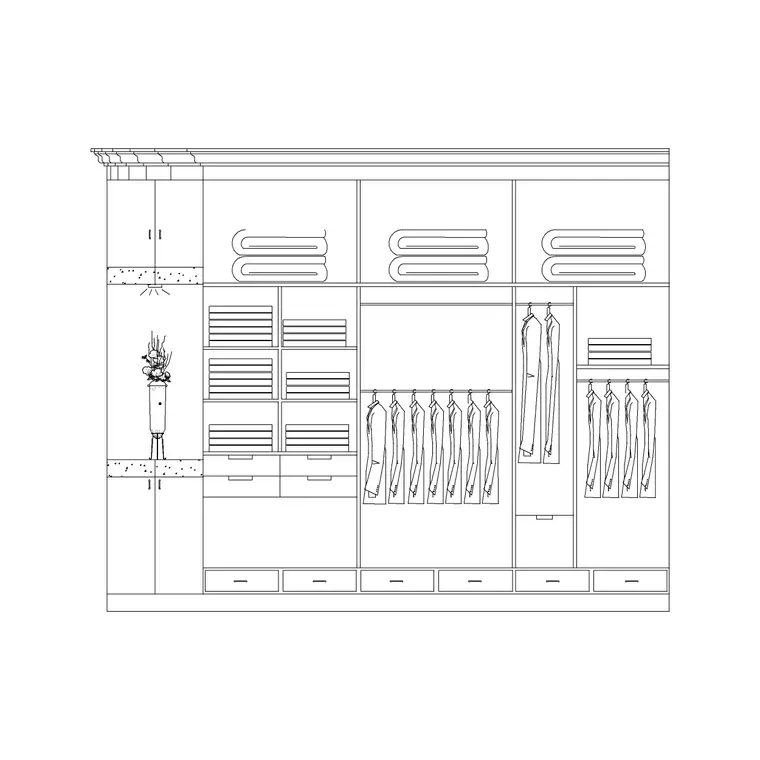
Storage in a kids' room is about reach and safety: low toy boxes and bookshelves a child can use independently, with taller clothes storage for the grown-ups to manage. Draw the low storage where the child plays and the tall storage out of the main floor zone. The child scale figure — included in the pack — is what ties it all together: drop it beside the bed, the desk and the storage to confirm everything is sized and reachable for a small person, which is the check an adult-furniture layout always misses.
Plan view for layouts
Kids'-room work is plan-led: bed, desk, storage and play zone seen from above, with the clear floor and the reach to storage checked, and a child figure dropped in for scale. The plan blocks are what you mirror when a shared room is handed about a central strip, or array when a development repeats a children's bedroom across units.
Keep the furniture on its own layer so you can freeze it for a clean shell plan and thaw it for the furnished version, and keep the play zone marked so it doesn't get colonised by furniture as the design develops. For elevations — a bunk against a wall, a desk under a window — pull the heights into a section, but the layout that makes the small room work is decided in plan.
Who uses the kids room pack
Interior designers use it to plan children's bedrooms and nurseries that genuinely work for a small person and flex as they grow. Architects use it to confirm a smaller bedroom can serve as a child's room with room for sleep, study, storage and play. Developers use the layouts to furnish kids' rooms believably on sales drawings, with the child figure making the scale read correctly.
Because the blocks are free and licence-clear, the same pack serves a single children's room or a whole development's smaller bedrooms. Pair it with the bedroom and wardrobe sets to carry the family's bedroom design through from the master suite to the kids' rooms consistently.
Free download
Browse the full library — DWG & DXF, no signup.
Questions
Frequently asked
What's in the kids room pack?+
Single beds, bunk beds and cabin or mid-sleeper beds, compact child-sized desks and chairs, low toy and book storage plus taller clothes storage, and a child scale figure to drop into the plan — all as scaled plan-view blocks.
Why does the pack include a child figure?+
Scale. Dropping a child figure beside the furniture instantly shows whether the pieces are sized and spaced for a small person rather than an adult — the check an adult-furniture layout always misses.
How much space does a bunk bed need?+
A bunk stacks two singles (around 900 × 1900 mm) in one footprint, but it needs headroom above the top bunk and clear floor for the ladder. Check the ceiling height and the climb space on the plan before committing.
Are the kids room blocks free for commercial use?+
Yes. Every block downloads free in DWG and, where available, DXF, with no signup, no watermark and no attribution requirement, cleared for commercial projects.
Related downloads
Blocks for this guide
Related categories
Related guides
Curated pack
Free Bedroom CAD Block Pack — DWG & DXF
Free bedroom CAD block pack in DWG and DXF — double beds, side tables, wardrobes and seating in plan and side view for AutoCAD. No signup, commercial OK.
Curated pack
Free Living Room CAD Block Pack — DWG & DXF
Free living room CAD block pack in DWG and DXF — sofa sets, coffee tables, rugs and seating in plan for AutoCAD lounge layouts. No signup, commercial OK.
Curated pack
Free Wardrobe & Closet CAD Block Pack — DWG
Free wardrobe & closet CAD block pack in DWG and DXF — fitted, sliding and walk-in wardrobes in plan for AutoCAD bedrooms. No signup, commercial OK.