Curated pack · indian standard furniture cad blocks
Free Indian standard furniture CAD block pack for AutoCAD
By Sumana Kumar · Published 21 Dec 2022 · Updated 9 Jan 2026
Indian homes have furniture and rooms that don't appear in generic Western block libraries — diwans and low seating, jhula swings, pooja units, and kitchens built around a masonry platform rather than fitted European cabinets. This free Indian standard furniture CAD block pack gathers that vocabulary — diwan-cum-beds, low floor seating and bolster setups, jhula swings, pooja and mandir units, Indian-style kitchen platforms with a built-in sink, and traditional and contemporary seating — in DWG and DXF at true millimetre dimensions, ready for AutoCAD 2004 or later. All free for personal and commercial work, no signup, no watermark, no attribution.
Use the pack for residential projects across India, apartment fit-outs, builder-floor and villa schemes, and any diaspora project that wants culturally appropriate furniture. Because the blocks are scaled in millimetres — the working unit on most Indian drawings — you can lay out a drawing room, a pooja corner or a kitchen platform and check clearances straight away.
Indian furniture sizing and room logic differ from Western norms in real ways: kitchens centre on a platform with a granite counter, drawing rooms often combine sofa seating with a diwan, and dedicated pooja space is part of the brief. Scaled, region-appropriate blocks let you plan all of that correctly rather than forcing Western blocks to stand in.
What's in the Indian standard pack
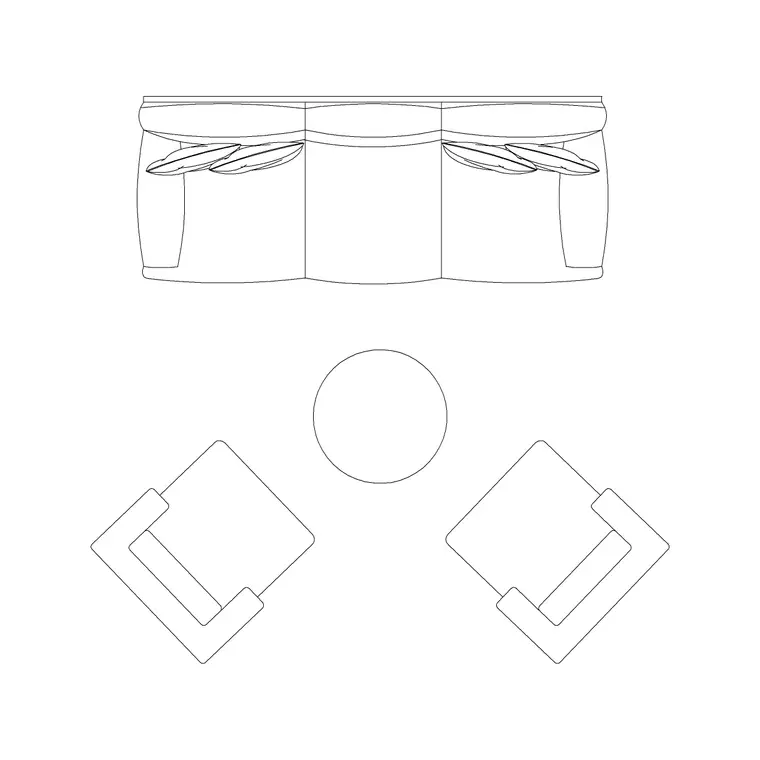
The set covers furniture common to Indian homes. Living: diwan-cum-beds, three- and two-seat sofas, low floor seating with bolsters and a centre table. Worship: pooja units and wall-mounted mandir blocks in plan and elevation. Kitchen: an Indian-style platform (otta) with a built-in sink and provision for a hob, plus overhead and under-counter storage drawn to the platform. Bedroom: cots in Indian sizes and a dressing unit. Outdoor and transitional: a jhula swing for a balcony or living area.
The defining traits are the masonry kitchen platform and the diwan and floor-seating culture, neither of which Western packs cover. The kitchen platform ships with the sink integrated so you can lay the wet point into the counter run as it is actually built on site.
Typical Indian furniture sizes to design around
Use these envelopes as a guide, in millimetres to match standard Indian drawing practice. A diwan-cum-bed commonly runs around 1900–2000 mm long and 750–900 mm wide, doubling as seating and a single bed. Indian kitchen platforms are typically built around 600 mm deep with a 850–900 mm counter height, the counter usually granite over a masonry base. Three-seat sofas land around 1800–2100 mm wide. Centre tables run roughly 900–1200 mm. Cots in common Indian sizes range from single to king, with queen often around 1500 × 1900 mm.
These are region-typical ranges, not fixed specs — confirm against the actual piece and local practice. For circulation, allow comfortable movement around the diwan and a clear working aisle in front of the kitchen platform, typically around 900–1000 mm so two people can pass while one cooks.
How to use the set to plan an Indian home
Start the kitchen from the platform. Lay the L- or U-shaped platform along the walls, set the built-in sink under or near the window, and leave space for the hob and a clear working aisle in front. Because the platform is masonry, draw it as a built element, not a fitted cabinet that can be moved later. Add overhead storage on its own layer above the counter line.
In the drawing room, combine a sofa set with a diwan along one wall — the diwan gives extra seating by day and a bed for guests by night — and centre the layout on a coffee or centre table. Place the pooja unit in its dedicated corner or wall, ideally away from the kitchen and bathrooms per common practice. Hang the jhula where there is room for it to swing. Keep decor, plants and soft furnishings on their own layer so you can present a clean plan and a dressed one.
Plan and elevation views
In plan you lay out the platform, diwan, sofa set and pooja corner and check the working aisles and seating circulation. In elevation you show the granite counter and platform front, the diwan with its bolsters, the mandir detailing and the jhula, which is where the region-specific character reads. Many blocks ship both views in one DWG, so a single download gives plan and elevation.
Elevation matters for the kitchen platform especially: the 850–900 mm counter height, the overhead storage line and the integrated sink all need to read on the joinery and tiling drawing. The elevation blocks carry those heights so the wall drawing reflects how the platform is actually built and finished.
Per-item notes
- Diwan-cum-bed: place it along a wall as dual-purpose seating and guest bed; leave space to add bolsters. - Kitchen platform: draw it as a built masonry element with the sink integrated; don't treat it as a movable cabinet. - Pooja / mandir unit: give it a dedicated corner or wall, conventionally away from kitchen and bathrooms. - Sofa set with floor seating: combine raised sofas with bolster floor seating for flexible capacity. - Jhula swing: leave clear swing room front and back; it's both a balcony and a living-room piece. - Overhead kitchen storage: keep it on its own layer above the counter so the platform plan stays clean.
Where the Indian standard pack is used
Indian standard blocks suit residential work across India and the diaspora: apartments and builder floors, independent houses and villas, interior fit-outs and renovation projects, and serviced or rental homes. Combine them with the broader furniture and kitchen categories where you need additional seating or appliances to complete a layout.
Because they are free and licence-clear, they fit concept plans, presentation drawings, competition boards and student briefs where you need culturally appropriate Indian furniture without licensing fuss. The same blocks run from an early concept to a coordinated working-drawing set, so the platform, diwan and pooja corner are drawn once and reused across the project.
Free download
Browse the full library — DWG & DXF, no signup.
Questions
Frequently asked
How is an Indian kitchen platform different from a fitted kitchen block?+
An Indian kitchen is built around a masonry platform (otta) with a granite counter, usually about 600 mm deep at 850–900 mm height, rather than movable fitted European cabinets. This pack draws the platform as a built element with the sink integrated, matching how it is actually constructed on site.
What units are the Indian standard blocks drawn in?+
They are drawn full size in millimetres, which is standard practice on most Indian drawings. Insert at scale 1 in a millimetre template, or set INSUNITS to millimetres so AutoCAD rescales automatically if your drawing uses different units.
Are these Indian furniture blocks free for commercial use?+
Yes. Every block is free in DWG and, where available, DXF, with no signup, watermark or attribution, and is cleared for commercial use on residential and interior-fit-out projects.
Do these files open in older AutoCAD and free viewers?+
Yes. The DWG files target AutoCAD 2004 and later and open in current AutoCAD, AutoCAD LT, BricsCAD, DraftSight and free DWG viewers like Autodesk's online viewer.
Related downloads
Blocks for this guide
Popular blocks to download
Related categories
Related guides
Curated pack
Free Art Deco Interior CAD Block Pack — DWG
Free Art Deco interior CAD block pack in DWG and DXF — geometric seating, sunburst motifs, mirrored consoles and lounge furniture drawn in plan and elevation.
Curated pack
Free Mid-Century Modern CAD Block Pack — DWG
Free mid-century modern CAD block pack in DWG and DXF — tapered-leg sofas, shell chairs, sideboards and low tables drawn in plan and elevation for AutoCAD.
Curated pack
Free Japandi Interior CAD Block Pack — DWG
Free Japandi interior CAD block pack in DWG and DXF — low platform seating, light-wood tables, floor cushions and minimalist storage in plan and elevation.