Explainer · metric vs imperial autocad
Metric vs imperial in AutoCAD in 2026
By Saumyajit Maity · Published 15 May 2026 · Updated 9 Jun 2026
AutoCAD doesn't care what units you draw in — it just counts drawing units. The catch is that you have to decide what one drawing unit means, and that decision divides into two worlds: metric, where a unit is usually one millimetre, and imperial, where a unit is one inch (and lengths are expressed in feet and inches). Choosing wrongly, or mixing the two, is behind a whole family of headaches: blocks at the wrong scale, dimensions that read oddly, and drawings that won't line up.
Which system you use is mostly dictated by region and discipline — the UK, Europe, and most of the world draw in millimetres; the US and a few others draw in feet and inches. But you'll inevitably receive a file in the 'other' system at some point, so understanding both, and how to convert cleanly between them, is part of being fluent. This page lays out the differences, the template and units settings that control each, and the practical steps for working across the divide.
The fundamental difference
In a metric AutoCAD drawing, the universal convention is one drawing unit = one millimetre. A 3-metre wall is drawn 3000 units long, a door is 900 units wide, a desk 1500 units. Everything is a plain decimal number of millimetres, which is why metric drafting feels arithmetic and clean — no fractions, no unit juggling.
In an imperial drawing, one drawing unit = one inch, and lengths are commonly entered and displayed as feet and inches. You might type 10' for ten feet (which AutoCAD stores as 120 units), and dimensions read as 10'-6". Fractions of an inch appear too (3 1/2"). It's a different mental model: architectural imperial units use the foot-and-inch notation that US construction drawings expect. Neither is 'better' — they're conventions — but a drawing commits to one, and that choice ripples through dimensions, blocks and everything you type.
The two starter templates: acadiso vs acad
AutoCAD ships starter templates that pre-configure the unit system, and choosing the right one at the start saves trouble. The acadiso.dwt template sets up a metric drawing (millimetres, ISO conventions), while acad.dwt sets up an imperial drawing (inches/feet). There are also -named layout variants for paper sizes.
The difference goes beyond a single setting: the templates carry matching dimension styles, text heights, hatch scales and default linetype scales appropriate to each system. Start a metric job from acadiso and your dimensions, hatches and linetypes are already sensibly scaled for millimetre work; start it from acad by mistake and your hatches come in microscopic and your linetypes look solid. Picking the correct template — or better, your own house template built on the right base — is the cleanest way to commit to a unit system from the first line.
Setting and reading drawing units
Whichever template you start from, the UNITS command (type UNITS, or DDUNITS) opens the Drawing Units dialog where you confirm and refine the setup. 'Length type' chooses the format: Decimal for metric millimetres, Architectural for feet-and-inches with fractions, Engineering for feet-and-decimal-inches. 'Precision' sets how many decimals or what fraction the display rounds to.
Crucially, the same dialog holds 'Insertion scale' — the INSUNITS setting that controls how blocks auto-scale on insertion. For metric work set it to Millimeters; for imperial set it to Inches. Getting this right is what lets a downloaded block land at true size. Reading the dialog tells you instantly what world a drawing lives in: Decimal + Millimeters means metric millimetre drafting; Architectural + Inches means US imperial. When you open an unfamiliar file, UNITS is the first thing to check.
Why mixing systems goes wrong
Trouble starts when geometry, blocks or xrefs from one system meet a drawing set up for the other. The headline symptom is the 25.4× error: there are 25.4 millimetres in an inch, so an imperial block (inches) dropped into a metric drawing that doesn't auto-convert can arrive 25.4 times too small, and a metric block into an imperial drawing 25.4 times too big.
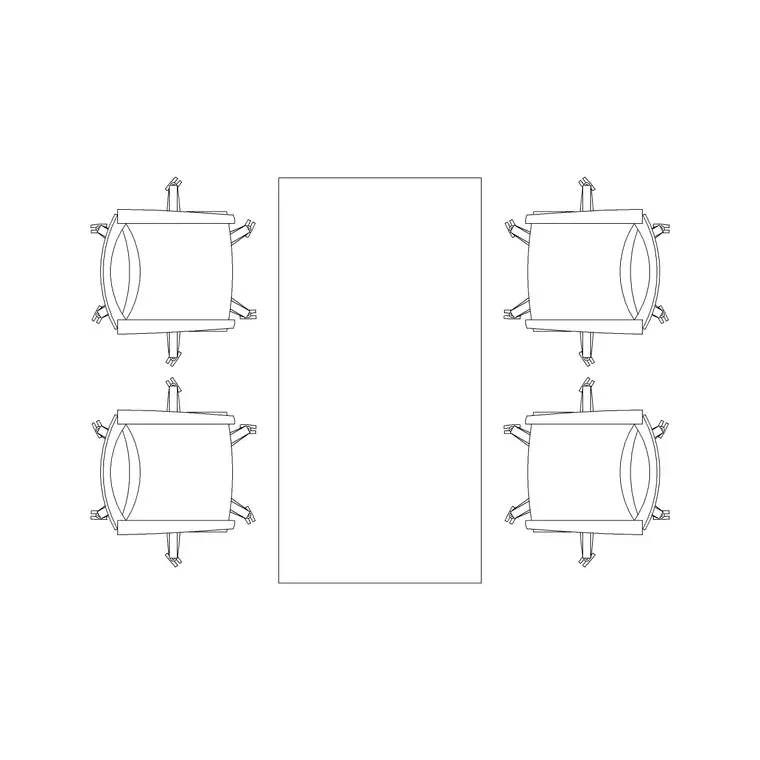
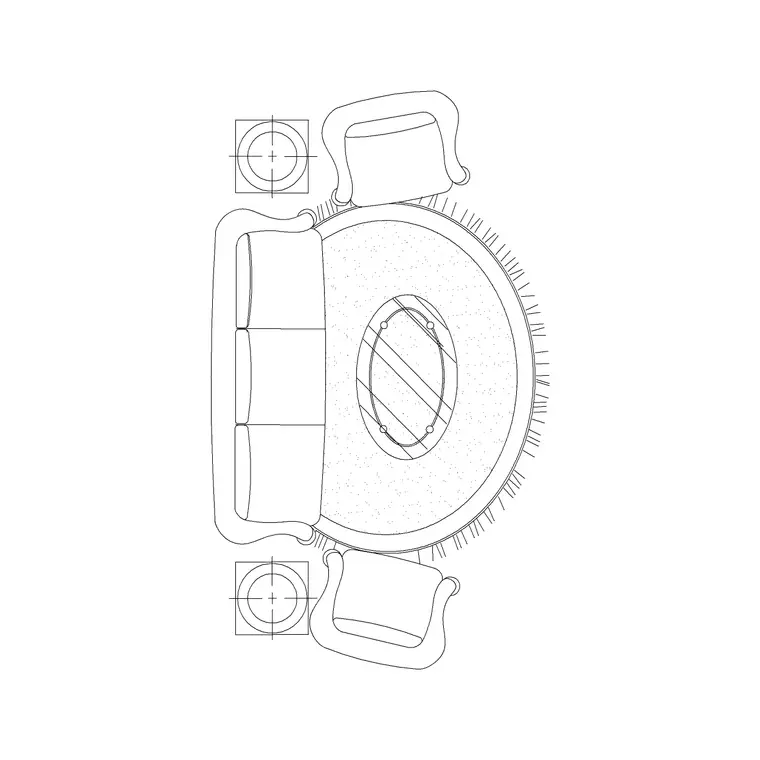
The robust defence is the INSUNITS / insertion-units mechanism: if both the drawing and the block declare real units, AutoCAD applies the 25.4 conversion automatically and everything lands correctly. The errors appear when one side is Unitless. So the rule for cross-system work is simple — make sure every drawing and every block carries explicit units, and let AutoCAD do the conversion rather than eyeballing a scale factor. The blocks here are drawn in millimetres with defined units, so they convert cleanly into an imperial drawing whose insertion units are set to Inches.
Converting a drawing between systems
Sometimes you genuinely need to convert a whole drawing — say a metric drawing a US client wants in imperial. The honest approach depends on what 'convert' means. If you just need it to read in the other system's notation, change the units format in the UNITS dialog (Decimal to Architectural); the geometry's true size is unchanged, only the display changes.
If you need the actual numbers to become 'round' in the new system — a 3000 mm wall becoming a clean dimension in feet — that's a scaling operation. To rescale metric-to-imperial you'd SCALE the entire drawing by 1/25.4 (so millimetre values become inch values), or the reverse by 25.4. Do this on a copy, check a known dimension afterward, and re-set the units format and INSUNITS to match the new system. For coordination it's often cleaner to keep your native units and let xref insertion handle the conversion, rather than permanently rescaling a master drawing.
Which should you choose?
For most people the answer is decided for you: follow the convention of your region, client and industry. UK, European, Asian and most international construction works in metric millimetres, so default to acadiso, Decimal units and INSUNITS = Millimeters. US architectural and a lot of US construction works in imperial feet-and-inches, so default to acad, Architectural units and INSUNITS = Inches.
If you're learning and have a free choice, metric millimetres is the simpler system to reason about — whole numbers, no fractions, easy mental arithmetic — and it's the world standard, which is why the blocks on this site are drawn in millimetres. Whatever you pick, the important discipline is to commit: set it in your template, keep INSUNITS correct, and ensure every block and xref carries real units so cross-system files convert themselves instead of arriving 25.4 times wrong.
Free download
Browse the full library — DWG & DXF, no signup.
Questions
Frequently asked
Is AutoCAD metric or imperial by default?+
It depends on the template. Starting from acadiso.dwt gives a metric (millimetre) drawing; starting from acad.dwt gives an imperial (inch/feet) drawing. The installation's default and your region's locale influence which template opens first, so always confirm via the UNITS command.
How do I change an AutoCAD drawing to metric?+
Open the UNITS command and set 'Length type' to Decimal and 'Insertion scale' to Millimeters. That changes the display and the block-insertion units to metric. If you also need to rescale existing imperial geometry to true millimetre values, SCALE the drawing by 25.4 (inches to millimetres).
Why is there a 25.4 factor between my drawings?+
There are 25.4 millimetres in one inch, so that factor appears whenever metric and imperial geometry meet without unit conversion. An imperial block can arrive 25.4× too small in a metric drawing (or vice versa). Setting real units on both ends lets AutoCAD apply the conversion automatically.
Can I use millimetre blocks in an imperial drawing?+
Yes, as long as both carry defined units. Set the imperial drawing's insertion units to Inches; AutoCAD then auto-converts the millimetre block (dividing by 25.4) so it lands at true size. The blocks here are drawn in millimetres with defined units precisely so they convert cleanly either way.
Related downloads
Blocks for this guide
Popular blocks to download
Related categories
Related guides
Explainer
AutoCAD Layers Explained — A Practical Guide in 2026
AutoCAD layers explained simply — what layers are, how to organise a drawing with them, the difference between Off, Freeze and Lock, and how layer 0 behaves with blocks.
Explainer
Layer Naming Standards: AIA & BS1192 Explained
Layer naming standards explained — how AIA, BS1192 and ISO 13567 structure CAD layer names, what each field means, and how to apply a consistent convention to your drawings.
Explainer
Lineweights in AutoCAD Explained — Set & Plot
Lineweights in AutoCAD explained — how to assign them ByLayer, why they don't always show on screen, the LWT and LWDISPLAY settings, and how plot styles control printed line thickness.